



Traditional Kurdish Hallway Carpet
A traditional kurdish hallway carpet brings resilient tribal woolwork into narrow spaces, offering sturdy geometric patterns woven across nineteenth and early twentieth century Persia.
Traditional Kurdish Hallway Carpet
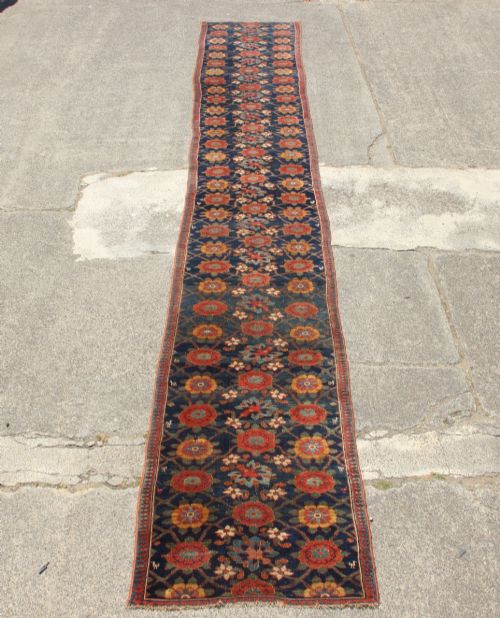
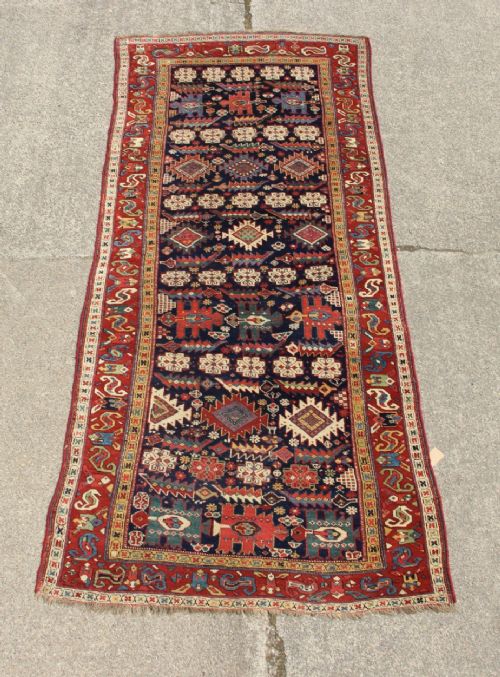
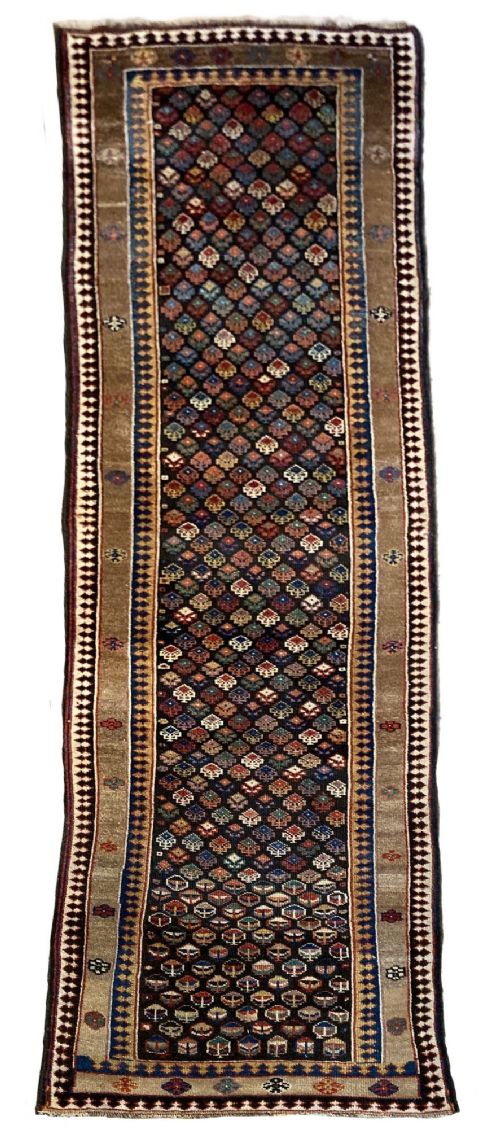
A traditional kurdish hallway carpet typically takes the form of an elongated runner or narrow kelleh designed specifically for corridors and extended domestic spaces. These textiles emerge primarily from nineteenth and early twentieth century village and tribal workshops across north west Persia and Kurdistan.
Makers utilise distinct regional motifs such as the mina khani pattern, boteh designs, and repeated shrub arrangements across the narrow field. Buyers encounter formats spanning from compact narrow runners to substantial six-metre carpets suited for grander halls.
How they were made
Weavers construct these floor coverings using wool pile secured on cotton or wool foundations, often employing hand-spun yarn that accepts natural dye variations across the length of the rug. Village and tribal producers combine sturdy knotting techniques with resilient flatweave finishes to withstand heavy domestic transit.
The structure relies on durable structural integrity, utilising dense wool packs that maintain pile resilience in high-traffic corridors over generations of daily use.
Keep an eye out for hidden birds perched quietly among the tree branches in the narrow village borders.
What varies in quality
Quality rests upon the fineness of the knot count, the crispness of the tribal geometry, and the integrity of the surviving wool pile along high-wear edges. Pieces displaying intricate secondary borders like dragon motifs or well-preserved hand-spun yarn textures represent the upper tier of production.
The depth and variation of the dye palette further separate standard village output from master-woven examples originating in centres like Bidjar or Senneh.
The Traditional Kurdish Hallway Carpet Glossary
- Kelleh
- A large format rectangular rug, typically longer than a standard room-size carpet but broader than a corridor runner.
- Mina Khani
- An all-over repeating pattern composed of daisy-like flowers linked by delicate curved lattice stems.
- Boteh
- A stylised almond or pear-shaped motif representing a floral shoot or cypress tree, frequently seen in Persian tribal weaving.
- Memling Gul
- An octagonal guls motif featuring hooked or stepped edges, commonly found in Caucasian and Kurdish tribal carpets.
- Soumak
- A flatweave technique utilising wrapping threads over warp strings to create a durable surface without a cut pile.
Traditional Kurdish Hallway Carpet: Frequently Asked Questions
Where should I place a long runner?
These narrow floor coverings fit naturally into corridors, hallways, and gallery spaces where length dictates the layout. Their sturdy construction handles continuous foot traffic while introducing colour and geometric structure to transitional areas.
Ensure you measure the clear floor space between skirting boards carefully, leaving an even border of exposed timber or stone on all sides.
How do I clean an old wool carpet?
Regular gentle vacuuming without a rotating brush head removes surface dust and prevents grit from settling into the wool foundation. Address spills immediately by blotting with a damp cloth rather than rubbing the pile.
Professional specialist cleaning remains the safest method for deep maintenance every few years.
Are these runners durable for daily use?
Tribal weavers constructed these textiles using dense wool and robust foundations designed explicitly for heavy domestic wear. The natural lanolin present in hand-spun wool helps repel everyday dirt and cushions footfalls effectively.
Using a quality underlay prevents slipping and reduces friction between the rug and the floorboards beneath.
How do I date an antique runner?
Dating relies on examining the dye palette, structural materials, and stylistic consistency of the tribal motifs. Natural colour variations and the use of hand-spun yarn typically point towards nineteenth or early twentieth-century production.
Comparing border details and structural knotting helps narrow the period of origin within regional traditions.