


Traditional Indian Area Rug
A traditional indian area rug brings centuries of woven artistry into a room, offering rich patterns and textures from various periods.
Traditional Indian Area Rug
A traditional indian area rug encompasses large country house carpets, decorative fragments, and smaller floor coverings originating from northern India. These pieces span multiple centuries, appearing in records from the eighteenth century through the early twentieth century.
Buyers frequently encounter room-sized carpets and smaller rugs associated with specific centres such as Amritsar, Agra, and Kashmir. The selections include grand formats alongside flat-woven cotton dhurries and chain-stitch variations.
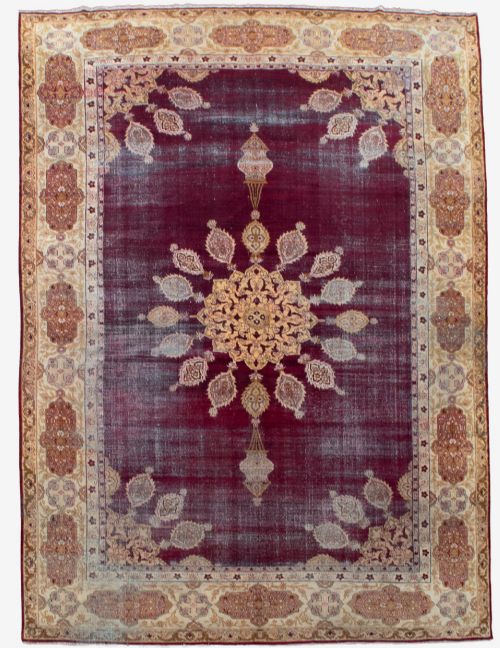
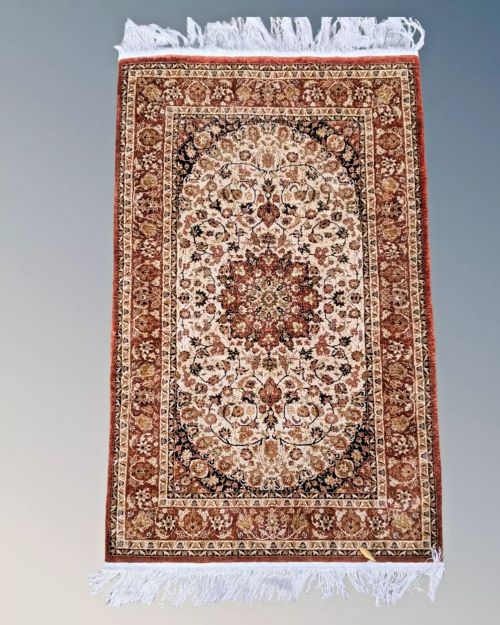
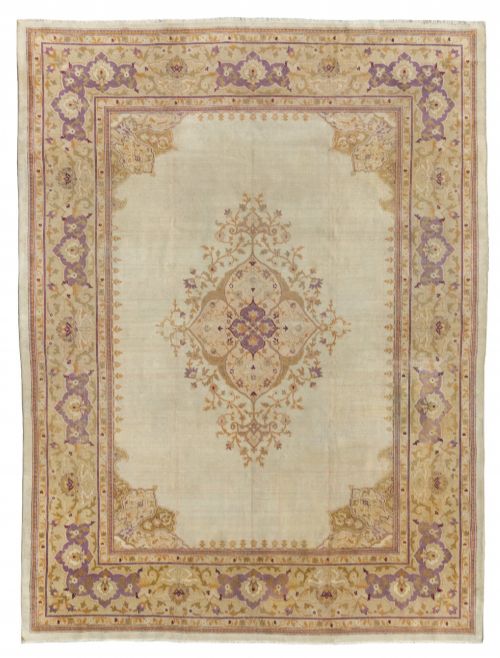
The aesthetic vocabulary draws upon Mughal traditions, Victorian Indian tastes, and regional designs. Many examples feature all-over patterns or intricate medallion layouts characteristic of classical oriental weaving.
Materials and construction methods
The foundational materials recorded in these textiles are wool, cotton, and silk. Artisans employed these fibres to build durable pile carpets as well as lighter flat-woven textiles.
Weavers utilised techniques ranging from traditional hand-knotting in wool and silk to fine chain-stitch embroidery on base fabrics. Cotton frequently served as the structural warp and weft for piled carpets and flat dhurries.
Some nineteenth-century country house carpets are large enough to anchor an entire parlor.
Assessing quality in regional weaving
Quality rests upon the fineness of the knotting and the density of the weave, which dictate how crisply the botanical and geometric motifs render. Superior examples display precise drawing and harmonious colour saturation across the field.
The condition of the pile and the integrity of the foundational structure influence the durability of each textile. Pieces retaining their original selvedges and proportions hold greater integrity for daily placement.
The Traditional Indian Area Rug Glossary
- Dhurrie
- A traditional flat-woven rug or carpet from India, typically made of cotton or wool without a raised pile. These utilitarian textiles often feature geometric or striped patterns.
- Amritsar
- A prominent carpet-weaving centre in the Punjab region of northern India known for producing large room-sized carpets during the nineteenth and twentieth centuries. These works frequently incorporate soft colour palettes and classic Persian-inspired designs.
- Agra
- A historic northern Indian city celebrated for producing grand carpets, particularly during the nineteenth century. Agra pieces often display dense floral motifs and substantial wool construction.
- Chain stitch
- An embroidery technique where looped stitches form a continuous chain-like pattern on a fabric ground. This method appears on decorative Kashmiri rugs and wall hangings.
- Mughal
- An imperial artistic style originating from the Mughal Empire that heavily influenced Indian carpet design. It is characterised by naturalistic floral renderings, elaborate borders, and balanced symmetry.
Traditional Indian Area Rug: Frequently Asked Questions
What is a traditional indian area rug?
A traditional indian area rug is a hand-woven or embroidered textile originating from centres like Agra, Amritsar, and Kashmir. These pieces range from large wool carpets to cotton flatweaves created across the eighteenth, nineteenth, and early twentieth centuries.
They reflect diverse regional designs, including classical Mughal motifs and Victorian Indian influences, utilising natural materials such as wool, silk, and cotton.
How do I care for an antique rug?
Protecting these textiles involves placing them in low-traffic areas or using appropriate underlays to prevent slipping and friction. Regular gentle vacuuming without a beater bar removes surface dust safely.
Professional cleaning tailored for antique wool and silk textiles maintains the integrity of the fibres and dyes. Direct sunlight should be avoided to prevent fading over time.
Where were these carpets made?
The pieces originate primarily from workshops and weaving centres across northern India. Prominent locations include Amritsar in the Punjab, Agra, and the vale of Kashmir.
Each region developed distinct characteristics in materials and design, ranging from grand wool carpets to delicate silk and chain-stitch works.
How can I tell the age of a rug?
Dating relies on stylistic markers, material analysis, and structural evidence within the weave. Pieces associated with nineteenth-century production often exhibit specific regional palettes and knot densities characteristic of periods like the Victorian era or late Mughal revivals.
Documentation and comparative study with established dated examples help narrow down the decade or century of origin.