
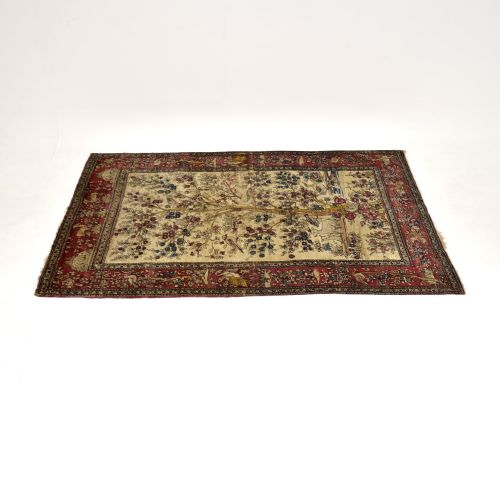
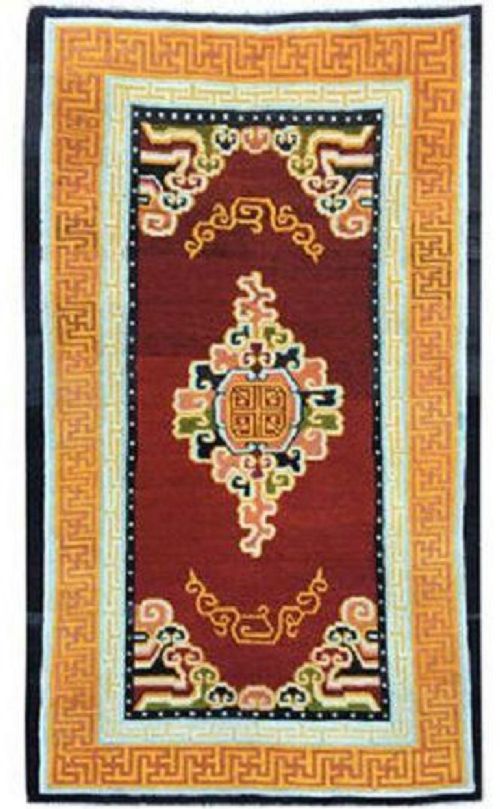
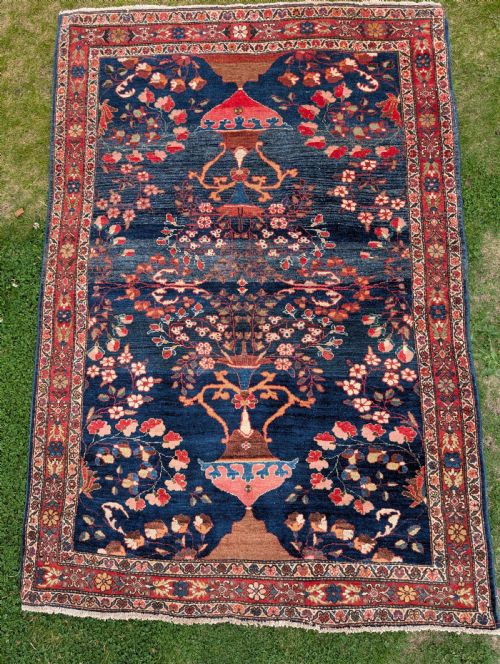
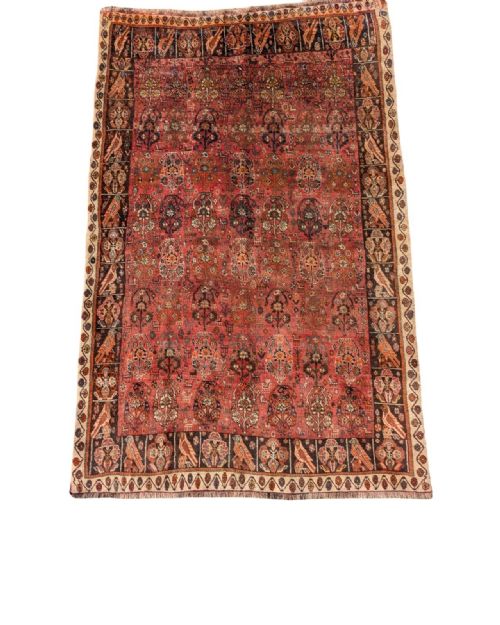
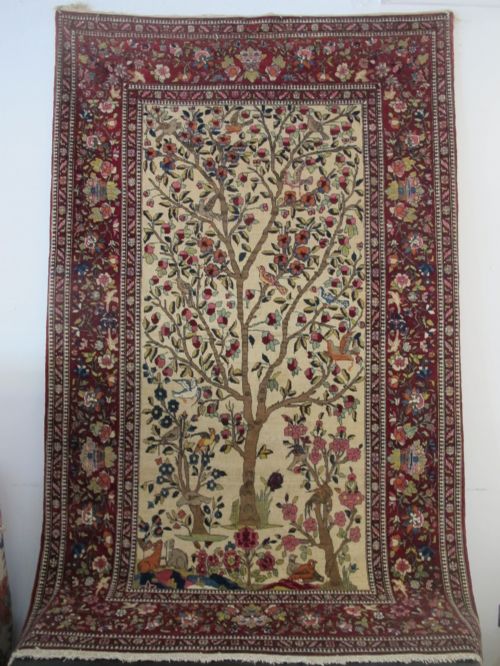


Red Border Wool Rug
A red border wool rug anchors a room with saturated colour and traditional motifs, offering enduring warmth underfoot.
Red Border Wool Rug
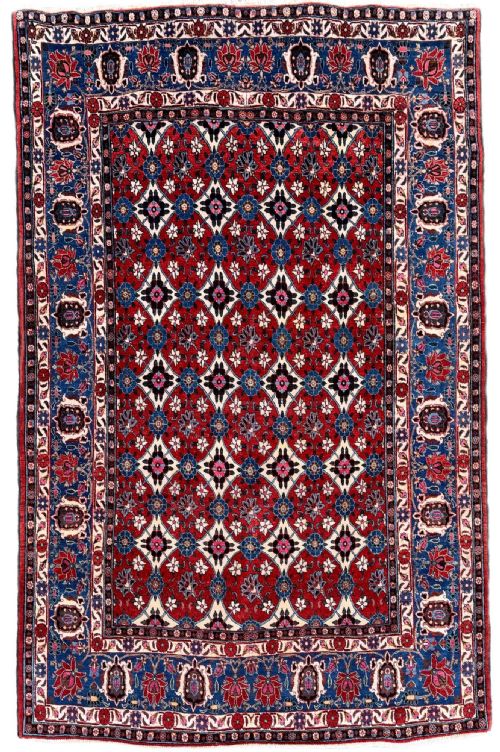
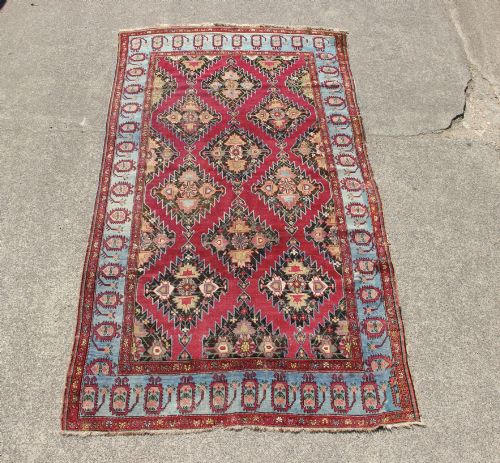
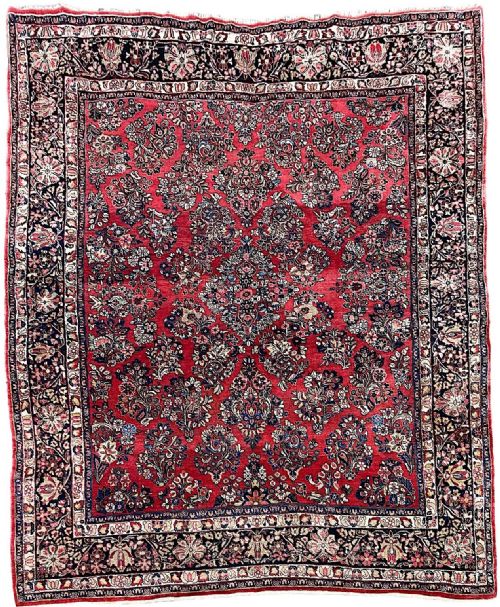
A red border wool rug brings together centuries of weaving traditions from Persia, the Caucasus, Anatolia, and Tibet, spanning periods from the mid-nineteenth century to the early twentieth century. These floor coverings range from compact scatter formats and runner proportions to room-sized carpets and massive formats exceeding five metres.
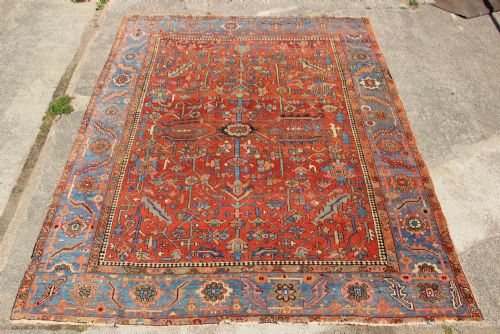
The version most commonly met on this page is the Persian carpet or rug, produced in historic centres such as Heriz, Kashan, Tabriz, and Veramin. Such pieces frequently combine intricate field patterns with strong framing borders.
Beyond Persian workshops, the selection includes Caucasian Kazak remnants, Ottoman Ushak and Angora Ushak weaves, Kurdish runners, and traditional Tibetan saddle covers and rugs. Each provenance brings distinct knotting structures and regional palettes to the red border format.
Materials and construction methods
The foundation of these textiles rests primarily on natural wool, supplemented by hand-spun wool, cotton foundations, silk accents, angora wool, and occasional leather elements. Spinners prepared fleece by hand to yield durable yarns capable of absorbing rich dye stuffs.
Weavers knotted these wool yarns meticulously onto vertical looms, employing structural foundations of cotton or wool warp and weft threads. The resulting pile provides resilience and dense tactile depth.
Listings span eight distinct decades of production from the mid-nineteenth century through the 1930s.
Distinctions in quality and execution
The upper tier of these textiles reveals itself through precision of knot density, harmonious saturation of natural dyes, and crispness of drawing within both field and border. Master workshops and skilled tribal weavers achieved balanced proportions and structural integrity that withstand heavy use.
Lower rungs of quality involve coarser pile, less nuanced colour graduation, or compromised structural edges from extensive wear. The distinction lies in the fidelity of the weaver's execution and the preservation of the original format.
The Red Border Wool Rug Glossary
- Warp
- The stationary vertical threads stretched on a loom before weaving begins. The exposed fringe at either end of a finished rug consists of these remaining warp threads.
- Weft
- The horizontal threads passed alternately over and under the warp threads to bind the knots in place. Together, warp and weft form the structural grid of the textile.
- Pile
- The upright cut ends of the yarn that form the usable surface of the rug. Dense pile protects the structural foundation from friction.
- Runner
- A long, narrow carpet format designed specifically for hallways, corridors, or alongside beds. These proportions guide movement through domestic spaces.
- Knot
- The individual loops of wool or silk tied around warp threads to create the pile. Knot count and tying style vary considerably between tribal and city workshops.
Red Border Wool Rug: Frequently Asked Questions
Where should I place a large carpet?
A large carpet anchors a principal reception room or dining space, sitting comfortably beneath major items of furniture.
Allow sufficient floorboards to show around the perimeter to frame the textile correctly within the room.
How do I care for antique wool rugs?
Vacuum gently with suction only, avoiding rotating brush heads that can catch hand-spun fibres.
Rotate the piece periodically to ensure even footfall and exposure to light over the decades.
What distinguishes Heriz carpets?
Heriz carpets originating from north-west Persia feature bold geometric medallions and robust structural wool.
Their sturdy construction makes them exceptionally resilient for high-traffic areas.
How can I date an older rug?
Dating relies on stylistic analysis of border motifs, the character of natural dyes, and structural evidence within the foundation.
Comparison with documented examples from periods like the nineteenth or early twentieth century provides reliable chronological markers.