
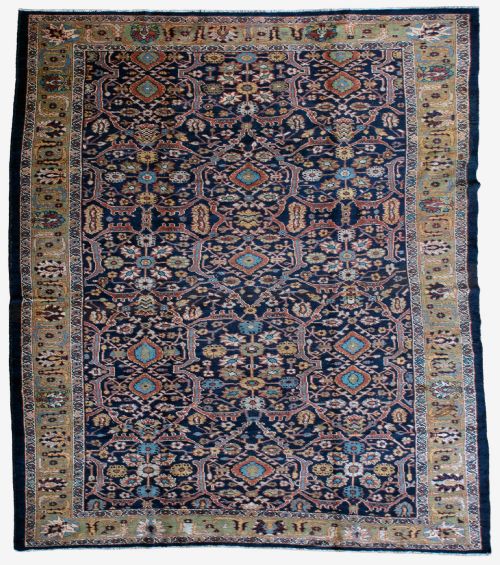
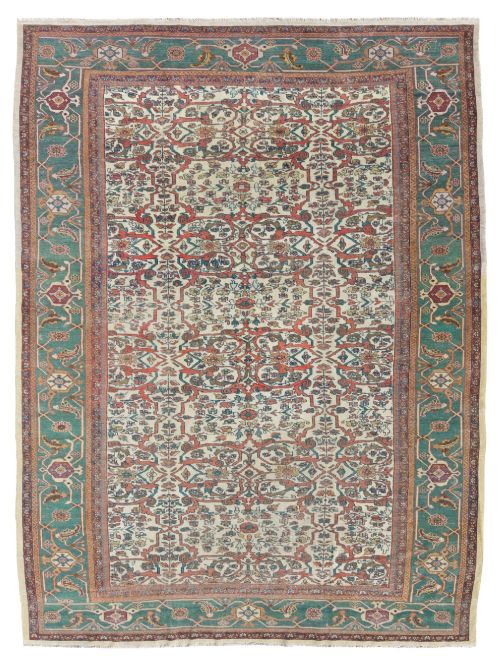
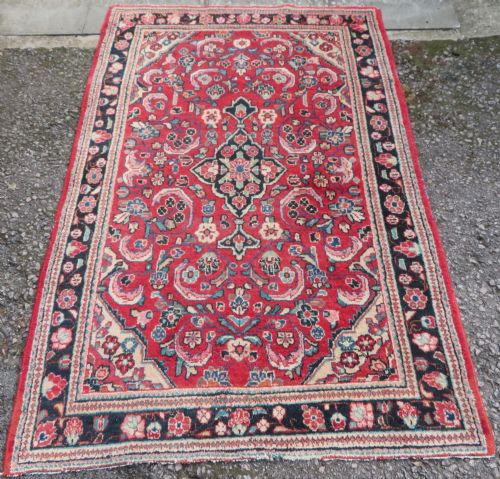
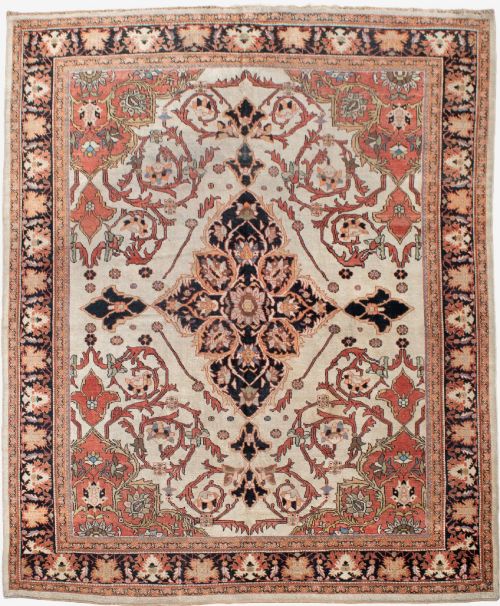


Sultanabad Area Rug
A sultanabad area rug brings the grand floral designs of West Persia into a room through generous scale and muted, balanced colour palettes.
Sultanabad Area Rug
A sultanabad area rug is a grand floor covering originating from the West Persian region during the late nineteenth and early twentieth centuries. These pieces share stylistic roots with Mahal and Ziegler carpets, often displaying large-scale floral motifs and palmettes.
Most examples encountered on this page date from the nineteenth century up to the nineteen-thirties, reflecting the output of West Persian weaving workshops. They appear primarily as large carpets or room-sized rugs designed to anchor traditional and eclectic interiors.
The aesthetic bridges formal Persian court design with softer, room-friendly tones tailored for Western markets. Buyers frequently encounter related Mahal and Ziegler types alongside pieces specifically attributed to the Sultanabad region.
How They Were Made
Traditional weavers constructed these carpets using a foundation of durable cotton warps and wefts to ensure structural stability. The soft wool pile was hand-knotted onto this grid, creating a dense and resilient surface suited for heavy foot traffic.
Natural dye traditions governed the coloration, producing earthy tones and subdued fields that developed a gentle patina over decades. Skilled artisans executed expansive curvilinear patterns with remarkable fluidity, balancing open backgrounds with intricate floral sprays.
Sultanabad Area Rug Retail Price Guide 2026
Typical asking prices for sultanabad area rug among the pieces listed under this phrase on Sellingantiques today, from the lower quarter to the upper quarter. They describe what is for sale here now, not the wider market.
Many nineteenth-century weavers intentionally muted their wool dyes to please Victorian drawing rooms, accidentally creating the faded elegance collectors chase today.
What Varies in Quality
Quality rests upon the fineness of the knotting and the precision with which the grand floral motifs are articulated across the field. Superior examples maintain balanced proportions and harmonious dye transitions that prevent the large designs from appearing heavy.
The integrity of the cotton foundation and the even wear of the wool pile dictate the structural longevity of the piece. Masterwork rugs display exceptional clarity in their curvilinear drawing, separating standard village weaving from finer workshop productions.
Ziegler and Co
The Sultanabad Area Rug Glossary
- Sultanabad
- A carpet style and regional West Persian production known for large-scale floral patterns and muted palettes. These pieces were largely exported to European and American markets during the nineteenth century.
- Mahal
- A West Persian rug weaving style closely associated with Sultanabad production. Mahal carpets often feature more open fields and simplified geometric floral arrangements.
- Ziegler
- A classification often applied to nineteenth-century Persian carpets produced or commissioned by foreign firms. These rugs typically exhibit soft, faded coloration and expansive European-influenced layouts.
- Pile
- The raised, soft surface of knotted wool that forms the upper layer of the rug. Its density and condition determine the texture and longevity of the piece.
- Warp
- The vertical threads stretched tightly on the loom that form the structural skeleton of the carpet. Cotton is standard in these West Persian pieces for strength.
Sultanabad Area Rug: Frequently Asked Questions
What is a sultanabad area rug?
A sultanabad area rug is a nineteenth or early twentieth century West Persian carpet known for large-scale floral patterns and muted, room-friendly tones.
These pieces were woven primarily for export, blending traditional Persian motifs with softer palettes that suited Western interior decoration.
How do I care for my rug?
Protect the wool pile by vacuuming gently without a rotating brush bar and keeping the rug out of direct sunlight. Rotate the piece periodically to ensure even wear across the floor.
Professional cleaning by a specialist familiar with antique Oriental textiles is essential to preserve the natural wool and cotton materials.
How do I tell Mahal and Sultanabad apart?
Mahal and Sultanabad carpets share the same regional origins and materials, making strict separation difficult without studying specific design nuances. Mahal pieces often feature slightly more open fields and relaxed geometry.
Both styles were produced during the same nineteenth-century eras and frequently overlap in appearance and construction.