
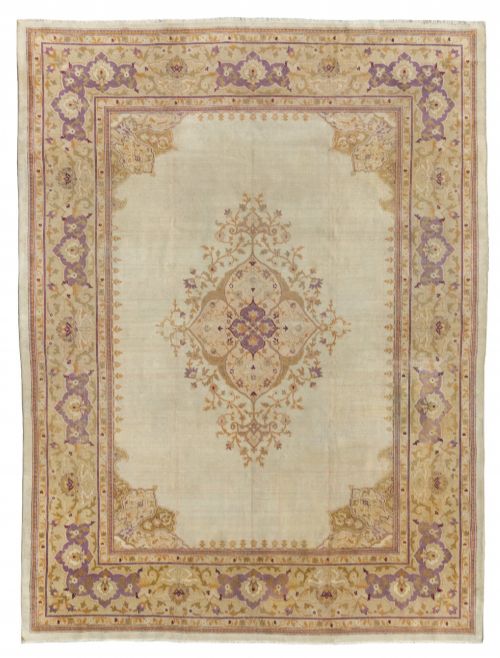


Vintage Indian Wool Carpet
A vintage indian wool carpet brings rich hues and traditional patterns straight to your floor.
Vintage Indian Wool Carpet
A vintage indian wool carpet represents a tradition of hand-knotted and embroidered floor coverings originating from the Indian subcontinent. When buyers search for a vintage indian wool carpet, they encounter various styles including Amritsar, Agra, Mughal, and Traditional Kashmiri designs spanning the nineteenth and early twentieth centuries.
Many items display regional influences such as Indo-Persian motifs or Timuri Baluch designs found in jail Agra carpets. Buyers will find both room-sized floor coverings exceeding three metres in length and smaller format rugs suitable for compact spaces.
Materials and construction
The construction of these floor coverings relies primarily on natural wool pile worked onto cotton foundations. Artisans utilised hand-knotting and specialised embroidery techniques such as crewelwork and chain stitch to build intricate patterns.
Weavers in centres like Agra and Amritsar sourced local wool and employed traditional dyeing methods to achieve deep, lasting colours. The backing structures consistently utilise durable cotton warps and wefts to support the heavy wool pile.
Factors of quality
Quality in these textiles depends on the density of the knotting or the fineness of the embroidery work across the field. Tighter construction yields sharper botanical and geometric motifs that retain their definition over decades of use.
The depth and preservation of natural dye colours also distinguish superior examples from standard ones. Well-preserved pieces maintain rich tones across the central medallion and border systems without excessive fading.
The Vintage Indian Wool Carpet Glossary
- Amritsar
- A style of carpet originating from the Punjab region known for complex patterns and high-grade wool. These pieces often exhibit strong Persian influence blended with local colour palettes.
- Agra
- A designation for carpets produced in northern weaving centres, frequently associated with institutional or jail production. They display robust construction and traditional field designs.
- Chain stitch
- An embroidery technique using hooked needles to form looping stitches that create textured patterns on a fabric ground. It appears frequently on Kashmiri rugs.
- Crewelwork
- Surface embroidery executed with wool yarn on a plain cotton or linen foundation. This method produces decorative wall hangings and textile coverings.
- Warp
- The vertical foundation threads stretched lengthwise on a loom before weaving begins. Cotton warps provide structural stability for wool pile carpets.
Vintage Indian Wool Carpet: Frequently Asked Questions
What is an Amritsar carpet?
An Amritsar carpet is a traditionally woven floor covering originating from the Punjab region of northern India. These pieces date back to the nineteenth century and often feature detailed floral or geometric layouts.
Weavers in Amritsar utilised hand-knotted wool pile on cotton foundations, blending regional aesthetic traditions with classical medallion formats.
How do I care for a wool carpet?
Regular gentle vacuuming without a rotating brush roll helps remove loose dust from the wool pile. Professional cleaning suited for antique textiles preserves the natural fibres.
Keep these rugs out of direct sunlight to prevent colour fading over time. Using an appropriate underlay prevents slipping and reduces wear from foot traffic.
What distinguishes an Agra carpet?
Agra carpets stem from production centres in northern India, with many historical examples linked to regional jail workshops. They typically showcase durable construction with dense wool pile.
Design elements often include classic all-over patterns, Indo-Persian motifs, and Timuri Baluch design influences executed in rich, enduring tones.
Are these rugs suitable for daily use?
These historical wool carpets were built for domestic flooring and handle normal foot traffic well. The natural resilience of wool fibres allows them to withstand regular household living.
Placement in lower-traffic areas or bedrooms helps preserve delicate chain stitch embroidery or crewelwork wall hangings from excessive friction.