


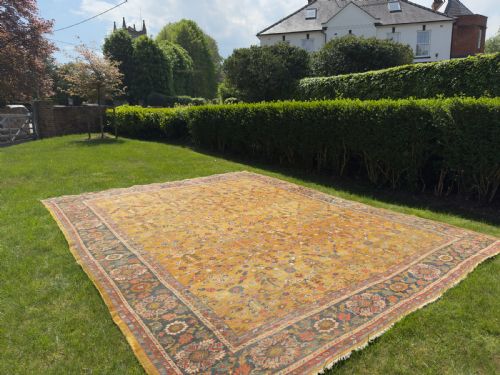


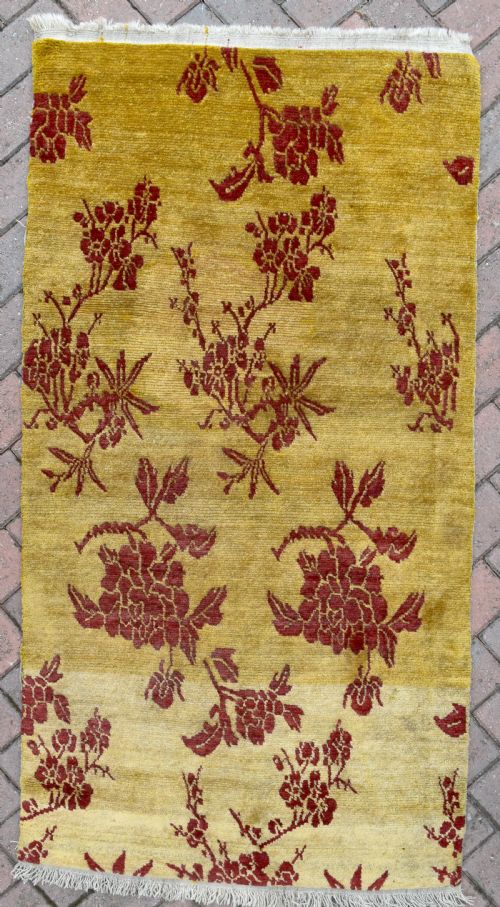
Gold Wool Area Rug
A gold wool area rug brings warmth and deep texture to a room, drawing on centuries of weaving traditions from across Asia.
Gold Wool Area Rug
When you search for a gold wool area rug, you encounter hand-knotted floor coverings spanning the late nineteenth and early twentieth centuries. These pieces originate from diverse regions including Anatolia, Persia, India, China, Tibet and Afghanistan, each bringing distinct regional aesthetics to the floor.
The selection on this page centres on large carpets and smaller village rugs employing rich wool pile. You will find grand room-sized Persian and Indian carpets alongside intimate tribal mats and seating rugs from village workshops.
Dating primarily from the 1880s to the 1930s, these textiles showcase traditional dying methods that yield lustrous golden tones. The variety ranges from large-scale Oushak and Ziegler carpets to smaller Afghan village pieces and Chinese Ningxia mats.
How they were made
These textiles rely primarily on a foundation of sturdy cotton warp and weft threads supporting a dense wool pile. Artisans knotted the wool by hand onto the vertical looms, building up intricate patterns and durable surfaces designed for daily use.
Natural dyeing techniques applied to the wool create the characteristic gold, ivory and burgundy colourways seen across the pieces. The interplay of hand-spun yarn and traditional dye baths gives each rug its subtle tonal variation and soft sheen.
Some small seating mats are so compact they were originally carried from room to room for personal comfort.
What varies in quality
The distinction between standard village pieces and fine workshop carpets lies in the density of the knotting and the complexity of the design. Master weavers in urban centres achieved greater precision and finer detail, whereas tribal weavers produced bolder, simpler geometries.
Material selection and dye depth also separate the categories, with superior examples exhibiting richer wool quality and more nuanced colour transitions. The overall harmony of the composition and the integrity of the original borders dictate the standing of each textile.
The Gold Wool Area Rug Glossary
- Pile
- The vertical or diagonal loops of yarn that form the usable surface of the carpet. This dense layer of wool absorbs foot traffic and displays the woven design.
- Warp
- The longitudinal threads stretched tightly on the loom before weaving begins. These strong cotton or wool strands form the structural backbone of the rug.
- Weft
- The horizontal threads passed alternately over and under the warp threads to lock the knots in place. Together with the warp, they form the sturdy foundation grid.
- Medallion
- A large, symmetrical central ornament placed in the field of the carpet. This focal motif often anchors the entire composition of classical oriental rugs.
- Khaden
- A traditional Tibetan sleeping or seating rug. These smaller format pieces often feature distinctive border arrangements and symbolic motifs.
Gold Wool Area Rug: Frequently Asked Questions
Where were these rugs made?
These textiles originate from various weaving centres across Asia, including Anatolia, Persia, Northern India, China, Tibet and Afghanistan. Each region developed distinct stylistic traditions and knotting techniques.
Workshop traditions in cities differed significantly from the rural methods used in remote villages and nomadic encampments.
How do I care for a wool rug?
Regular gentle vacuuming without a beater bar removes surface dust and keeps the wool pile lifted. Professional cleaning by a specialist in antique textiles preserves the natural lanolin in the wool.
Keeping the rug out of harsh direct sunlight prevents the natural dyes from fading prematurely over the years.
How can I tell the age of a rug?
Age is determined by examining the specific weave structure, the characteristics of the wool, and the types of natural dyes employed. Stylistic markers and regional design motifs also provide reliable clues to the decade of production.
Comparing construction methods against documented examples from the late nineteenth and early twentieth centuries helps narrow down the period.
Are these rugs suitable for heavy traffic?
Traditional wool rugs with a dense pile were constructed to withstand generations of daily domestic use. The natural resilience of wool fibres makes them exceptionally durable underfoot.
Placing a suitable underlay beneath the carpet provides additional cushioning and prevents slipping on hard floors.