

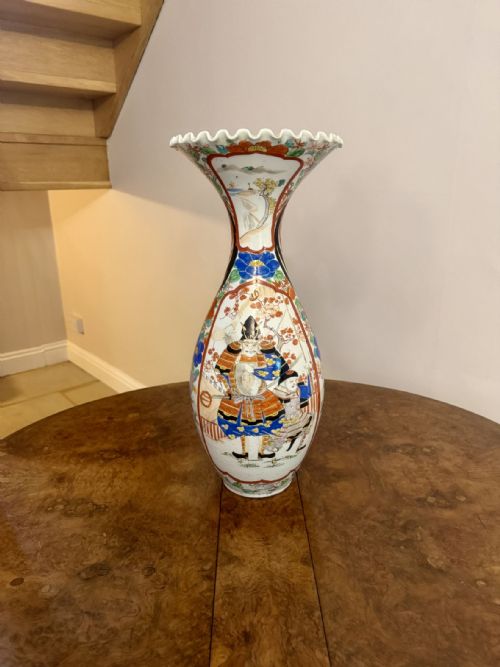
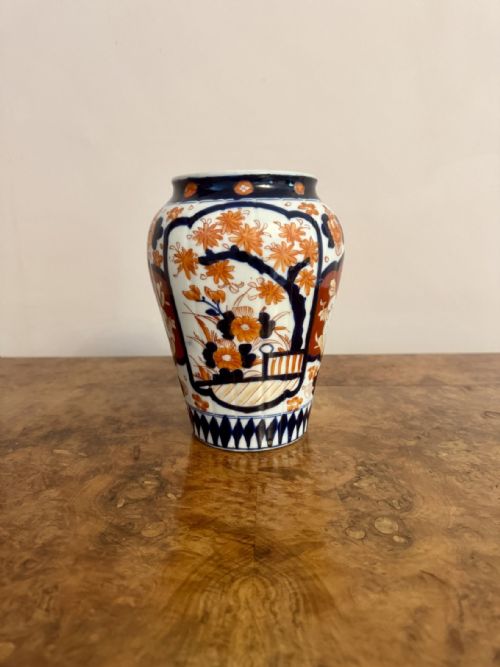
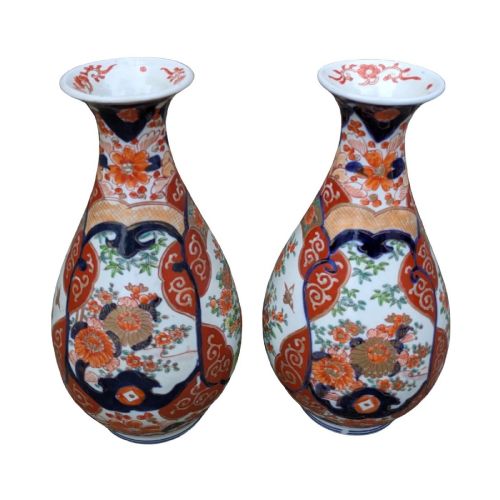


Traditional Imari Ware Vase
These traditional imari ware vase examples bring bold palettes and rich detailing to a room, offering the decorative presence collectors seek.
Traditional Imari Ware Vase
When searching for a traditional imari ware vase, you encounter decorative vessels spanning the late nineteenth century, including the Meiji period. The selection on this page centres on porcelain vases and shaped vases, often found as matched pairs or individual decorative pieces.
These items originate from Japanese workshops and reflect distinct nineteenth century imari aesthetics. Most examples date from the decades between eighteen seventy and nineteen ten, presenting varied forms from standard vessels to hexagonal shapes.
How they were made
Maker construction relies on ceramic porcelain formed into vases and fired before receiving hand-applied decoration. Artisans then added enamel pigments and glaze to create the characteristic surface patterns.
Many examples incorporate gold leaf or gilding, applying gilt highlights over the glaze to catch the light. This layered technique combines painted pigments with metallic accents across the porcelain body.
Traditional Imari Ware Vase Retail Price Guide 2026
Typical asking prices for traditional imari ware vase among the pieces listed under this phrase on Sellingantiques today, from the lower quarter to the upper quarter. They describe what is for sale here now, not the wider market.
Materials recorded across the available items include enamel, glaze, gold leaf, and gilt applied to porcelain.
What varies in quality
Quality rests upon the precision of the hand-painted enamel work and the richness of the gold leaf or gilding. Superior examples display crisp definition in the decorative motifs and balanced proportions across the porcelain form.
Scale and format also distinguish the pieces, with large pairs commanding attention through their substantial presence. The complexity of shaped bodies, such as hexagonal profiles, adds another layer of distinction to the craftsmanship.
The Traditional Imari Ware Vase Glossary
- Imari
- A traditional style of Japanese porcelain featuring a distinctive palette, usually combining underglaze blue with iron red and gilt highlights. This aesthetic developed in Hizen province and gained popularity in the West during the nineteenth century.
- Meiji Period
- The era of Japanese history lasting from eighteen sixty-eight to nineteen twelve, marked by extensive international trade and artistic production. Pieces from this time often show exceptional technical skill in ceramics and decorative arts.
- Enamel
- A decorative glass-like substance fused to the porcelain surface through firing to impart vibrant colour. In these vessels, enamel works alongside glaze to build up complex patterns.
- Gilt
- A thin layer of gold applied to the surface of the porcelain to provide metallic accents. This technique enhances the decorative impact of the painted designs.
- Hexagonal
- A six-sided geometric profile occasionally utilised for vase bodies. This shaped form requires careful moulding during the porcelain creation process.
Traditional Imari Ware Vase: Frequently Asked Questions
How old is my imari vase?
Dating relies on stylistic markers, manufacturing methods, and recorded periods such as the Meiji era or the broader nineteenth century. These vessels typically date from eighteen seventy to nineteen ten.
Examining the base, glaze texture, and enamel saturation helps narrow down the production decade. Comparing the form against known nineteenth century styles confirms the era of origin.
Are these vases functional or decorative?
These pieces function primarily as decorative objects rather than utilitarian vessels for water or flora. Their delicate porcelain bodies and layered enamel surfaces suit display on mantels or cabinets.
Placing them in prominent positions allows the gold leaf and rich palette to stand out within a room. Care should be taken to protect the gilt highlights from abrasive cleaning.
What colours define imari ware?
Traditional imari pieces are known for a striking combination of underglaze cobalt blue and iron red. Artisans layered these primary hues with supplementary colours and gold leaf.
This palette creates a high-contrast visual effect across the porcelain body. The balance of blue, red, and gilt remains a hallmark of the style.
How do I care for antique porcelain?
Maintenance involves gentle dusting with a soft, dry cloth to prevent accumulation on the glazed and gilded surfaces. Avoid using chemical cleaners or water that might disturb the enamel pigments.
Keeping the vessels away from direct sunlight preserves the vibrancy of the painted details. Stable placement on a secure surface prevents accidental knocks to the porcelain.