






Large Japanese Decorative Vase
When you search for a large japanese decorative vase, you find heavy floor-standing pieces and table urns shaped by Meiji artisans.
Large Japanese Decorative Vase
A large japanese decorative vase comprises floor-standing urns, palace vessels, and heavy table pieces designed to dominate a room. These objects emerge primarily from the Meiji period, alongside Edo, Taisho, and Showa examples.
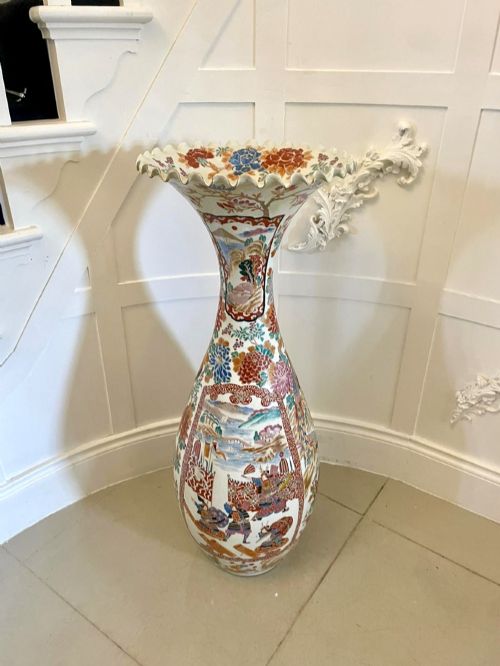
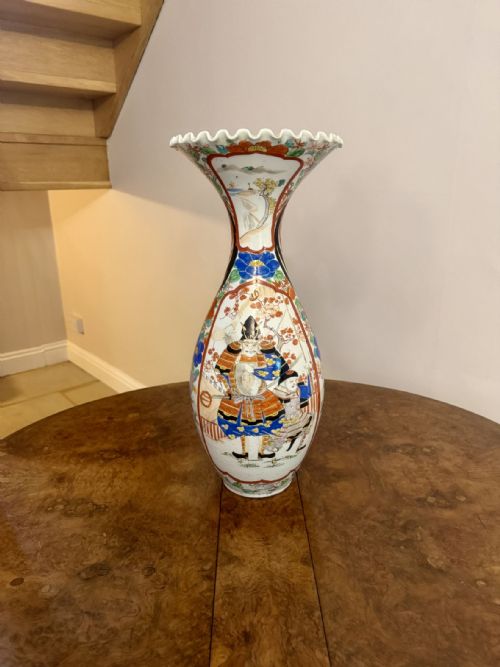
The selection on this page centres on Imari palettes, Satsuma earthenware, Kutani porcelain, and bronze or cloisonné enamel bodies. Forms range from covered jars and two-handled urns to ikebana baskets and conversion table lamps.
How they were made
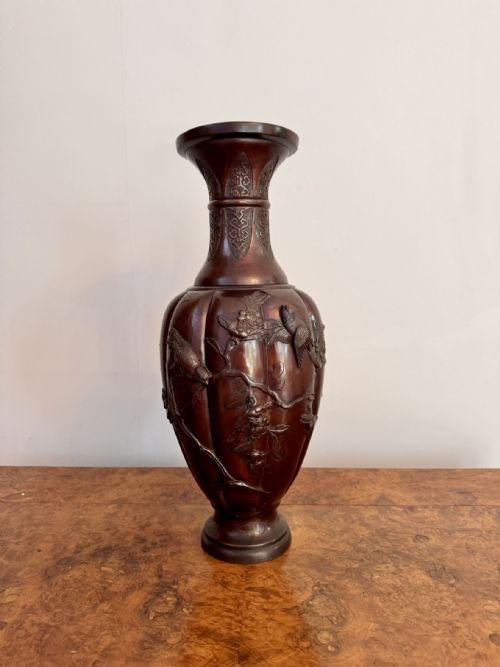
Potters shaped porcelain and earthenware by hand before applying cobalt blue, Imari pigments, or detailed Satsuma enamels with gold leaf accents. Bronze and brass vessels utilised lost-wax casting, often incorporating champlevé enamel or mixed metal onlaid elements.
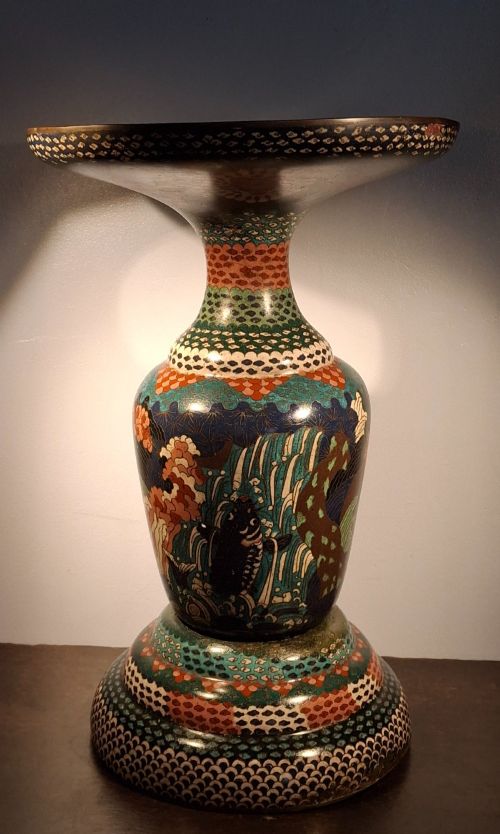
Cloisonné pieces relied on fine silver wire cells soldered to metal bases, filled with red or coloured enamel pastes and fired repeatedly. Lacquer panels and carved wood components were frequently integrated into large nineteenth-century display forms.
Large Japanese Decorative Vase Retail Price Guide 2026
Typical asking prices for large japanese decorative vase among the pieces listed under this phrase on Sellingantiques today, from the lower quarter to the upper quarter. They describe what is for sale here now, not the wider market.
A towering phoenix motif watches quietly from the surface of a ninety-one-centimetre palace vase.
What varies in quality
Quality rests on the crispness of the hand-painted detail and the density of the gold leaf or enamel work across the body. Superior examples display disciplined brushwork on Satsuma earthenware and precise wire alignment in cloisonné.
Weight and balance distinguish standard production vessels from palace-scale bronze and porcelain creations. Signed pieces from known makers command attention through sharper surface relief and deeper cobalt tones.
Ando Jubei·Kinkozan·Noritake
The Large Japanese Decorative Vase Glossary
- Imari
- A style of Japanese porcelain featuring a distinct palette of underglaze blue, iron red, and gilt. It originated in Arita and was exported in large quantities during the Edo and Meiji periods.
- Satsuma
- An earthenware pottery type with a crackle-glaze finish, typically decorated with polychrome enamels and raised gold. It became exceptionally popular for decorative export ware.
- Cloisonné
- A metalwork technique where flat wires form compartments on a vessel surface that are filled with enamel. Ginbari and basse-taille variations add textured foil beneath translucent coloured layers.
- Kutani
- Japanese porcelain known for bold colour schemes, frequently dominated by greens, reds, and golds. Pieces often depict figures, birds, and intricate floral patterns.
- Meiji Period
- The era spanning from 1868 to 1912, marking a major opening in international trade. It produced much of the elaborate decorative metalwork and porcelain found in Western collections.
Large Japanese Decorative Vase: Frequently Asked Questions
How were these large vases displayed originally?
Large vessels stood directly on the floor in entrance halls or principal reception rooms, often acting as architectural anchors for the interior.
Pmaller heavy urns occupied prominent table tops, sometimes paired on either side of a fireplace or cabinet.
Can I convert a bronze vase into a lamp?
Many surviving pieces arrive already converted into table lamps with fitted electrical hardware from earlier decades.
Undamaged antique bronze and porcelain bodies can be adapted by professional electricians using methods that preserve the original structure.
How do I identify a Meiji period piece?
Meiji pieces typically exhibit dense, highly refined decorative schemes combining gold leaf, complex enamel work, and deep relief casting.
Imperial era production shifted toward elaborate export goods, distinguishing them from earlier, more restrained domestic Edo utensils.
How should I clean antique cloisonne enamel?
Dust surfaces gently with a soft dry brush to prevent accumulation in the fine wire channels.
Avoid liquid cleaners or chemical polishes, as moisture can penetrate hairline fractures in aged enamel or tarnish exposed base metals.