


Traditional Hunt Landscape
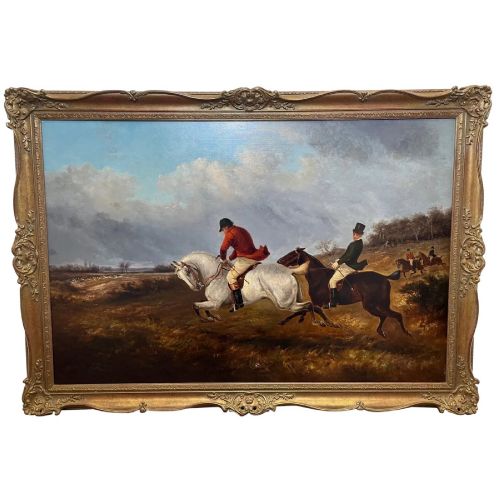
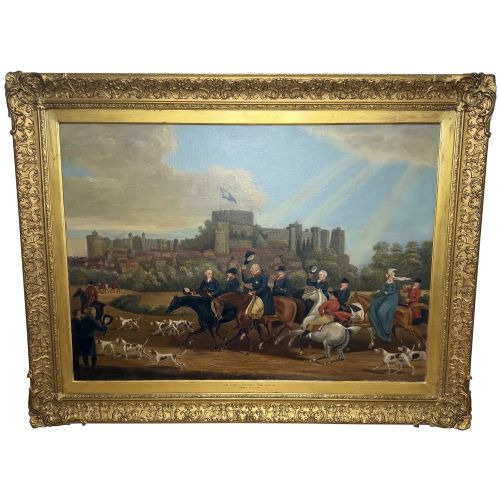
A traditional hunt landscape captures horses, hounds and riders sweeping across open countryside in oils.

Traditional Hunt Landscape
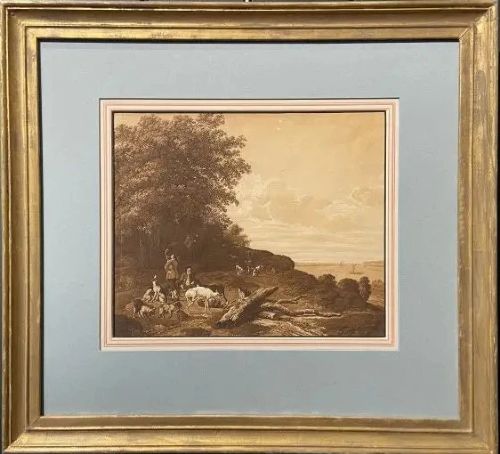
When you search for a traditional hunt landscape, you encounter oil paintings and watercolours depicting equestrian pursuits, sporting dogs and rural chases.
The pieces on this page span from the seventeenth century through the Victorian and Edwardian eras up to the mid-twentieth century, with nineteenth-century works forming the largest group.
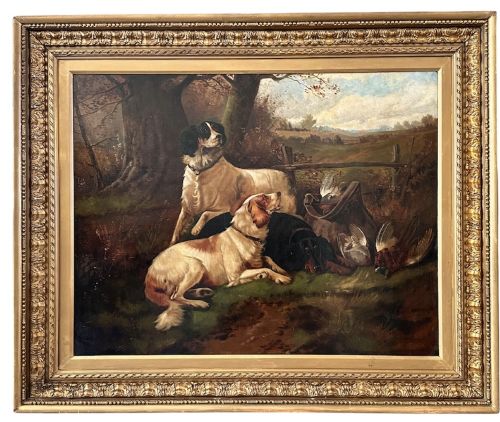
Subjects range from grand coaching scenes and full-cry fox hunting gatherings to quieter portraits of gun dogs and setters resting in winter snow or moorland settings.
How They Were Made
Artists painted these works primarily with oil paint on canvas, wood panels or paper supports, occasionally using watercolour for lighter compositions.
Finished canvases typically sat within traditional wooden frames, often enhanced with giltwood and gold leaf to elevate the presentation of the rural scenery.
Several canvases squeeze in so many barking hounds and galloping hooves you can practically hear the mud flying.
What Varies in Quality
Quality rests upon the artist's ability to render the anatomy and motion of galloping horses and hounds with anatomical conviction.
The depth and atmosphere of the surrounding countryside landscape distinguish finer works from simpler compositions.
Thomas Smythe·Johannes Lingelbach·John Sargent Noble·George Wright·Philip Henry Rideout·George Armfield·Fannie Moody·Colin Graeme Roe·John Frederick Herring Jnr·John Charles Tunnard·John Sanderson-Wells·Michael Lyne·Henri Schouten·Thomas Ivester Lloyd·Guillaume Urban Régamey·George Goodwin Kilburne·Thomas Blinks·James Ward·William Albert Clark·Godfrey Douglas Giles·Wilfred Bailey·Samuel John Egbert Jones·Dean Wolstenholme·Charles Ashmore
The Traditional Hunt Landscape Glossary
- Oil on canvas
- Pigments bound in drying oil applied to a woven fabric stretched across a wooden frame. This medium allowed artists to build rich textures and deep tones for outdoor scenes.
- Giltwood
- Wood carved and coated with gold leaf or metallic paint. It provides a bright, reflective border that complements traditional sporting artworks.
- Full cry
- The collective baying of hounds when they sight and pursue their quarry. In art titles, it denotes the moment of highest action in the field.
- Sporting art
- Depictions of animals, hunting, shooting and equestrian events. This genre flourished in Britain throughout the eighteenth and nineteenth centuries.
- Watercolour
- Paint made with water-soluble pigments on paper. It creates transparent washes well suited for delicate landscape details.
Traditional Hunt Landscape: Frequently Asked Questions
What periods do these paintings date from?
The works span multiple centuries, ranging from seventeenth-century Dutch golden age pieces through Georgian and Victorian periods up to mid-twentieth-century examples.
Nineteenth-century paintings form the core of the selection, reflecting the peak era of British sporting art.
How were these hunt scenes used historically?
Wealthy landowners and patrons commissioned sporting art to record their prize horses, favoured packs of hounds and memorable days in the field.
These artworks traditionally hung in country houses to celebrate rural pursuits and equestrian heritage.
How do I hang a large sporting oil painting?
Large canvases require secure wall fixings anchored into studs or masonry to support the weight of the timber stretcher and heavy giltwood frame.
Position the centre of the painting at standard eye level in a room with balanced lighting to showcase the landscape details.