



Antique Fox Hunting Scene
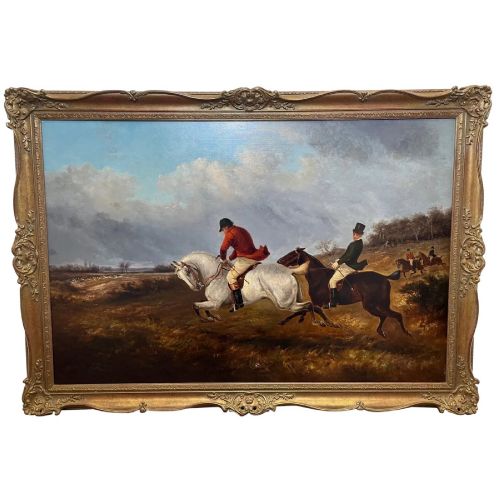
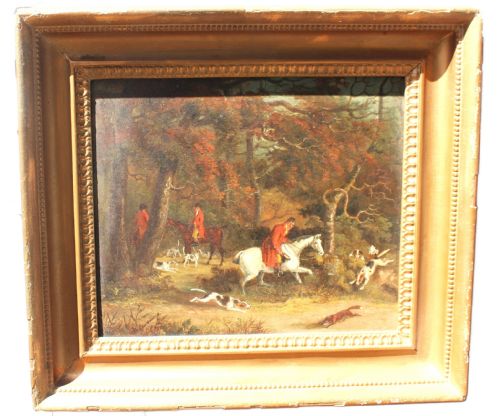
An antique fox hunting scene captures the drama of the chase in oil, watercolour, and engraved paper from the nineteenth and early twentieth centuries.

Antique Fox Hunting Scene
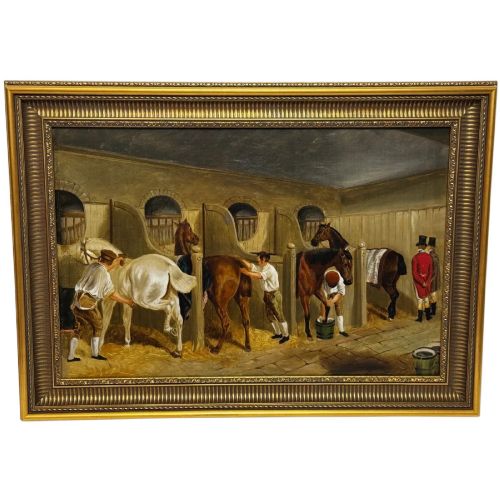
When you search for an antique fox hunting scene, you encounter works celebrating equestrian sport, hounds, and country pursuits across Victorian and Edwardian Britain. These pieces depict key moments of the chase, from the meet and the gallop across landscape to the kill and the hunt in full cry. Oil paintings on canvas and panel dominate the selection, alongside framed watercolours, hand-coloured engravings, and decorated objects.
The material form varies considerably depending on the original commissioning purpose and the artistic medium chosen by the painter or printmaker. You find grand framed oils intended for country houses alongside smaller watercolours, glassware, and papier-mâché decorative trays. Victorian sporting art forms the core of what survives, reflecting a period when equestrian painting reached a distinct level of popularity among British collectors.
Assessing quality
Quality rests primarily on the anatomical accuracy of the horses and hounds and the artist's ability to convey motion and tension. Works by named painters exhibit a superior command of perspective, landscape detail, and character expression compared to unsigned studio pieces.
The preservation of the surface layer matters significantly, particularly in oil paintings where craquelure or old restoration can alter the visual balance. Crispness in engraved lines and vibrancy in hand-coloured prints or enamelled glass also separate standard decorative items from superior collector pieces.
Hounds and horses share the canvas with the occasional startled duck or country landscape.
Thomas Smythe·John Arthur Lomax·Philip Henry Rideout·George Armfield·Charles Faulkner·John Sanderson Wells·Thomas Ivester Lloyd·Guillaume Urban Régamey·George Goodwin Kilburne·William J Hodgson·Charles Hunt·Francis Calcroft Turner·Frank Dadd·Edward B Herberte·Jennens & Bettridge
The Antique Fox Hunting Scene Glossary
- Meet
- The gathering of riders, hounds, and followers at the designated starting point before the hunt commences. This subject forms a frequent focal point for Victorian sporting artists.
- View halloo
- The shout given when the fox is first seen breaking covert and running in the open. Artists often title dynamic pursuit compositions with this phrase.
- Papier-mâché
- A composite material made of paper pulp or sheets of paper mixed with glue and pressed, used here for durable decorative trays painted with rural scenes. Jennens & Bettridge produced notable examples in the nineteenth century.
- Sporting art
- A genre of painting and illustration dedicated to depicting field sports, equestrian events, and animals. It flourished in Britain throughout the Georgian and Victorian eras.
- Craquelure
- The fine network of minute cracks appearing on the surface of old oil paintings as the paint film ages. It serves as a natural indicator of age in canvas and panel works.
Antique Fox Hunting Scene: Frequently Asked Questions
What periods do these pieces come from?
The works span the Georgian, Victorian, and Edwardian eras, with the majority originating in the nineteenth century. Production extends into the early twentieth century through artists capturing traditional rural subjects.
Dates are often supported by artist signatures, stylistic conventions, or inscribed publication details on engravings and watercolours.
How were hunting scenes used originally?
Large oil paintings were commissioned to hang in country houses, estate reception rooms, and libraries to celebrate local packs and equestrian pursuits. Smaller watercolours, engravings, and painted trays served as decorative accessories for parlours and dining rooms.
Enamelled glass and card cases provided portable, functional items adorned with sporting motifs for everyday gentlemanly use.
How do I care for an antique oil painting?
Keep paintings away from direct sunlight, high humidity, and rapid temperature fluctuations to protect the canvas and wood panels. Dust the surface gently with a soft, dry brush without applying pressure to the paint layer.
Avoid using water or chemical cleaners, and consult a professional conservator if cleaning or structural repair becomes necessary.
How do I distinguish an original painting from a print?
Examine the surface with a magnifying glass to check for brushstrokes, pigment texture, and the raised gloss of dried oil paint. Prints display a uniform dot pattern, flat ink application, or engraved plate lines pressed into the paper.
Watercolours show transparent washes of colour on paper grain, whereas engravings rely on printed ink lines combined with hand-applied watercolour washes.