
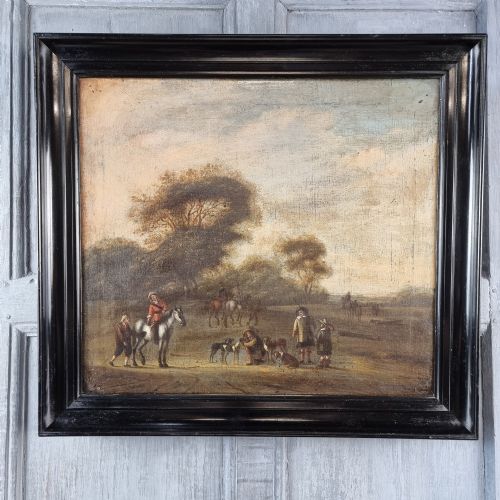


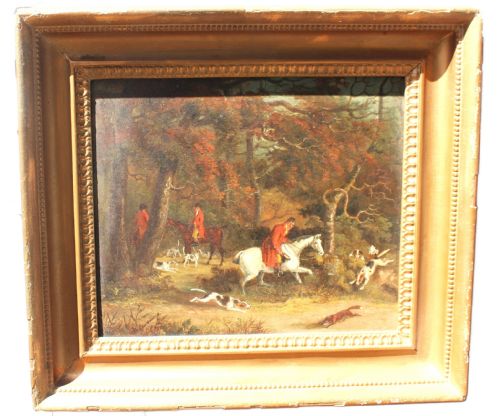


Horse and Hound Painting
A horse and hound painting captures the speed and tradition of the chase through oil on canvas and watercolour.

Horse and Hound Painting
A horse and hound painting depicts the dynamic energy of equestrian sport, field sports, and rural pursuits across several centuries. These works range from intimate watercolours to large oil paintings on canvas, often capturing specific moments of the hunt like the kill, the view halloo, or the quiet landscape aftermath.
The pieces on this page lean heavily towards nineteenth-century British sporting art and traditional hunting scenes, alongside earlier seventeenth-century landscapes and later twentieth-century interpretations. Painters record handlers, mounts, and packs of hounds moving through open countryside, preserving the social and sporting history of the period.
Subjects vary from individual artist studies of huntsmen and hounds to sweeping coaching scenes and detailed portraits of packs in action. Buyers encounter framed works in gilt wood as well as unframed canvases, reflecting the original presentation of domestic sporting art.
How They Were Made
Artists create these works primarily using oil paint on canvas or board, applying pigment to capture the texture of coats, foliage, and earth. Watercolours on paper also appear among the selections, offering a lighter touch for detailed studies of horses and hounds.
Frames play a significant role in the construction, frequently employing gilt wood or carved wood moulding to complement the artwork. These frames often date from the same period as the painting, providing structural integrity and visual weight to the piece.
Listings feature oil on canvas, watercolours, and gilt wood frames spanning the seventeenth to the twentieth centuries.
What Varies in Quality
The anatomical accuracy of the horses and hounds distinguishes superior works from simpler renderings, with master painters capturing muscle tension and movement with precision. Compositional balance between the figures and the surrounding landscape also marks the difference between a standard record and a compelling artwork.
The handling of light and atmospheric depth dictates the artistic merit of each piece, particularly in how the painter portrays open skies and woodland shadows. Original frames in good condition enhance the overall integrity of the painting.
George Wright·John Sanderson Wells·Heywood Hardy·Guillaume Urban Régamey·George Goodwin Kilburne·Edward B. Herberte·Wilfred Bailey·Henry Alken
The Horse and Hound Painting Glossary
- Sporting Art
- A genre of painting that depicts rural sports, equestrian subjects, hounds, and field pursuits. This tradition flourished in Britain during the eighteenth and nineteenth centuries.
- View Halloo
- The traditional cry raised when hounds sight the quarry during a hunt. Painters use this dramatic moment to structure dynamic outdoor compositions.
- Gilt Wood
- Wood carved and covered with a thin layer of gold leaf or gold paint. This material forms the traditional framing for nineteenth-century oil paintings.
- Watercolour
- A painting method where fine pigment is suspended in a water-based solution on paper. These works offer delicate detail compared to heavy oil on canvas.
Horse and Hound Painting: Frequently Asked Questions
What is a horse and hound painting?
A horse and hound painting is a work of fine art focusing on equestrian sports, hunting dogs, and rural landscapes. These pieces record the traditions of field sports primarily from the nineteenth century.
Artists use oil on canvas or watercolour to depict huntsmen, packs, and horses in motion. The works serve as historical records of rural life and sporting culture.
How were these paintings displayed?
These paintings typically hang in traditional domestic interiors, mounted in decorative wooden frames. Gilt wood frames are common for nineteenth-century oils, adding brightness and weight to the composition.
Collectors often place them in studies, hallways, or reception rooms alongside other sporting art. The framing protects the canvas while completing the aesthetic presentation of the period.
How do I identify the period?
Dating relies on stylistic clues, framing materials, and the clothing worn by the figures in the scene. Nineteenth-century works often show distinct Victorian dress and precise handling of animal anatomy.
Signatures, artist records, and canvas stamps help confirm the exact era. Earlier works from the seventeenth century feature darker palettes and different landscape conventions.
Are these paintings original?
The selections include original vintage and antique works created by listed artists and traditional schools. Each piece reflects the hand of the painter through visible brushwork and material wear.
Archives and recorded signatures establish the authenticity of these historical paintings. Collectors value the direct link to past artistic traditions found in original canvas and watercolour formats.