
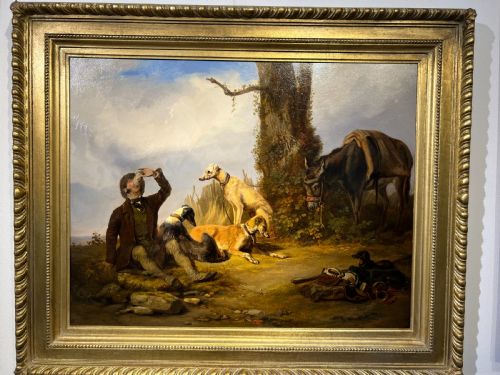

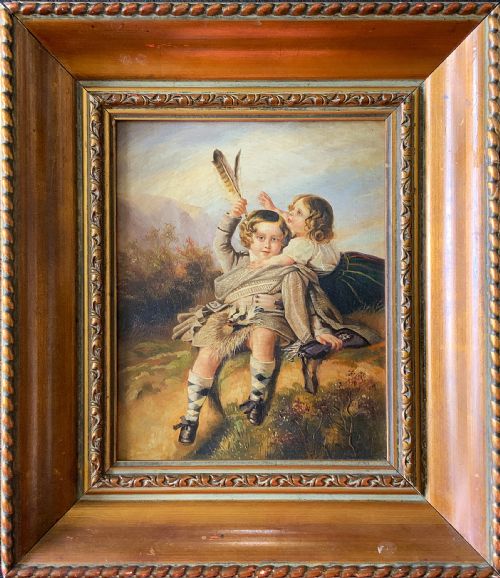


Victorian Hunt Oil Painting
A victorian hunt oil painting captures horses, hounds and field sports in traditional canvases.

Victorian Hunt Oil Painting
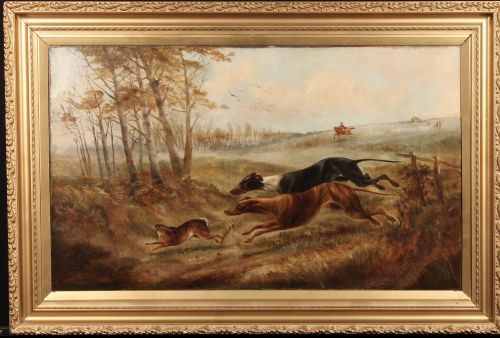
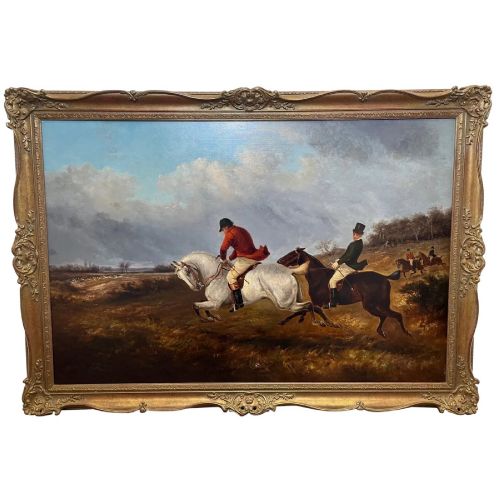
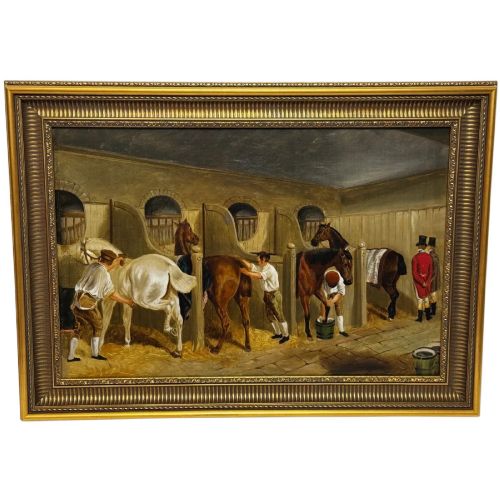
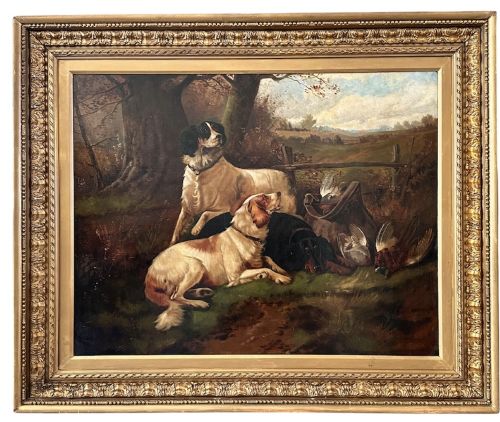
A victorian hunt oil painting depicts mounted riders, packs of hounds and sporting dogs within rural landscapes or country estates. These works reflect the high popularity of field sports during the nineteenth century, ranging from intimate portrayals of individual gun dogs to sweeping panoramas of hunts in full motion. Works originating from this period frequently celebrate equestrian subjects alongside game animals and rural pastimes.
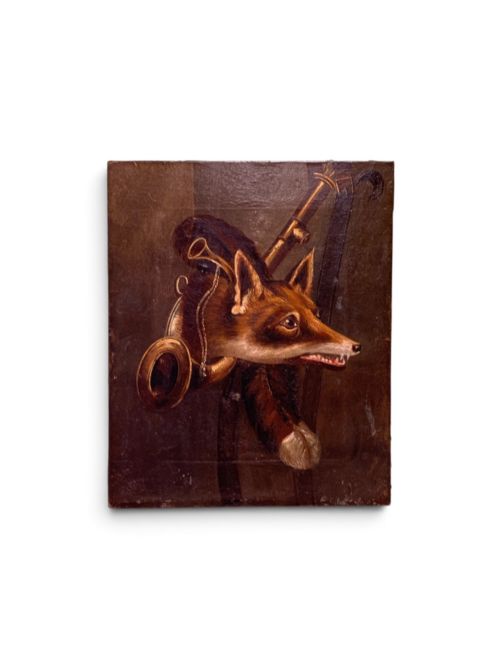
The most common examples encountered on this page belong to the nineteenth century, created using oil paint on canvas or wood panels. Many canvases survive housed in their original giltwood or gilt frames, preserving the aesthetic presentation favoured by period collectors. Buyers will find both detailed portraits of specific sporting dogs and dramatic narratives capturing moments from renowned hunts.
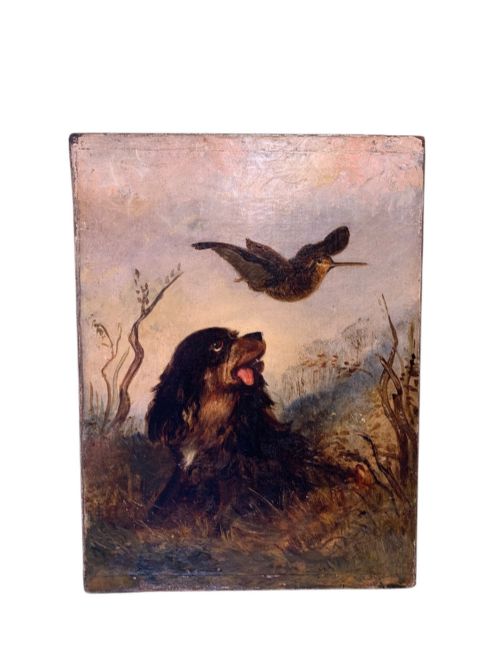
Subjects stretch from the Berkeley Hunt scenes to intimate studies of terriers, spaniels and setters resting after the day's sport. Highland sporting art and equestrian studies also form a substantial part of these selections, often connecting the human participants with working animals in natural environments. Each piece provides a visual record of historical sporting traditions.
Materials and technique
Artists applied oil paint to stretched canvas or prepared wood boards, building depth through layered glazes and opaque pigments. This medium allowed painters to capture the sheen of a horse's coat, the texture of a hound's fur and the atmospheric light of winter landscapes.
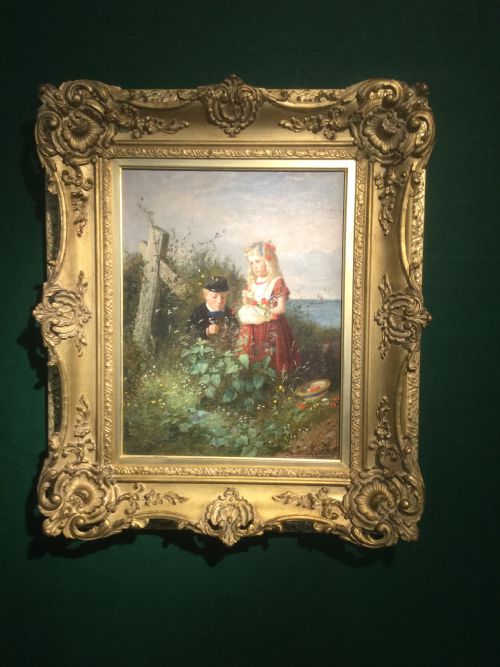
Surviving works are frequently mounted within heavy wooden frames finished with gold leaf or giltwood highlights. These frames formed an integral part of the presentation, designed to complement the rich tones of the oil compositions within domestic interiors.
Several Victorian canvases capture terriers standing guard over decidedly trapped rats and caged nuisances.
Evaluating quality
Quality rests upon the artist's ability to render the anatomy, movement and expression of animals with precision and life. Superior compositions display careful attention to the interaction between hounds, horses and the surrounding terrain, rather than relying on stiff or formulaic arrangements.
The handling of light and atmospheric depth distinguishes exceptional works from more modest studio productions. Furthermore, the survival of the original gilt frame and a well-documented provenance enhance the standing of a canvas within the broader field of sporting art.
Michelangelo Meucci·John Sargent Noble·Charles Hunt·Edwin Henry Landseer·Edgar Hunt·John Frederick Herring Senior·Benjamin Blake·John Arthur Lomax·Colin Graeme Roe·Charles Faulkner·Fannie Moody·Robert Cleminson·John Frederick Herring Jnr·Paul Jones·John Charles Tunnard·Jules Chardigny·Alfred Duke·Heywood Hardy·Robert Cleminson·George Goodwin Kilburne·John Hunter Thompson·Millson Hunt·J Langlois·John Alfred Wheeler
The Victorian Hunt Oil Painting Glossary
- Oil on Canvas
- A traditional painting medium where oil paints are applied to a woven fabric support stretched across a wooden frame. This combination allows for rich colour blending and durable preservation.
- Giltwood
- Wood carved and coated with gold leaf or metallic gilt paint to create a decorative frame surface. It provides a bright, reflective border that enhances the darker tones of oil paintings.
- Sporting Art
- Artwork dedicated to the depiction of field sports, equestrian subjects, hunting and domestic animals. This genre gained immense popularity in Britain throughout the nineteenth century.
- Trompe l'Oeil
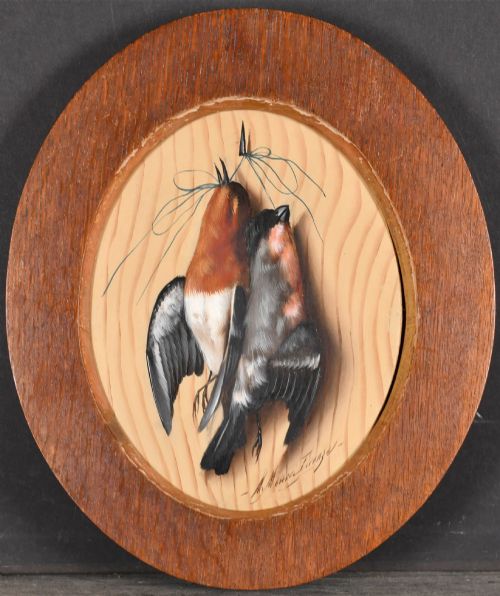
- An artistic technique designed to create an optical illusion of three-dimensional space and reality upon a flat surface. Such paintings often depict hanging game or everyday objects with striking accuracy.
- Provenance
- The documented history of ownership and origin for a work of art. A strong provenance helps confirm attribution to a specific artist.
Victorian Hunt Oil Painting: Frequently Asked Questions
What subjects appear in these paintings?
These works primarily feature horses, hunting hounds, gun dogs and riders engaged in rural field sports. Scenes range from quiet portraits of individual pointers and setters to large gatherings of hunts across winter landscapes.
Additional subjects include farmyard scenes, still life compositions with game birds, and portraits of equestrian animals in moorland settings.
How should I display these frames?
Most of these pieces are housed in heavy giltwood frames that require sturdy wall fixings to support their weight safely. Placing them away from direct sunlight and damp environments helps protect the oil pigments and the underlying canvas.
Matching the traditional aesthetic of the frame to a classic interior setting enhances the visual impact of the artwork.
Who painted these sporting scenes?
The works originate from nineteenth-century animal and sporting artists who specialised in capturing livestock, hounds and equestrian subjects with anatomical accuracy. Many pieces are attributed to recognised painters of the period, while others remain unsigned examples of the genre.
Several artists established strong reputations for depicting specific dog breeds and countryside pursuits.
How do I identify the period?
The dating of these paintings relies on stylistic conventions, costume details of the human figures, and the construction methods of the canvas and frame. Nineteenth-century works typically employ traditional pigment mixtures and specific stretching techniques common to the Victorian era.
Signatures, inscriptions on the reverse, and historical framing styles further assist in establishing the age of a piece.