
Traditional Gilt Frame Painting
A traditional gilt frame painting brings warmth and a sense of history to a room through layered gold leaf and oil on canvas.
Traditional Gilt Frame Painting
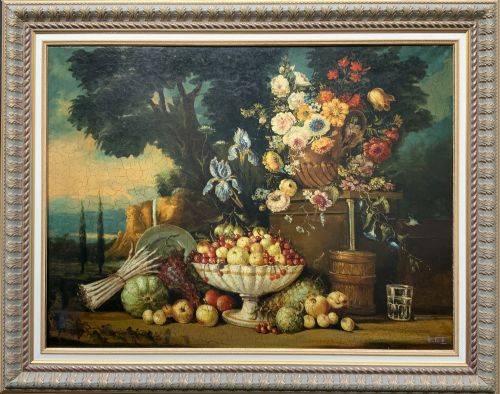
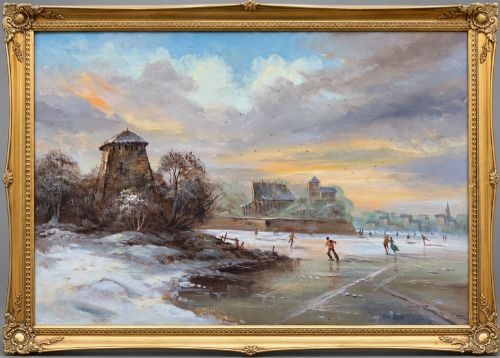
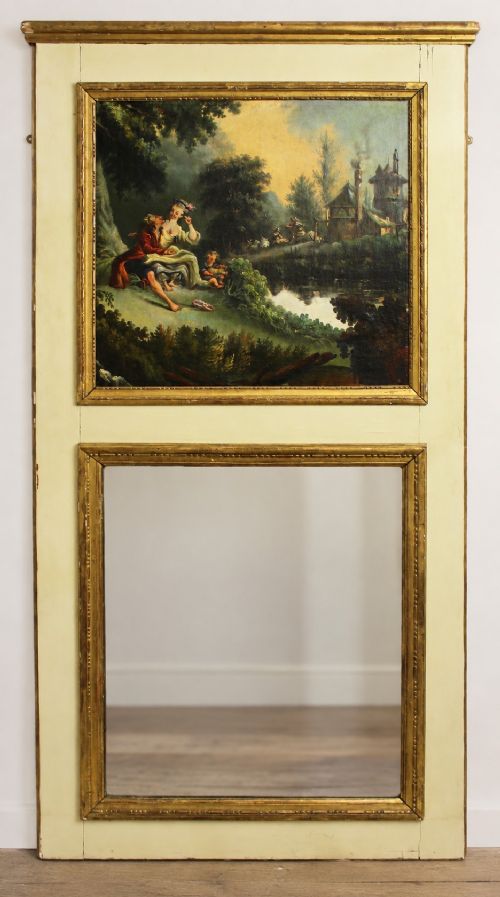
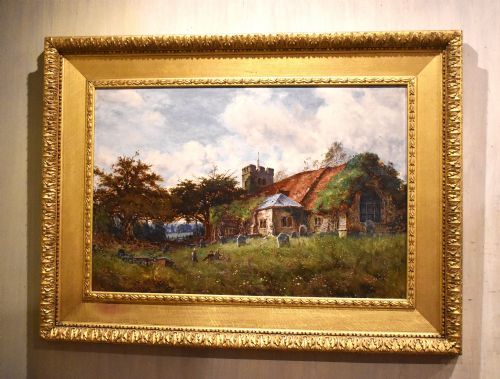
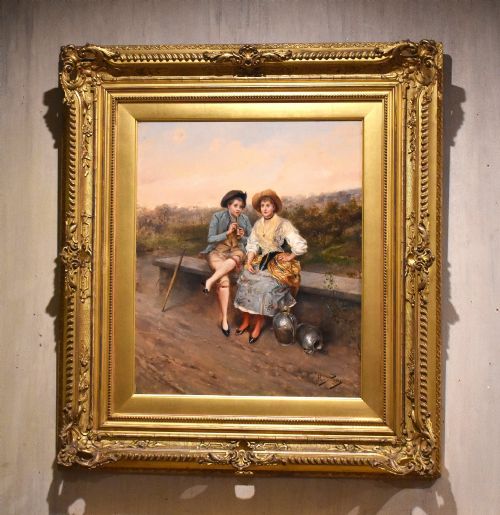
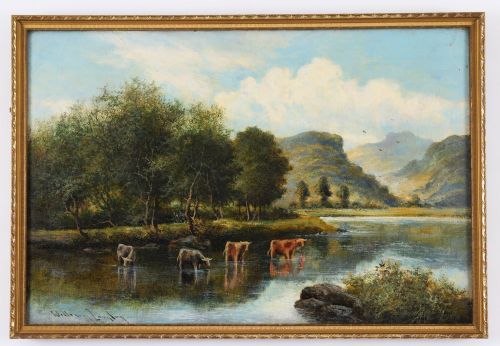
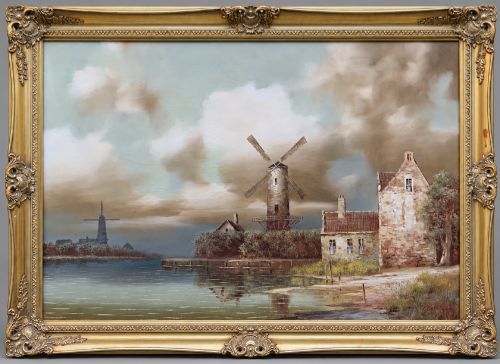
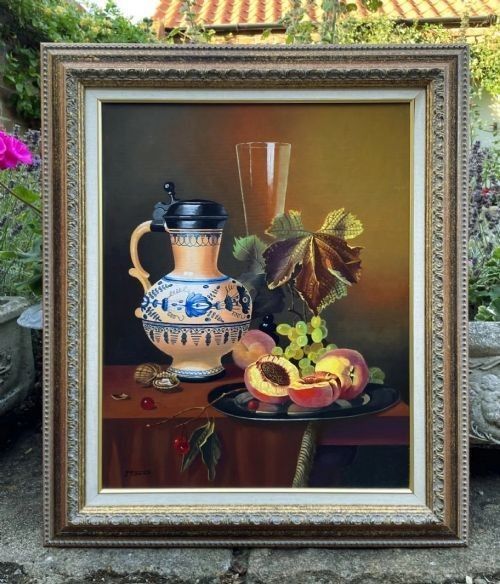
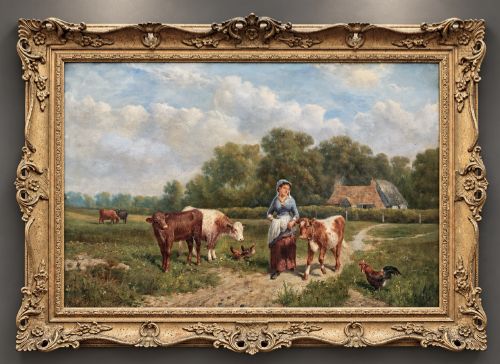
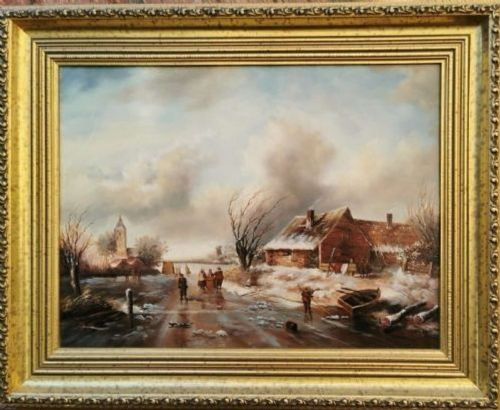
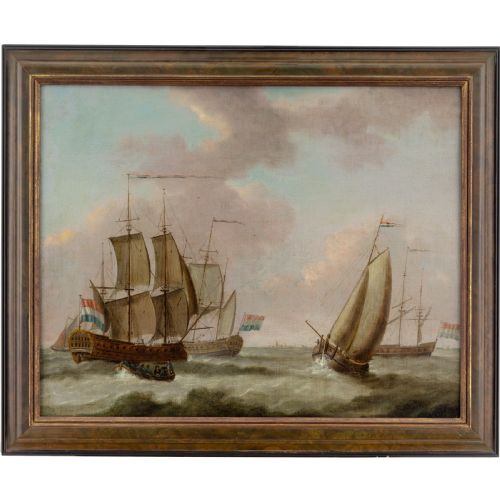
A traditional gilt frame painting combines an oil or watercolour artwork with a decorative wooden surround finished in gold leaf or gesso. These pieces span from the nineteenth century into the mid twentieth century, covering portraits, marine scenes, pastoral landscapes, and still life compositions.
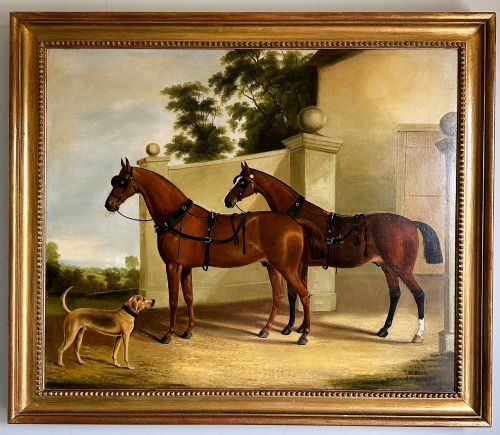
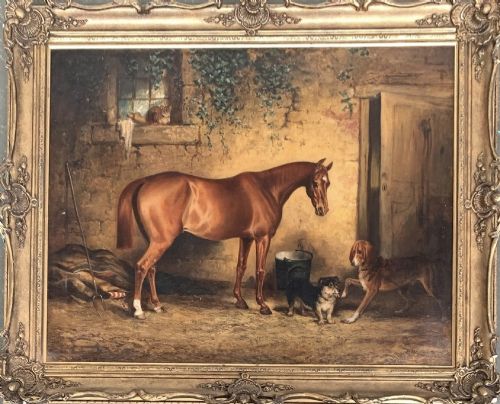
The works appearing here range from intimate portrait miniatures and rural village views to large scale depictions of horses, ships, and dramatic skies. Most examples originate from British and European schools, carrying the distinct aesthetic of Victorian realism, Edwardian illustration, and classical traditions.
Buyers look for these artworks to anchor a study, hallway, or living space with authentic period character. The combination of an aged oil painting and a heavy gilt surround creates a focal point that reflects natural light and integrates easily with traditional interiors.
How they were made
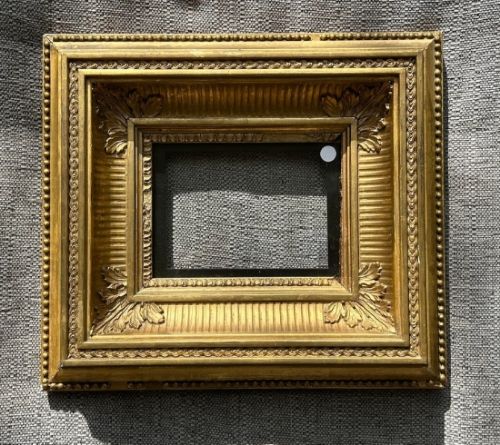
Makers built the support structures using timber frames overlaid with gesso, a plaster mixture applied to create smooth surfaces and sculpted decorative motifs before applying thin layers of gold leaf or gilt paint.
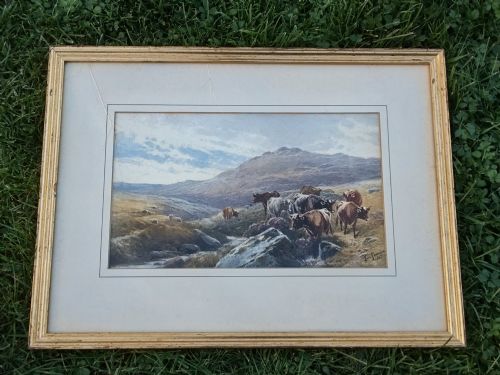
Artists worked primarily in oil paint upon prepared canvas or wooden panels, building up rich colour palettes through successive layers of pigment and varnish. Watercolours on paper also appear, typically protected behind glass within matching gilt surrounds.
Several canvases capture cows, sheep, and horses staring out calmly as though posing deliberately for their portrait.
What varies in quality
The integrity of the surrounding gesso and gilt work dictates much of the physical quality. Original frames with crisp, unbroken moulded details and intact gilding hold greater aesthetic weight than those suffering from heavy plaster loss, crude overpainting, or structural shrinkage.
William Oliver·Richard Sebastian Bond·William Beattie-Brown·Percy Lancaster·William Howard Hardy·John Horace Hooper·William McAlpine·Reginald Arthur Borstel·William Joseph Shayer Senior·Alfred Fontville de Breanski Jr·Edward Mills·George Houston·William Banks Fortescue·Thomas W Lascelles·David Bates·Thomas Smythe·Albert Clark
The Traditional Gilt Frame Painting Glossary
- Gesso
- A plaster mixture applied to wooden frame bases to create a smooth surface for carving or moulding decorative details. It forms the rigid foundation beneath the final layers of metallic leaf.
- Oil on Canvas
- A technique involving pigment suspended in drying oil applied to a stretched woven fabric support. This method allows for subtle blending and rich texture over time.
- Giltwood
- Timber carved and covered with thin sheets of gold leaf or gold powder. It provides a luminous border that catches interior light.
- Watercolour
- A painting method where fine pigment is suspended in a water soluble vehicle and applied to paper. These works require protective glazing.
- Victorian
- Pertaining to the period of Queen Victoria's reign, spanning the nineteenth century. Pieces from this era often exhibit narrative depth and detailed realism.
Traditional Gilt Frame Painting: Frequently Asked Questions
How do I hang a heavy gilt frame?
Heavy gilt frames require secure picture hooks fixed directly into wall studs or heavy duty wall anchors capable of supporting the substantial weight of wood and plaster.
Use robust brass wire or fixings attached firmly to the structural sides of the frame rather than hanging by light string alone.
Can I clean a gilt frame myself?
Gilt surfaces are extremely delicate and prone to abrasion or loss of gold leaf if rubbed with standard domestic cleaning liquids.
Dust the mouldings gently with a soft dry brush, avoiding any moisture or abrasive cloths that might lift the fragile gesso beneath.
How do I identify the period of a painting?
The period is usually indicated by the style of the brushwork, the subjects depicted, and the construction methods visible on the reverse of the canvas or panel.
Examine the stretcher bars, nails, and canvas texture, as older pieces often display hand cut woods and oxidized metals consistent with nineteenth century workshops.
Where should I place these paintings?
Position oil paintings away from direct sunlight and strong heat sources like radiators to prevent the canvas from drying out and the paint from cracking.
Rooms with stable ambient temperatures and gentle indirect light help preserve both the pigments on the canvas and the delicate gesso on the frame.