




Georgian Classical Landscape Painting
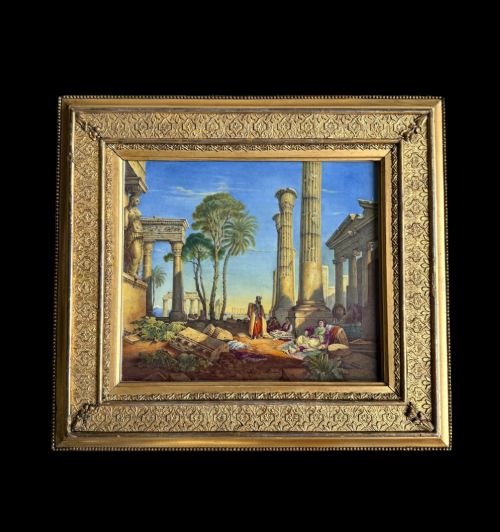
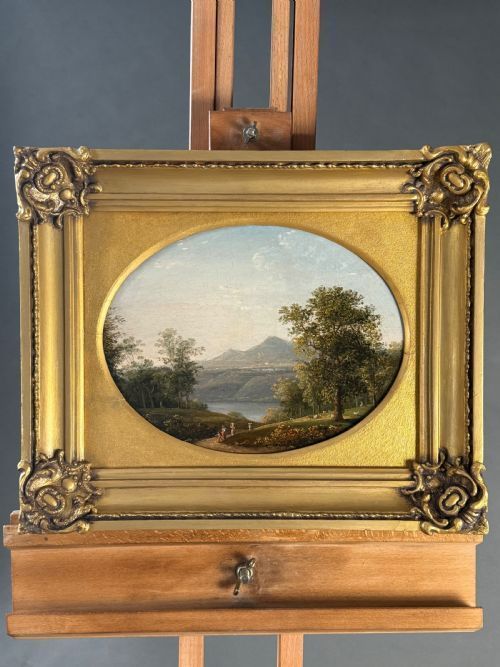
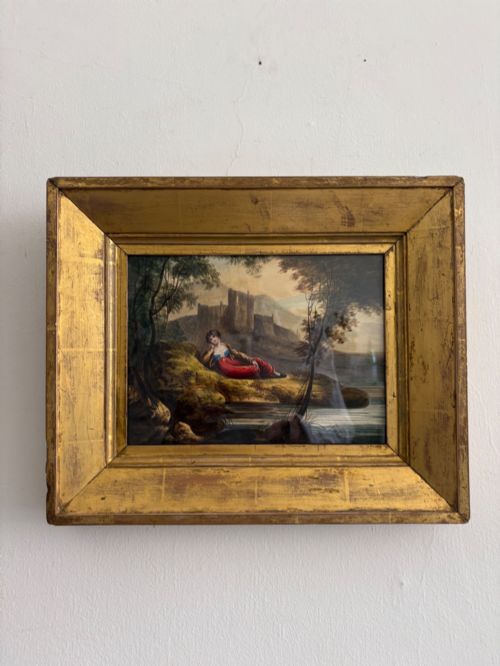
A georgian classical landscape painting brings distant Italianate ruins and pastoral river scenes directly into the drawing room.
Georgian Classical Landscape Painting
A georgian classical landscape painting depicts idealised rural scenes, architectural ruins, and pastoral figures rooted in eighteenth-century aesthetic ideals. These works draw heavily upon the Grand Tour tradition, capturing southern European vistas for British collectors.
The pieces on this page span the eighteenth and nineteenth centuries, including works from the Georgian and Regency periods. Alongside canvas oil paintings, buyers encounter related items such as giltwood trumeau mirrors, porcelain, and watercolours reflecting the same classical taste.
The selection ranges from works attributed to continental masters and British followers to examples by the English School and naive artists. Each piece reflects how patrons of the period desired ordered, poetic views of nature combined with classical architecture.
Assessing quality and execution
Quality in a georgian classical landscape painting rests upon the handling of perspective, atmospheric depth, and the natural integration of figures within the architectural setting. Superior works demonstrate confident brushwork in distant ruins and foliage, whereas simpler naive pieces employ flatter planes and more rudimentary compositions.
The preservation of the original canvas, oil paint layer, and period giltwood frame contributes significantly to the integrity of the piece. Consideration is also given to the strength of provenance, whether attributed to a known circle or documented within the British and continental schools.
Listings span the eighteenth and nineteenth centuries, incorporating oil on canvas, wood, giltwood, gesso, and glass across various schools.
Jacob Philipp Hackert·John Hamilton Mortimer·Francesco Zuccarelli·Richard Wilson·Thomas Jones·Julius Caeser Ibbetson
The Georgian Classical Landscape Painting Glossary
- Grand Tour
- A cultural journey of Europe undertaken by young upper-class Europeans in the eighteenth century. It directly stimulated demand for landscape paintings featuring classical ruins and Italian vistas.
- Italianate
- A stylistic influence derived from the landscape and architecture of Italy. It describes scenes populated by classical temples, rustic bridges, and tranquil rivers.
- Eglomisé
- A process of applying gold or silver leaf to glass combined with engraving and painting. This technique appears on decorative mirror panels associated with the Regency period.
- Giltwood
- Wood carved and coated with gold leaf or a metallic substitute. It forms the lustrous surface of period overmantel and pier mirror frames.
- Trumeau
- A decorative mirror incorporating a painted or carved panel above the glass. These architectural fixtures were designed to fit specific wall spaces in Georgian and Regency interiors.
Georgian Classical Landscape Painting: Frequently Asked Questions
What defines a classical landscape painting?
A classical landscape painting presents an idealized view of nature, typically featuring balanced compositions with trees, mountains, and classical architecture such as temples or rustic ruins. These works often include small pastoral figures engaged in quiet pursuits.
Rooted in seventeenth-century continental traditions, the genre remained popular throughout the Georgian era as an expression of classical learning and taste.
How do these paintings relate to the Grand Tour?
The Grand Tour encouraged wealthy British travellers to commission or purchase views of Rome, Venice, and the surrounding countryside. Artists working in Italy catered to this demand by producing idealized topographical and landscape scenes.
Back in Britain, collectors displayed these paintings to demonstrate their sophistication, classical education, and familiarity with continental culture.
What is an overmantel trumeau mirror?
An overmantel trumeau mirror is a large decorative wall mirror designed to hang above a fireplace mantelpiece. It frequently incorporates an upper panel featuring an oil painting or eglomisé glass design.
During the Georgian and Regency periods, these mirrors helped to amplify natural light within a room while unifying the interior decorative scheme.
How do you distinguish Georgian from Regency pieces?
Georgian pieces generally reflect the restrained ornamentation and classical proportions associated with the eighteenth century, drawing heavily on Palladian and Neoclassical design. Regency works, produced during the early nineteenth century, often display bolder decorative elements, brighter paint finishes, and heavier reliance on gilt surfaces.
Examining the framing materials, canvas preparation, and stylistic nuances helps to clarify the period of production.