




Traditional Flat Weave
Traditional flat weave textiles bring centuries of tribal craftsmanship and rich geometric patterns into modern interiors.
Traditional Flat Weave
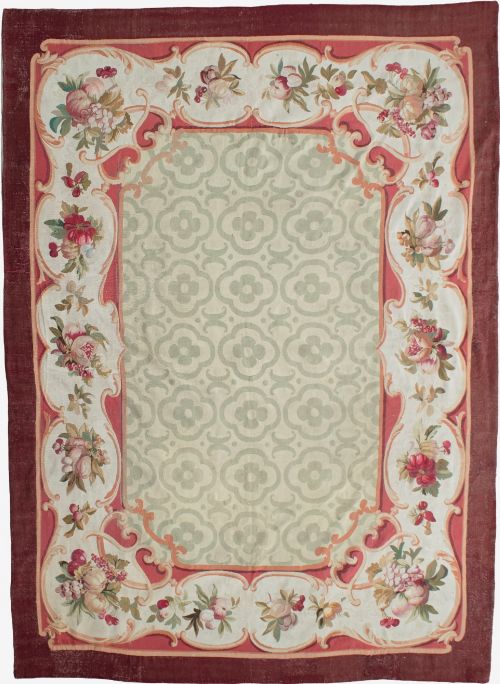
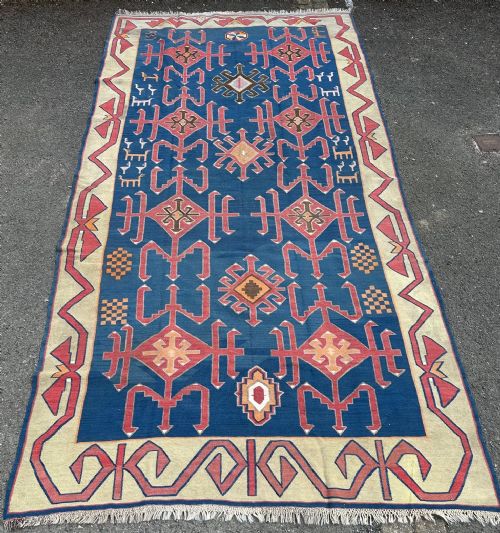
Traditional flat weave textiles comprise rugs, carpets, runners, and cushions originating from diverse regions such as the Caucasus, Anatolia, Central Asia, and Eastern Europe.
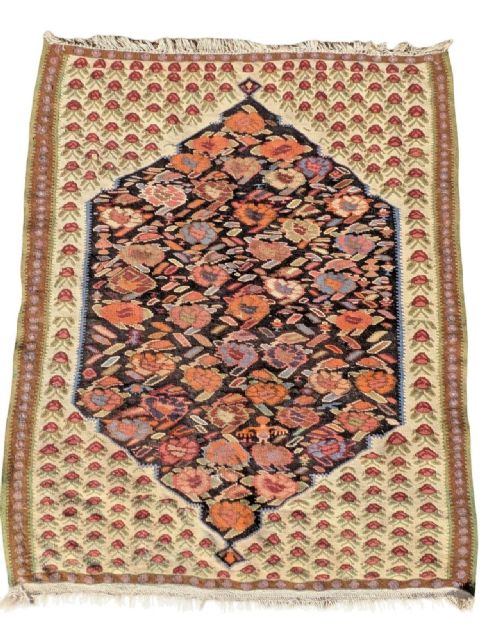
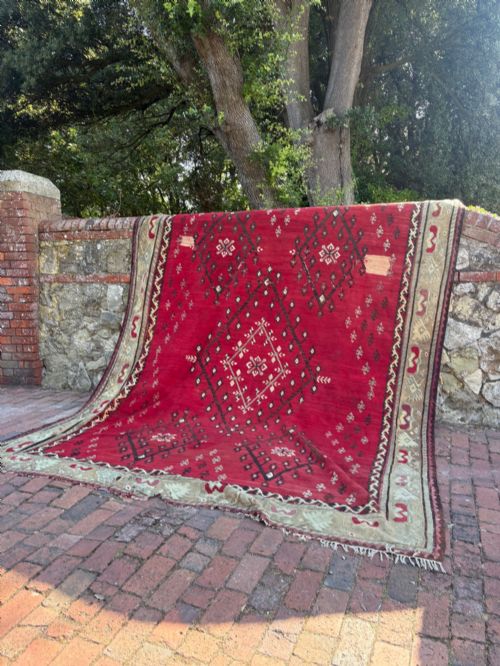
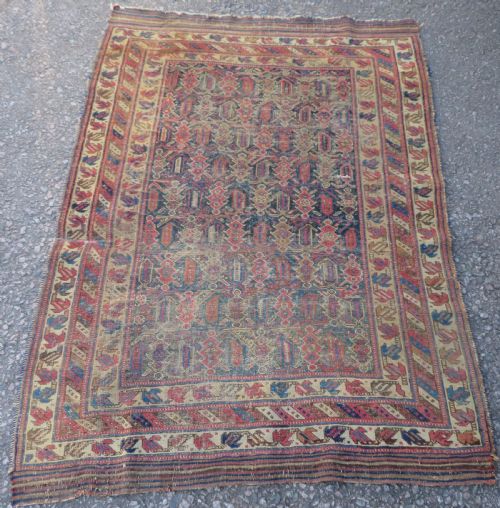
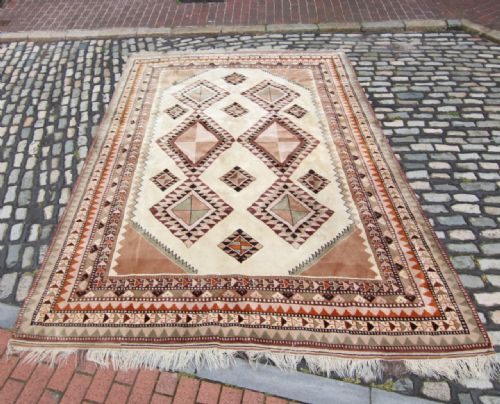
Buyers searching for traditional flat weave most frequently encounter antique kilims and tribal rugs featuring distinctive flat-woven surfaces without traditional pile.
The selection ranges from large room-sized carpets and prayer rugs down to smaller utility items like salt bags and horse cover fragments repurposed as cushions.
How they were made
Weavers constructed these textiles primarily using wool and cotton yarns, frequently employing slit-tapweaving and soumak techniques to build crisp, graphic patterns.
Natural dyes provide the characteristic depth of colour found across these pieces, reacting to age with subtle shifts in tone.
Several textiles began life as camel bags or grain sacks before finding retirement on living room floors.
What varies in quality
The sophistication of the design, the tightness of the weave, and the vibrancy of the palette dictate the standing of an individual piece.
Intricacy in tribal iconography and the preservation of original flat ends and selvedges elevate certain examples above standard utility weaving.
The Traditional Flat Weave Glossary
- Kilim
- A pileless textile produced by tightly interweaving warp and weft strands to create a flat surface. This method results in reversible patterns defined by sharp geometric motifs.
- Soumak
- A supplementary weft wrapping technique that creates a durable fabric with a textured, braid-like face. It provides extra structural integrity compared to standard plain weave.
- Khorjin
- A traditional tribal storage bag or saddlebag designed for nomadic use. Surviving fronts are often repurposed into decorative mats or cushions.
- Warp
- The stationary vertical threads stretched across the loom before weaving begins. Wefts are passed horizontally through these foundational strands.
Traditional Flat Weave: Frequently Asked Questions
How do I clean a flat weave rug?
Gentle surface cleaning and regular cautious shaking remove dust effectively without disturbing the delicate wool structures.
Professional specialist washing is advised for deeper maintenance to protect natural dyes.
Where were these textiles originally made?
Production centres span across Anatolia, the Caucasus, Persia, and parts of Eastern Europe including Bessarabia and Ukraine.
Nomadic tribes and village weavers created them for domestic utility, warmth, and decorative purposes.
Are these pieces suitable for heavy foot traffic?
Flat weave textiles possess inherent durability due to their dense construction, making them resilient for general floor placement.
Using a quality underlay prevents slipping and cushions the fibres against excessive wear.
How can I tell different tribal designs apart?
Motifs vary by region, with Caucasian pieces favouring sharp geometric medallions and Anatolian works displaying distinct tribal symbols.
Colour palettes and specific weaving structures like soumak further identify the originating culture.