



Traditional Fireplace Log Supports
Traditional fireplace log supports sit at the hearth to hold fuel above the grate, bringing both structure and period detail to an open fire.
Traditional Fireplace Log Supports
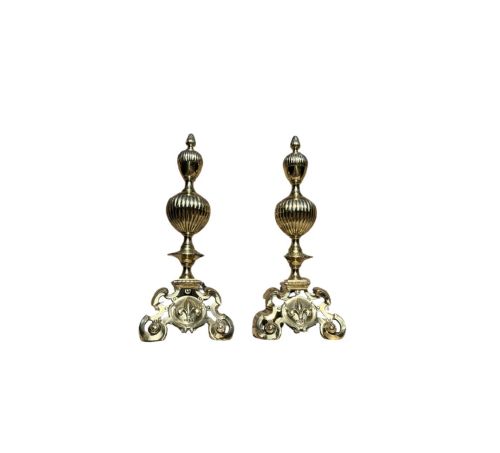
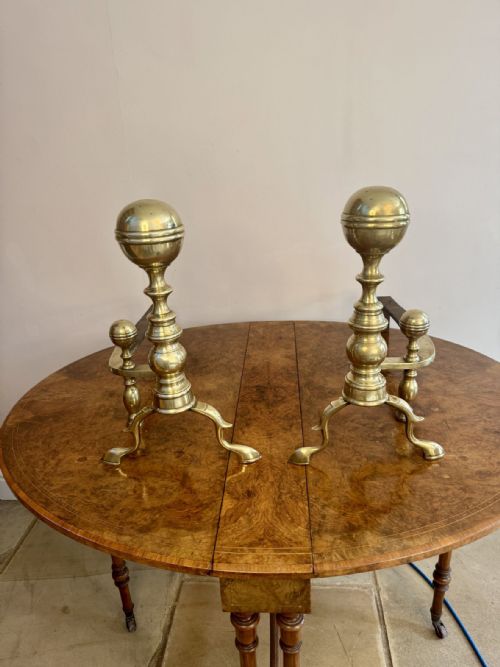
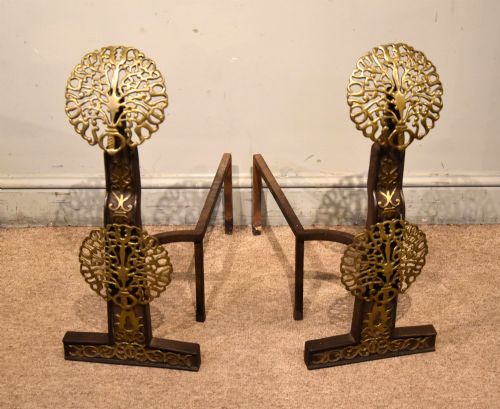
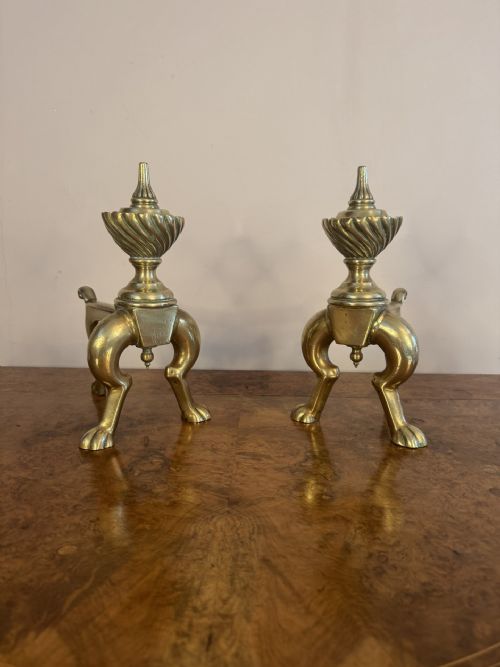
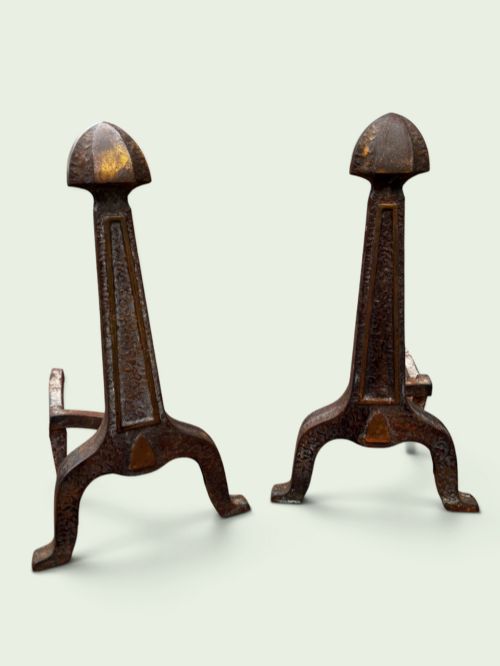
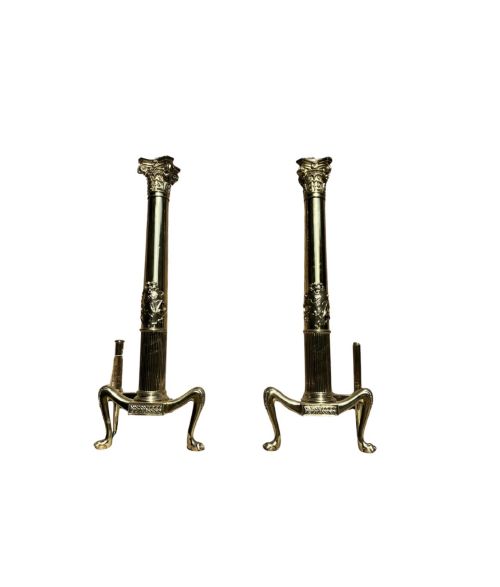
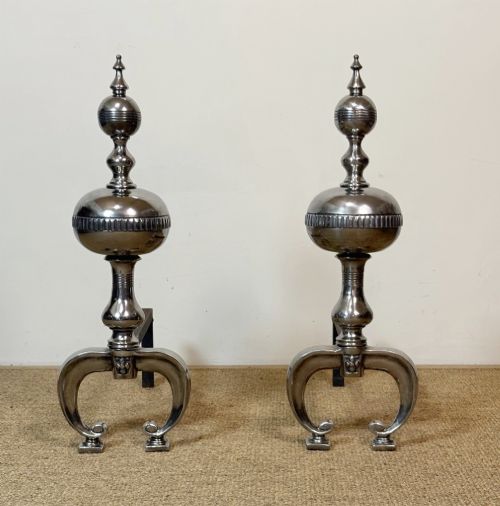
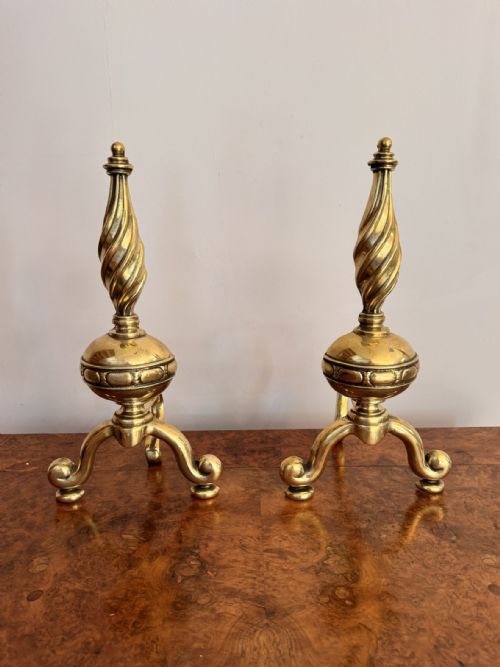
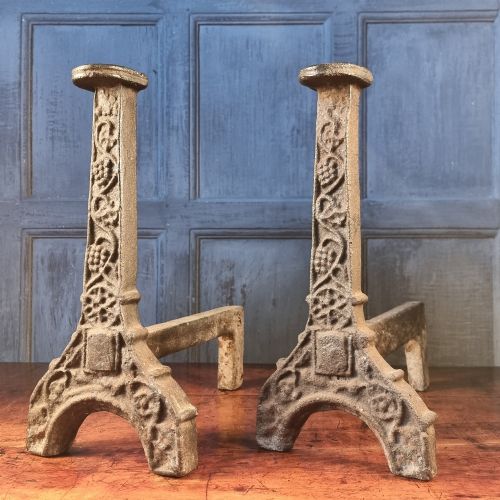
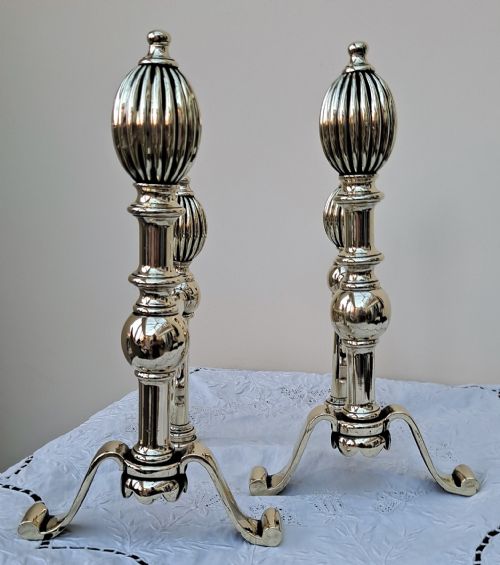
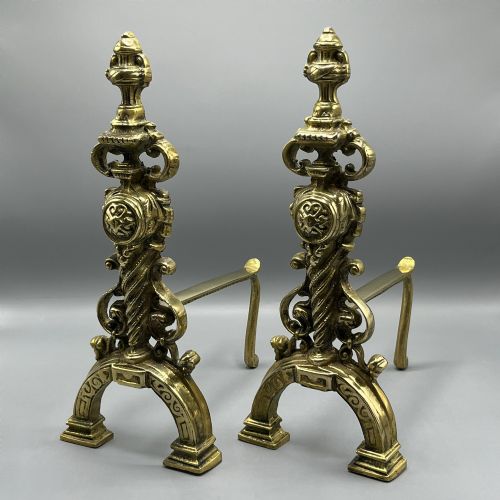
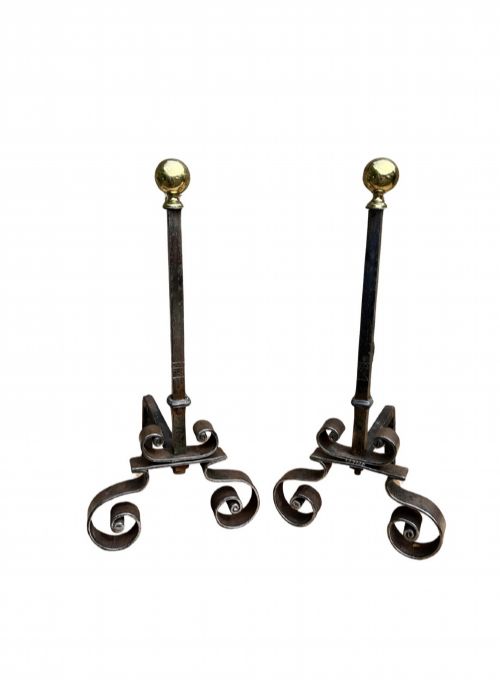
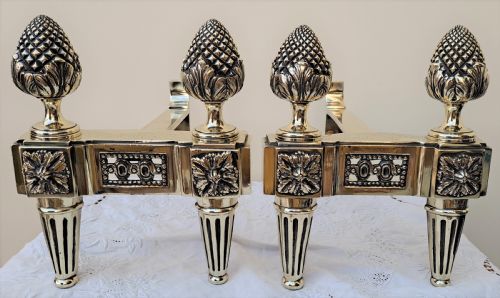
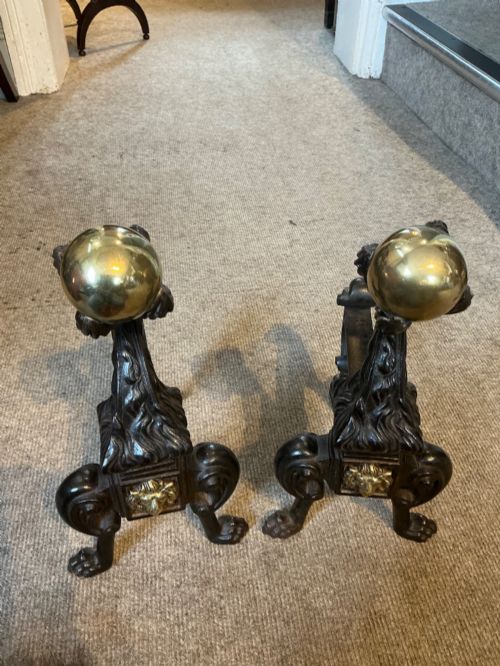
Traditional fireplace log supports appear across this page as firedogs and andirons, designed to elevate firewood within an open hearth for better air circulation and combustion. These metal supports range from domestic Victorian brass pairs to robust wrought iron examples reflecting earlier centuries.
The selection here draws heavily from the nineteenth century, alongside earlier sixteenth century Gothic items and later twentieth century interpretations. Buyers encounter heavy cast brass, polished steel, and hand-forged iron configurations suited to period hearths.
How they were made
The makers utilised cast iron and wrought iron for sturdy weight, shaping the metal by hand or pouring it into moulds to achieve durable structural frames. Brass and gilt brass components were cast separately, then polished or chased to give a bright finish to the front standards.
Steel and copper also appear among the materials, providing contrasting tones for the horizontal billets and upright finials. Artisans combined these metals with mechanical joints or forged them into single solid pieces designed to withstand intense hearth heat.
Traditional Fireplace Log Supports Retail Price Guide 2026
Typical asking prices for traditional fireplace log supports among the pieces listed under this phrase on Sellingantiques today, from the lower quarter to the upper quarter. They describe what is for sale here now, not the wider market.
Some nineteenth-century tool rests doubled as companion stands, keeping the poker and tongs close to the logs.
What varies in quality
Quality rests upon the weight of the metal and the crispness of any cast ornament, separating heavy solid brass or hand-forged iron from lighter commercial castings. Superior pairs show careful proportion between the upright standards and the horizontal log bars behind.
Detailing on the front faces dictates the distinction between standard utilitarian hearth furniture and fine decorative examples, with crisp chasing and substantial gauge metal marking the better tier of items.
The Traditional Fireplace Log Supports Glossary
- Andirons
- Supports for logs in a fireplace, typically consisting of a vertical front standard and a horizontal bar extending backward. They prevent logs from rolling forward into the room.
- Firedogs
- An alternative term for andirons, often featuring decorative cast brass or iron fronts. These stood at either side of the hearth to hold the fuel.
- Gilt brass
- Brass coated with a thin layer of gold or gold-coloured wash to enhance surface brilliance. This finish appears frequently on formal nineteenth-century pairs.
- Wrought iron
- Iron that has been heated and shaped with hand tools by a blacksmith rather than cast in a mould. It yields a fibrous, textured surface found on older or Arts and Crafts pieces.
Traditional Fireplace Log Supports: Frequently Asked Questions
What are traditional fireplace log supports used for?
These pieces hold logs off the hearth floor to improve airflow underneath the burning wood, which helps the fire burn more efficiently and evenly.
They also serve a decorative purpose, framing the hearth opening and coordinating with other fireside accessories like tool rests and fenders.
How do I choose the right size?
Measure the depth and width of your hearth opening before selecting a pair, ensuring the horizontal bars fit comfortably without crowding the space.
Larger monumental pairs require substantial hearths, while more compact nineteenth-century brass variants suit smaller period fireplaces.
Can I use antique andirons in a working fireplace?
Many solid iron and brass supports are robust enough for daily use with an open wood fire, provided the metal remains structurally sound.
Heavily gilt or delicate decorative pieces are better suited to decorative hearth displays or gas-converted grates to preserve their finish.
How do I tell Victorian andirons from older styles?
Victorian pieces often display heavier cast brass ornamentation and eclectic revivals of Gothic, Rococo, or Neoclassical motifs.
Earlier examples from the sixteenth or seventeenth centuries rely more heavily on hand-forged wrought iron with simpler, utilitarian construction.