



Gothic Revival Fire Dogs
Gothic Revival fire dogs bring architectural character to a hearth through heavy cast iron, brass, and wrought iron.
Gothic Revival Fire Dogs
Gothic Revival fire dogs combine functional hearth furniture with medieval architectural motifs borrowed from stone churches and cathedrals. When searching for gothic revival fire dogs, a buyer encounters matching pairs of andirons, fire baskets, and complete open hearth fireplace sets designed to support logs above the hearth floor.
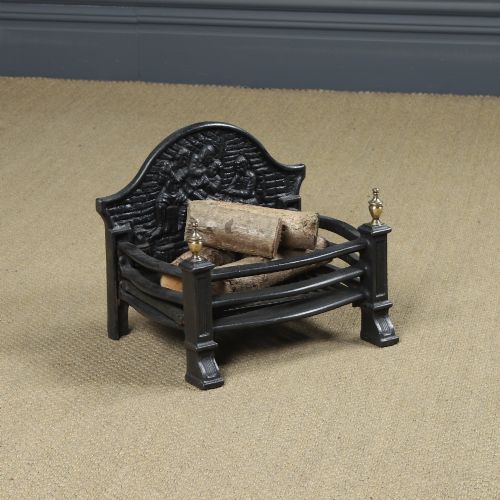
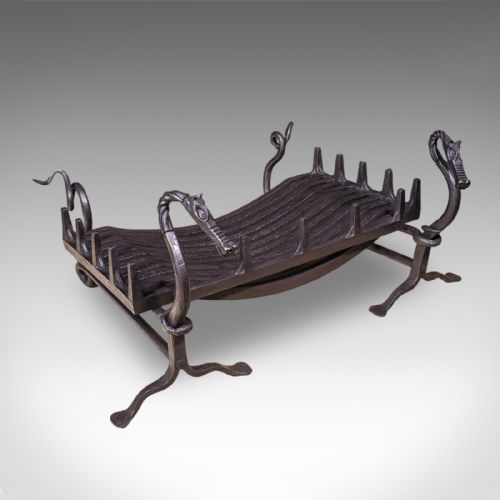
The pieces appearing on this page span the nineteenth century, the Edwardian era, and the early twentieth century. Victorian Gothic Revival designs dominate the selection, often taking the form of substantial cast iron andirons or inglenook fire baskets featuring pointed arches and dragon motifs.
Makers and workshops of the period also produced lighter interpretations during the Arts and Crafts movement. These variations include brass and steel fire dogs influenced by designers such as Christopher Dresser, alongside smaller fire grates built in eighteenth-century styles.
Materials and construction
Foundries manufactured the primary structural elements of these hearth accessories using durable cast iron, wrought iron, and steel. Molten metal poured into sand moulds created the heavy frames and decorative finials, while additional components utilised brass for visible highlights and firebrick to insulate the grate interior.
Craftsmen forged wrought iron sections by hand, heating and hammering the metal to shape supporting legs and basket bars. Assembly relied on heavy bolts and rivets to withstand intense hearth temperatures during continuous use.
Listings feature cast iron, wrought iron, brass, and steel across nineteenth-century Victorian, Edwardian, and early twentieth-century periods.
Distinctions in quality
Quality separates simple utility items from pieces displaying deliberate artistic ambition in their casting and metalwork. Superior examples show crisp, deep relief in decorative motifs such as dragon heads and tracery, whereas lesser pieces exhibit softer edges from worn moulds.
Material choice and structural integrity also divide the range. Heavier cast iron bodies paired with hand-wrought brass or steel fittings indicate higher workshop standards than light, uniform castings lacking individual finishing.
Christopher Dresser
The Gothic Revival Fire Dogs Glossary
- Andirons
- Supports for logs in an open fireplace, consisting of a horizontal bar raised on legs with an upright decorative front. They function in pairs to keep fuel elevated and allow air circulation.
- Fire basket
- An iron grate holding fuel within an open fireplace, often flanked by integrated andirons. They sit within the hearth opening to contain coal or wood.
- Inglenook
- A deep recess for a fireplace, typically featuring benches on either side. Fireplace sets designed for these spaces tend to be larger in scale.
- Cast iron
- Iron shaped by pouring liquid metal into a mould. It provides the heavy, rigid structure essential for enduring intense hearth heat.
- Wrought iron
- Iron beaten into shape by hand while hot. This material offers toughness and flexibility for forged structural bars and decorative scrolls.
Gothic Revival Fire Dogs: Frequently Asked Questions
What are gothic revival fire dogs?
Gothic Revival fire dogs are heavy metal supports used to hold logs inside an open fireplace. They combine practical hearth utility with medieval architectural decoration.
Most examples feature iron or brass construction styled with pointed arches, tracery, or dragon motifs typical of nineteenth-century design.
How were fire dogs used?
Fire dogs stood in pairs on the hearth floor to elevate logs above the masonry. This elevation allowed air to circulate underneath the fuel for a better burn.
Many styles worked alongside fire baskets to contain coal or wood safely within the open hearth space.
How do I date a set?
Dating relies on stylistic clues and material combinations recorded across the nineteenth and early twentieth centuries. Victorian pieces often display heavy cast iron with elaborate Gothic detailing.
Later Arts and Crafts examples shift toward cleaner steel and brass forms influenced by contemporary designers.
Are they suitable for modern fires?
These pieces were built for solid fuel open hearths using durable cast iron, wrought iron, and firebrick. Their robust construction handles high temperatures effectively.
Buyers should verify dimensions against their hearth opening before installation to ensure a proper fit.