


Traditional English Oak Chair
A traditional english oak chair brings centuries of domestic craft into daily use, offering robust timber construction and honest vernacular design.
Traditional English Oak Chair
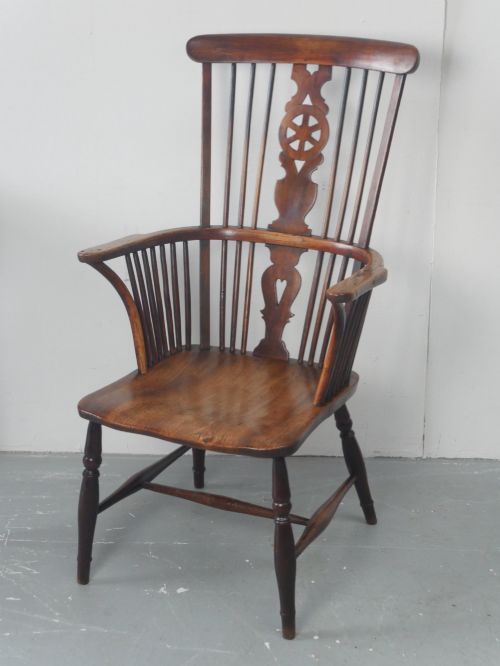
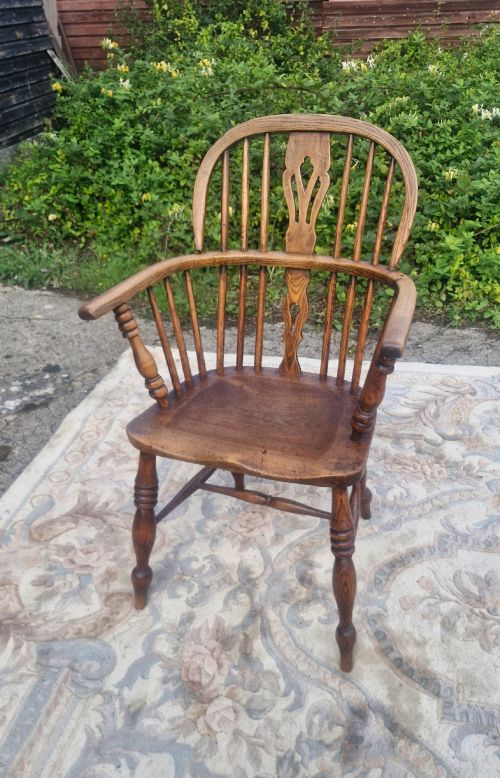
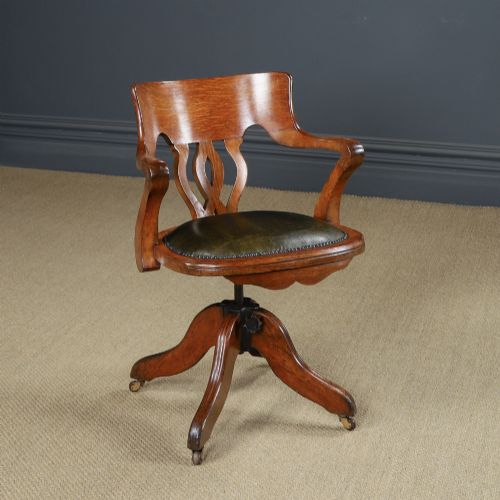
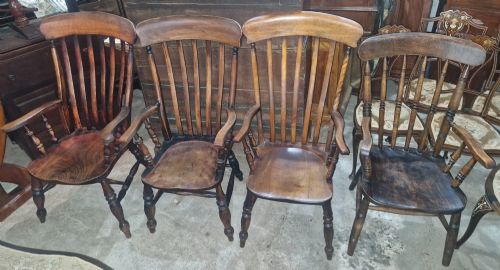
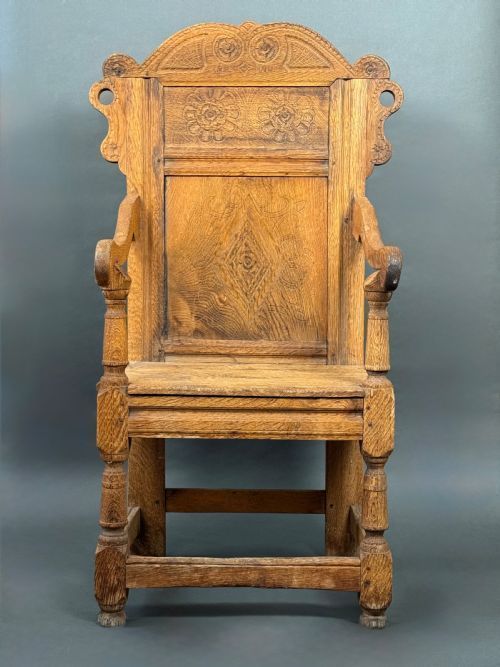
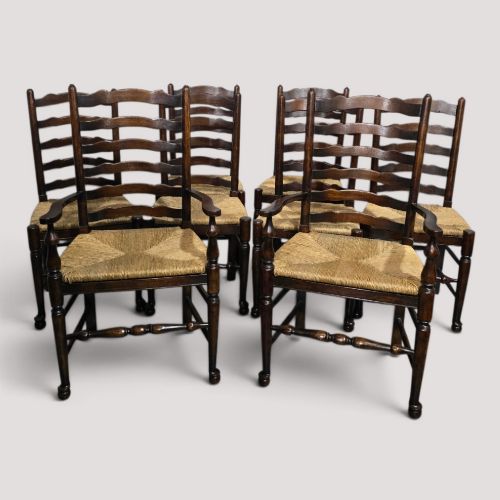
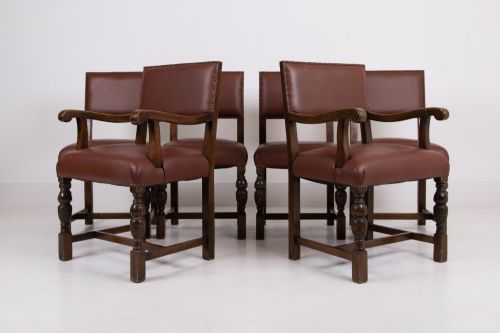
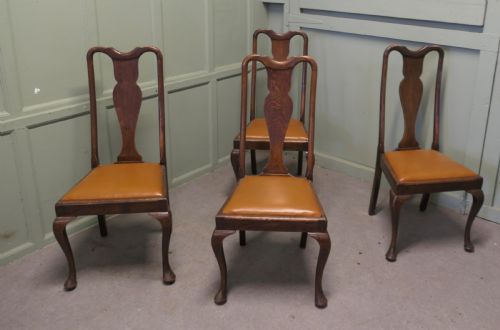
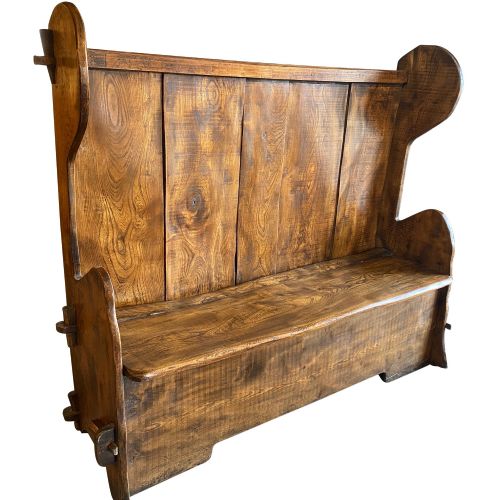
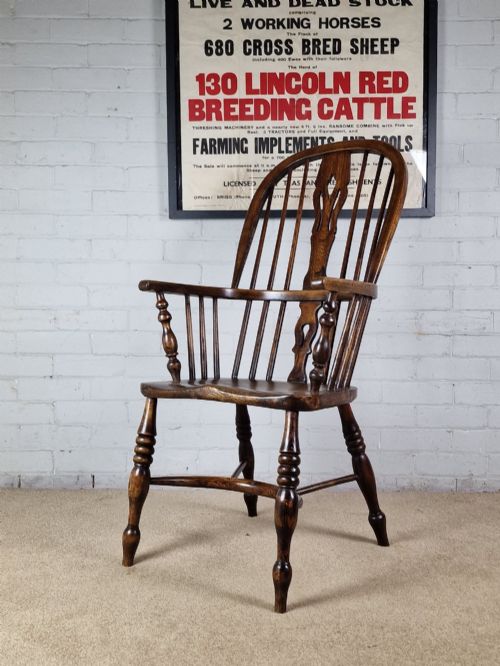
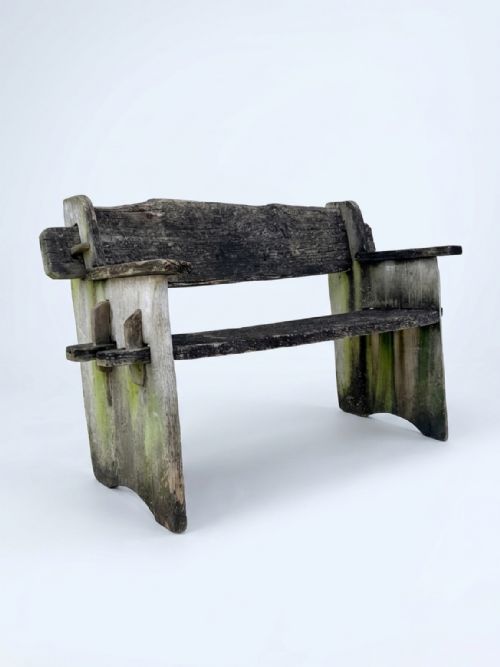
A traditional english oak chair encompasses a diverse range of seating, from sturdy wainscot and ladder back dining chairs to vernacular Windsor armchairs and settles. When exploring this selection, buyers encounter pieces originating from domestic kitchens, country houses, and rural workshops across the centuries.
The material palette is dominated by solid oak, frequently combined with elm, ash, and beech for seats and turnings, creating robust structures designed for heavy daily use. Regional variations appear regularly, including Thames Valley, Lincolnshire, and Lakeland forms that reflect local timber availability and woodworking traditions.
Dating spans from the eighteenth century through the Victorian era and into the early twentieth century, incorporating revival styles alongside genuinely old vernacular seating. Dining sets, rocking chairs, and single elbow seats dominate the forms currently available to collectors and homeowners.
Materials and Technique
Makers utilised solid hardwoods like oak for frames and legs, frequently pairing them with carved elm or ash for comfortable, shaped seats. Timber selection relied on local woodland availability, ensuring each piece possessed the appropriate density and grain for its specific structural role.
Construction techniques combined traditional joinery such as mortise and tenon joints with steam bending for hoops and backs, supplemented by bobbin, spindle, and lathe turnings. Seats were often saddled or hollowed from a single solid plank to improve comfort before the application of rush, leather, or plain wood finishes.
Listings span the eighteenth, nineteenth, and early twentieth centuries, featuring elm, ash, beech, and solid oak across regional Windsor and ladder back forms.
Evaluating the Seating
Quality rests upon the integrity of the timber, the tightness of the structural joints, and the retention of original surface patination rather than applied finishes. Superior examples display thoughtful proportions, balanced turnings, and minimal timber replacement over their long working lives.
The relationship between the primary oak frame and secondary woods like elm or ash dictates the overall harmony of the piece. Well-matched grain patterns and clean tool marks from the original maker separate ordinary utility furniture from finer vernacular work.
The Traditional English Oak Chair Glossary
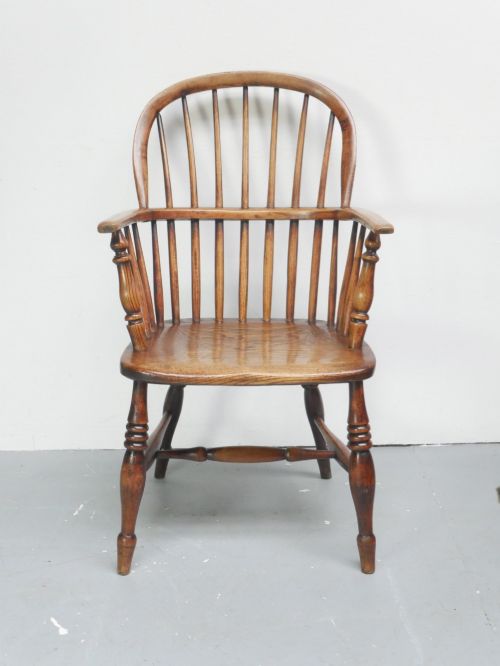
- Windsor
- A chair constructed with a solid wooden seat into which the legs, back sticks, and bow are separately tenoned. This technique creates a light yet rigid frame using different timber species for different parts of the structure.
- Wainscot
- An early heavy wooden armchair constructed with panelled backboards and solid armrests, typical of seventeenth and eighteenth-century domestic interiors. These pieces display rigid joinery and formal carving inherited from cabinetmaking traditions.
- Lathe Back
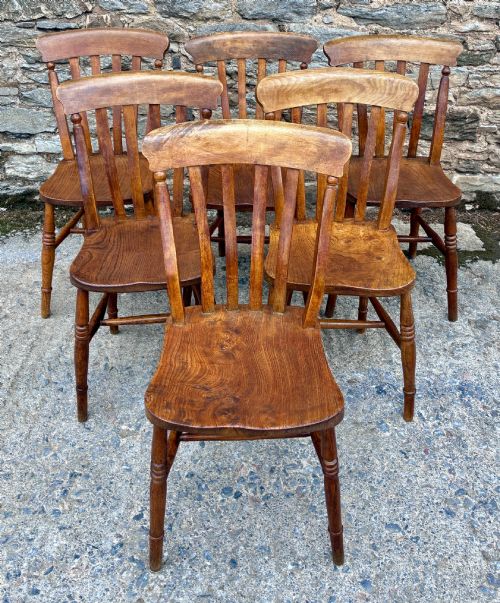
- A chair back featuring vertical wooden slats or splats turned on a lathe and secured between a top rail and the seat. They provide sturdy lumbar support in kitchen and dining environments.
- Rush
- Dried marsh grass twisted into cord and woven tightly to form a supportive, resilient seat base. This traditional method appears frequently on ladder back chairs.
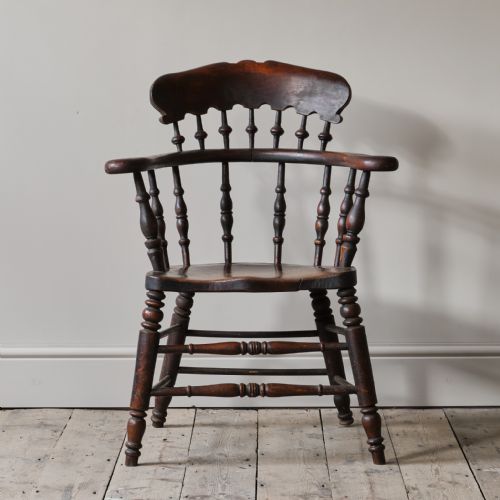
- Smoker's Bow
- A low-backed Windsor armchair with a continuous curved arm rail supported by turned spindles, originating in nineteenth-century public houses and parlours. The compact design allows easy movement around a table.
Traditional English Oak Chair: Frequently Asked Questions
How do I clean an old oak chair?
Dust the timber regularly with a dry, soft cloth to prevent particulate buildup in the grain and carved details.
Apply a coat of quality beeswax periodically to nourish the wood and maintain its natural lustre without washing away the surface patination.
Are these chairs suitable for daily dining?
Most solid wood vernacular seating was built precisely for heavy domestic use, making them durable companions for modern dining tables.
Ensure joints remain firm and check that seat heights match your table dimensions comfortably before regular usage.
How can I tell a Victorian copy from an older piece?
Examine the tool marks, timber shrinkage, and wear patterns around the footings and seat edges for signs of genuine age. Nineteenth-century makers frequently reproduced earlier styles during revival periods using machine-assisted lathe work rather than purely hand-carved methods.
What is a harlequin set?
A harlequin set is a collection of dining chairs that share similar proportions, materials, or stylistic traits while differing in minor details. This grouping method reflects how country houses and farmhouses historically gathered seating over many years.