
Traditional English Country Artwork
Traditional english country artwork captures the quiet charm of rural life through period paintings, watercolours and prints that bring historical English landscapes directly into the home.
Traditional English Country Artwork
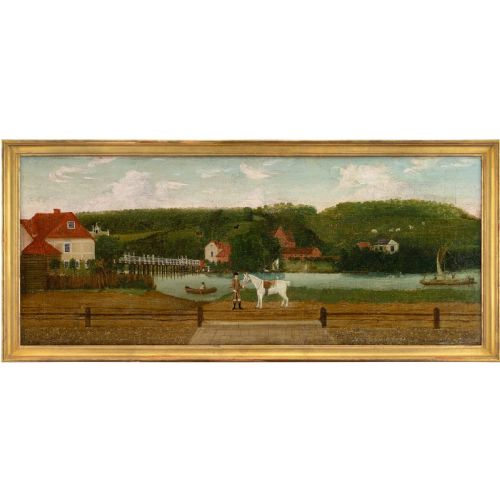
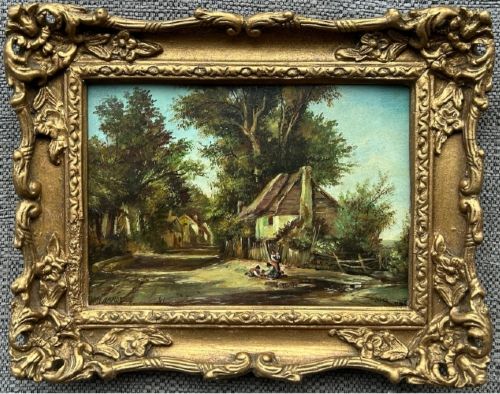
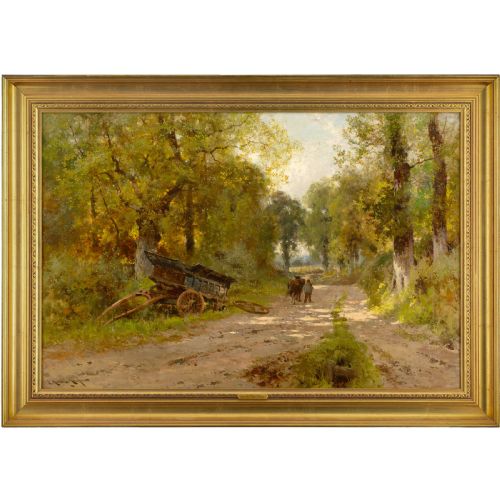
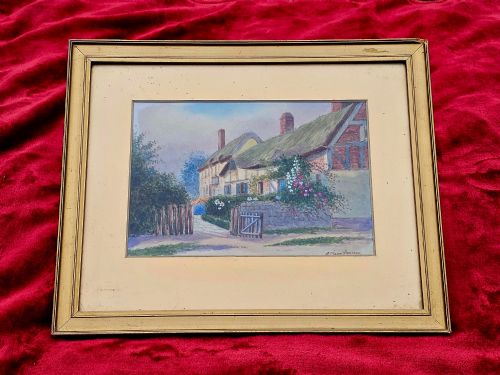
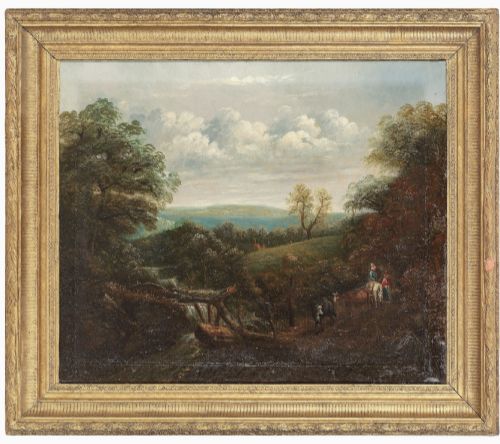
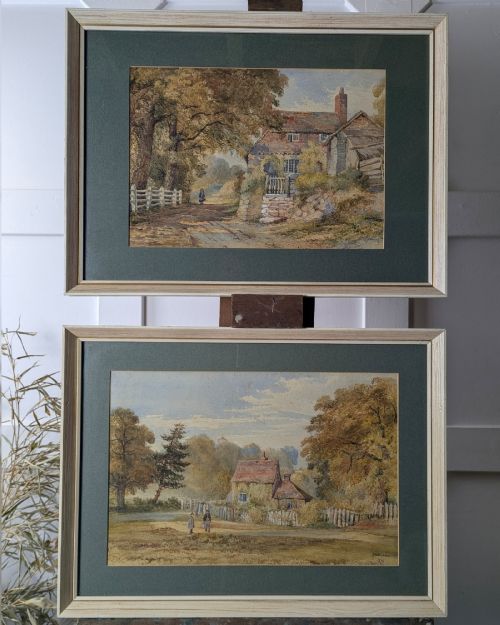
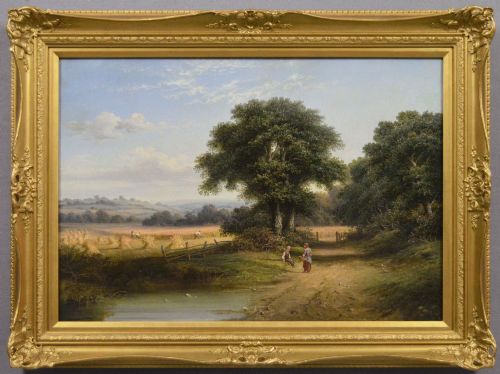
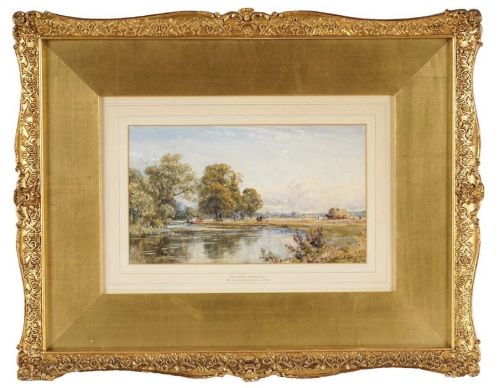
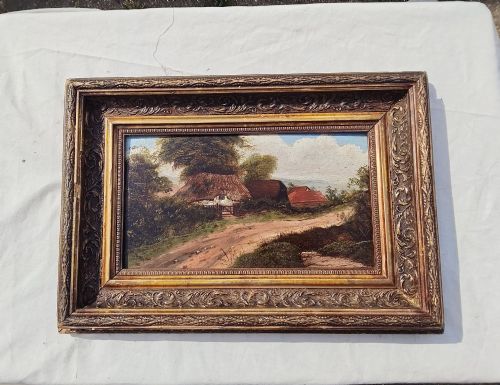
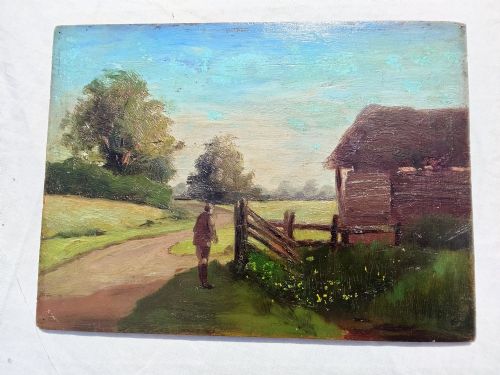
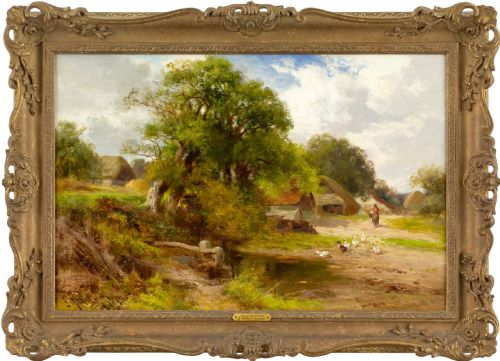
Traditional english country artwork comprises pastoral scenes, harvest landscapes, river views, and rural genre paintings that reflect the historic English countryside. These pieces span the nineteenth and early twentieth centuries, capturing agricultural life, thatched cottages, and local characters.
The selections on this page are most frequently nineteenth-century and early twentieth-century works, often rendered in oil on canvas or board, alongside delicate watercolours. Painters working in the British Impressionist, Victorian Pastoral, and English School traditions dominate the visual landscape.
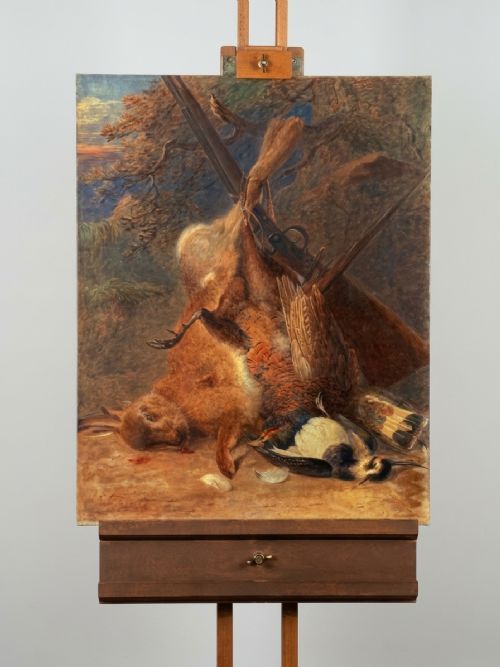
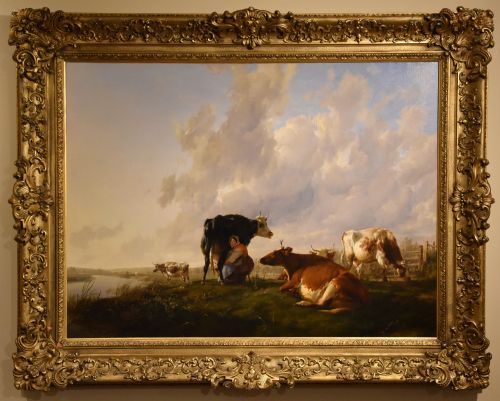
Subjects range from quiet rural pathways and livestock by ponds to hunting scenes and domestic interiors. Buyers encounter both signed works by known artists of the period and accomplished pieces by the English School.
Materials and methods
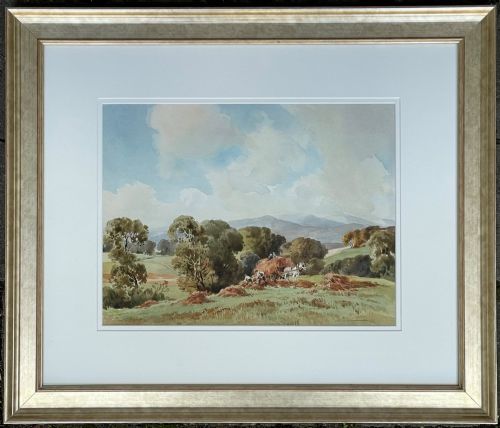
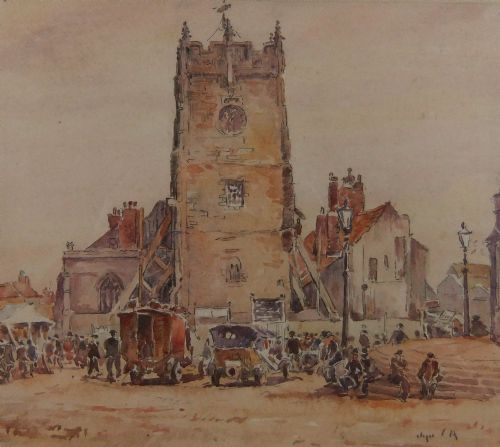
Artists typically worked with oil paint on canvas, wooden panels, or card, building up rich textures that have endured for generations. Watercolours on paper provide a lighter, more translucent record of rural topography, often protected behind glass in period frames.
Support materials varied according to the painter's preference and date, with some nineteenth-century canvases later laid onto board for stability. Original frames of gilt wood frequently complete the piece, maintaining the historical integrity of the artwork.
Listings feature works spanning the nineteenth century through the 1940s, executed in oil and watercolour on canvas, wood, paper, and card.
Distinctions in quality
Quality in traditional english country artwork rests upon the sureness of the brushwork, the naturalism of the light, and the compositional balance of the scene. Superior paintings capture atmospheric depth and authentic rural movement rather than relying on formulaic repetition.
The sophistication of the palette and the fidelity of the rendering separate master practitioners of the British School from lesser contemporaries. Original period framing also contributes significantly to the integrity and visual weight of the piece.
Percy Lancaster·William Howard Hardy·John Horace Hooper·Walter Heath Williams·Robert Thorne Waite·Thomas Sidney Cooper·Henry Yeen King·Charles Walter Simpson
The Traditional English Country Artwork Glossary
- Victorian Pastoral
- A style celebrating an idealized, peaceful rural existence, focusing on agricultural laborers, livestock, and country cottages. These works reflect nineteenth-century nostalgia for traditional rural life.
- British Impressionism
- A painting approach emphasising light, loose brushstrokes, and everyday rural or coastal subjects. Practitioners adapted continental techniques to capture specific English atmospheric conditions.
- Oil on Canvas
- A traditional painting medium utilising pigments suspended in drying oils applied to stretched woven fabric. This combination allows for rich colour saturation and textured impasto work.
- Watercolour
- A painting method where water-soluble pigments are applied to paper to create translucent washes. It was widely favored by nineteenth-century artists for capturing fleeting landscape effects.
- English School
- A designation for anonymous or varied British artists working within shared regional or national traditions. Pieces attributed this way often demonstrate high technical proficiency without bearing a confirmed individual signature.
Traditional English Country Artwork: Frequently Asked Questions
What subjects appear most often?
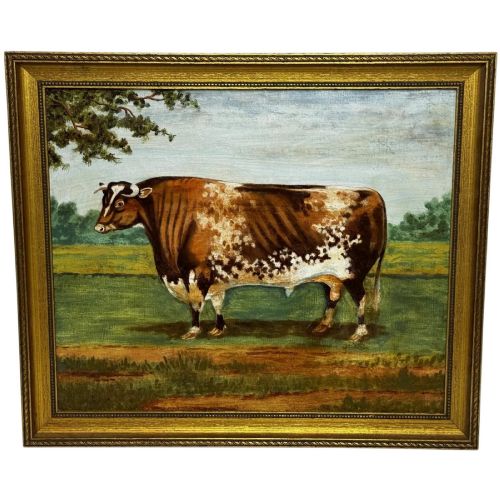
These works feature rural landscapes, harvest scenes, river views, and agricultural animals like shorthorn bulls and draft horses. Domestic country interiors and historical sporting subjects also feature prominently.
Artists drew inspiration from the Berkshire, Yorkshire, Sussex, and Devon countryside, recording cottages, country paths, and local figures at work.
How do I date these pieces?
Dating relies on stylistic clues, framing methods, support materials, and artist signatures where available. Nineteenth-century works often use heavier canvas supports and ornate gilt frames, while early twentieth-century pieces can show looser impressionistic tendencies.
Inscribed titles and signatures on the reverse or front of panels frequently provide direct historical context for the creation date.
Are watercolours as durable as oils?
Watercolours utilise paper supports and require protection behind glass and away from direct sunlight to prevent fading. When framed correctly, they remain remarkably stable over generations.
Oil paintings on canvas or wood panels offer greater physical resilience against environmental changes, though both mediums benefit from stable indoor humidity.
How should I display them at home?
These artworks pair naturally with traditional interiors, wood panelling, and neutral walls that complement their historic palettes. Hanging them away from direct sunlight preserves the pigments of both oils and watercolours.
Matching the scale of the painting to the wall space ensures the artwork commands the room without overwhelming surrounding furniture.