
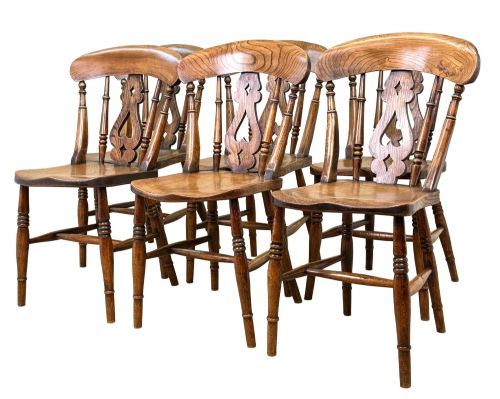
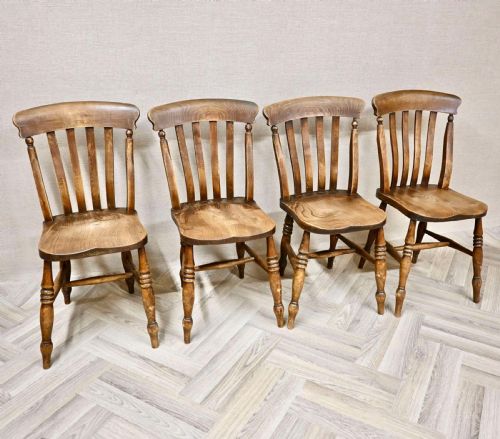
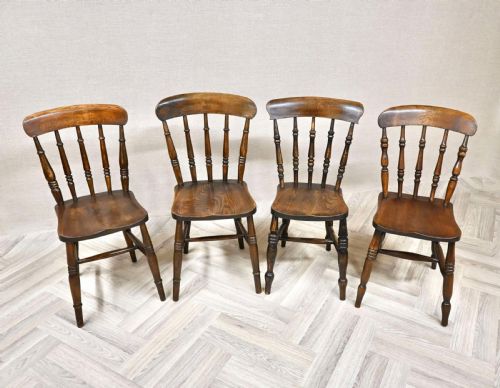
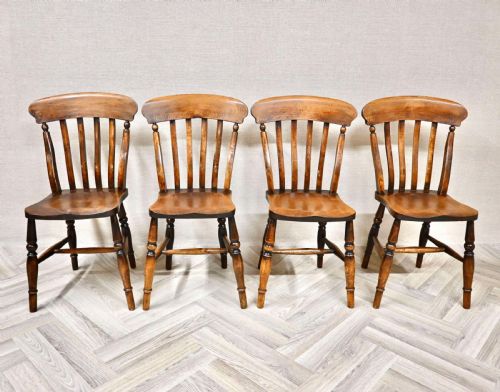
Traditional Country Kitchen Chairs
Traditional country kitchen chairs offer sturdy domestic utility, combining local timbers and vernacular forms to anchor a functional kitchen or dining space.
Traditional Country Kitchen Chairs
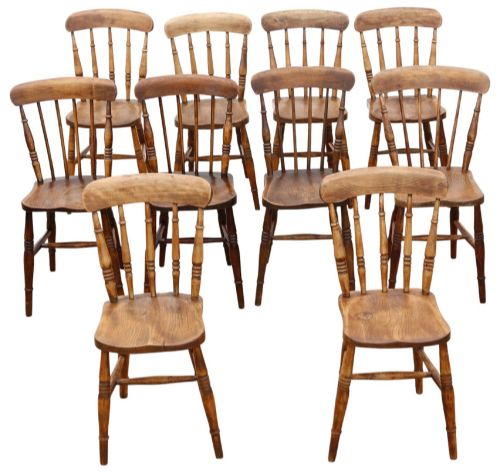
Traditional country kitchen chairs encompass robust seating forms designed for heavy daily use, ranging from single dining chairs to sets and armchairs. Buyers searching for traditional country kitchen chairs encounter pieces primarily from the nineteenth century, alongside Georgian, Victorian, and early twentieth-century examples.
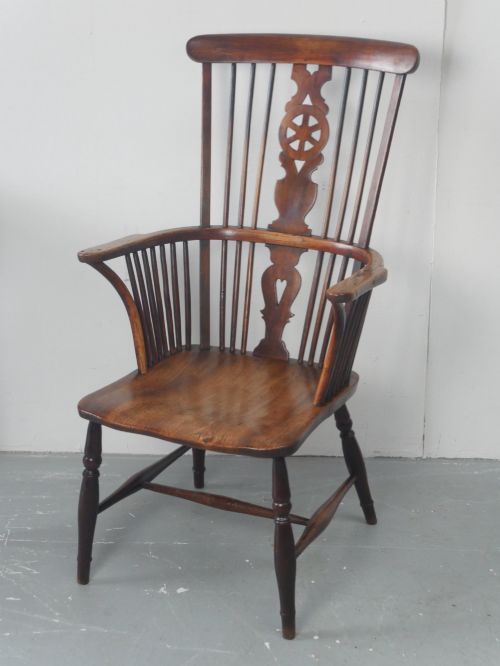
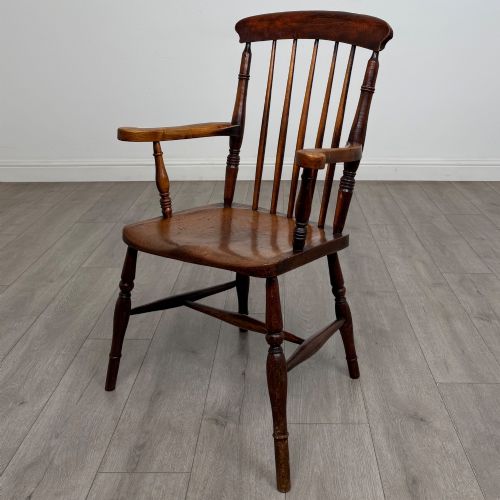
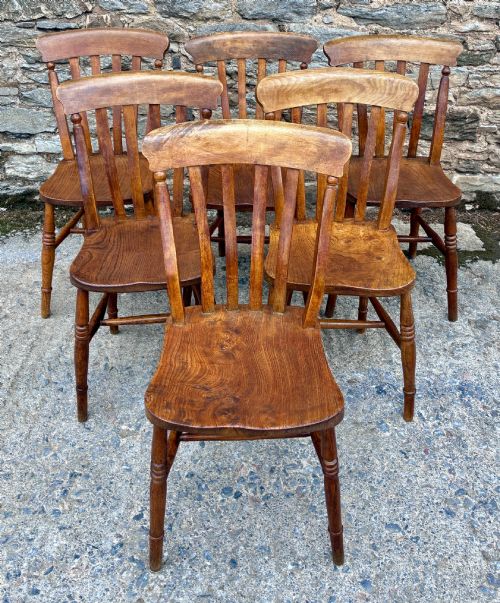
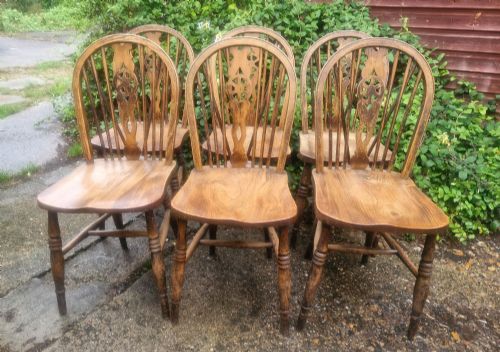
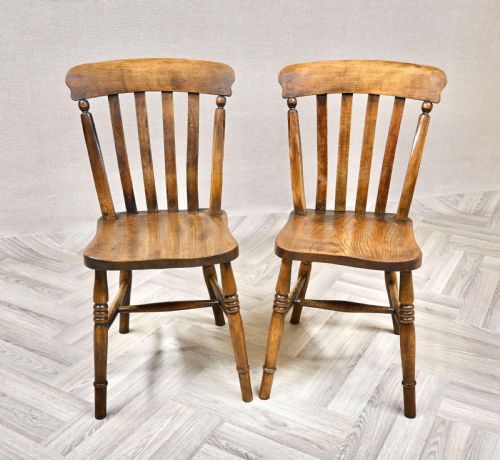
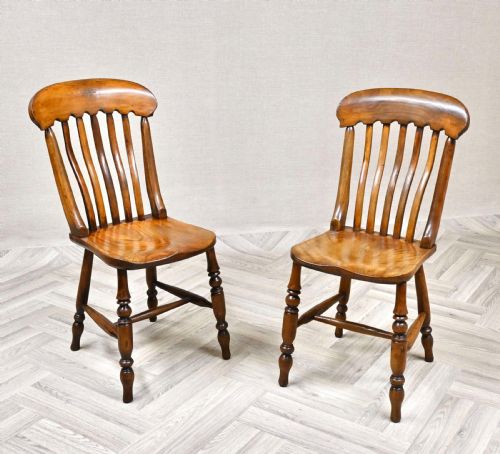
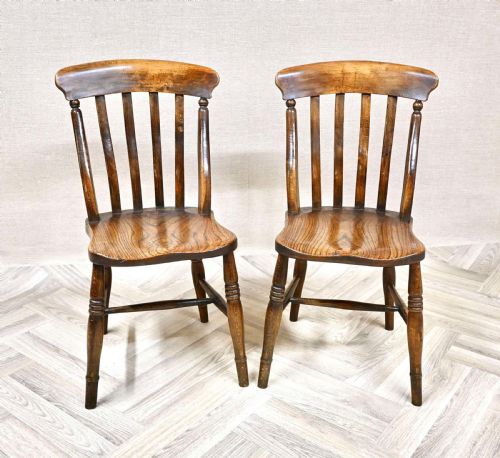
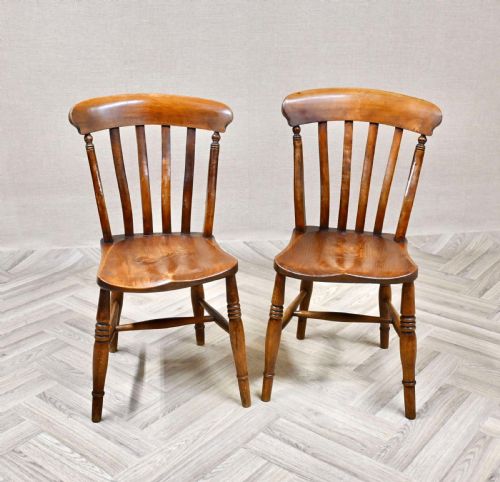
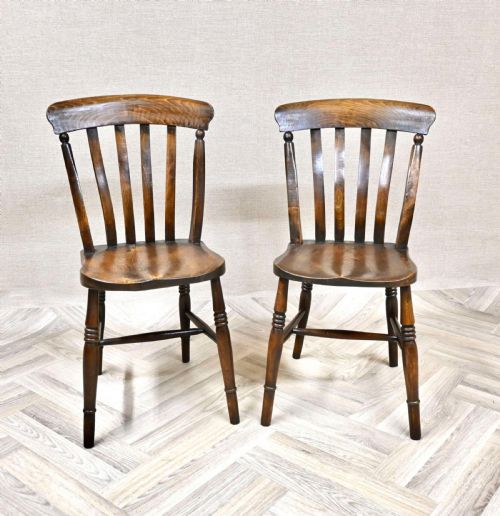
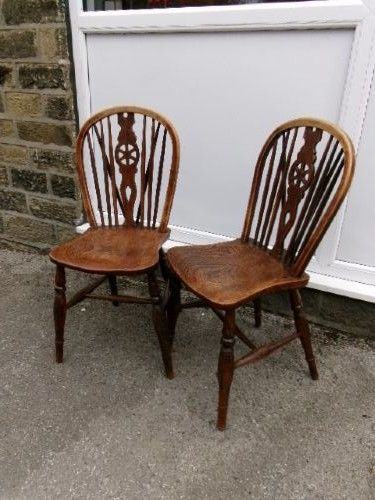
The most common forms on this page include Windsor chairs with hoop, stick, lath, and wheel backs, alongside ladderbacks and spindle backs. Regional variations such as Thames Valley chairs and Welsh oak pieces also appear, alongside dining chairs, bar stools, and settles.
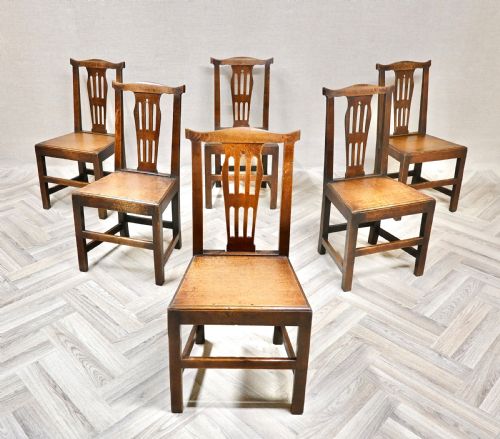
Makers utilised local hardwoods to construct these seats, producing durable furniture suited for farmhouses and cottages. Sets range from matched pairs to large harlequin groups gathered over time.
How they were made
Craftsmen built these chairs using a combination of native timbers, pairing sturdy elm for solid seats with ash, beech, oak, and pine for spindles, legs, and bentwood components. Rush seating also appears on specific rush seat dining chairs and armchairs.
Construction relied on traditional joinery methods including turned legs fitted into bored seats, steam-bent hoops, and pegged joints. Artisans shaped solid wood seats to fit the body while maintaining structural integrity across heavy kitchen use.
Certain chairs wear generations of kitchen polish on their elm seats, recording every family meal and quiet evening by the hearth.
What varies in quality
Quality in these chairs depends upon the harmony of the timber selection and the integrity of the original construction. Chairs retaining deep natural patinas on uncompromised elm seats show superior historical care.
The precision of the turnery on spindles and legs separates standard utility seating from finer regional vernacular pieces. Retaining a matching set or a well-matched harlequin group also elevates the standing of the seating.
The Traditional Country Kitchen Chairs Glossary
- Windsor chair
- A chair built with a solid wooden seat into which the legs and back spindles are driven directly. This design provides robust everyday support.
- Harlequin set
- A collection of chairs sharing a similar style or period rather than being originally manufactured together. These sets allow buyers to gather larger dining groups.
- Lathback
- A Windsor chair variation featuring a vertical central slat or lath in the backrest instead of individual spindles. It offers solid back support.
- Wheelback
- A Windsor chair back incorporating a pierced splat shaped like a cartwheel. This decorative feature became popular during the nineteenth century.
- Spindle back
- A chair back constructed from multiple slender turned vertical rods. These components distribute weight evenly across the frame.
- Settle
- A wooden bench featuring a high solid back and sometimes armrests, designed to block draughts in farmhouse kitchens.
Traditional Country Kitchen Chairs: Frequently Asked Questions
What is a harlequin set of chairs?
A harlequin set is a group of individual chairs that share similar periods, materials, or regional styles rather than originating from a single workshop bench. They are gathered together to provide seating for larger dining tables while maintaining a unified vernacular aesthetic.
This approach allows buyers to acquire larger seating groups that possess individual character and history. Each chair contributes its own subtle variation in turning or timber grain to the overall arrangement.
How do I identify a Windsor chair?
A Windsor chair is distinguished by its solid wooden seat, which acts as the central hub into which both the undercarriage legs and the upper back assembly are tenoned. Unlike framed chairs, the structural components attach directly to the thick wooden seat slab.
Variations include hoop backs, stick backs, and wheel backs, all sharing this fundamental method of construction. Elm was frequently chosen for the seat slab due to its resistance to splitting under structural stress.
Were these chairs used only in kitchens?
While primarily designed for domestic work and dining in farmhouses and country cottages, these robust seats also served in pubs, dairies, and rural schools. Their durable construction suited heavy daily tasks across various domestic and commercial environments.
Over time, many migrated from working spaces into domestic living rooms and dining rooms as buyers sought vernacular character. Their sturdy build ensures they remain practical for daily seating today.
What timber was used for the seats?
Elm was the preferred timber for the solid seats of these chairs because its interlocking grain prevented it from splitting when legs and spindles were wedged into place. Craftsmen relied on its toughness to withstand constant movement and heavy usage.
Turned legs and back spindles were often fashioned from contrasting woods such as ash or beech. This combination of timbers maximised both flexibility and strength across the entire chair.