
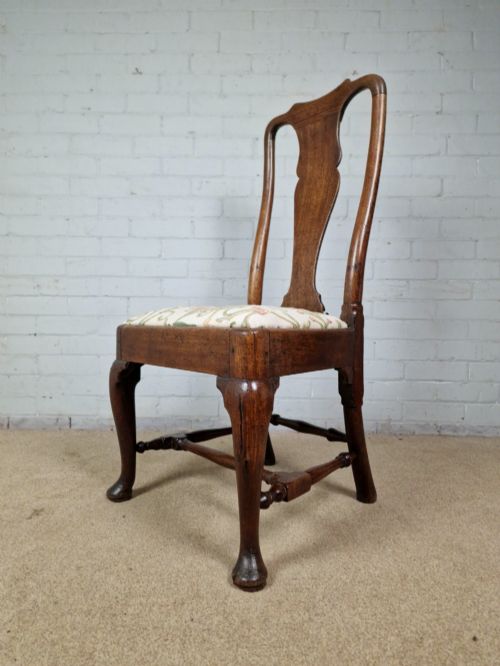
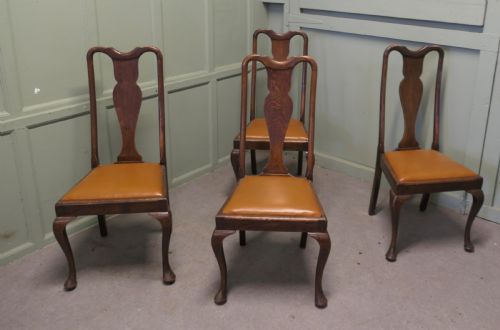
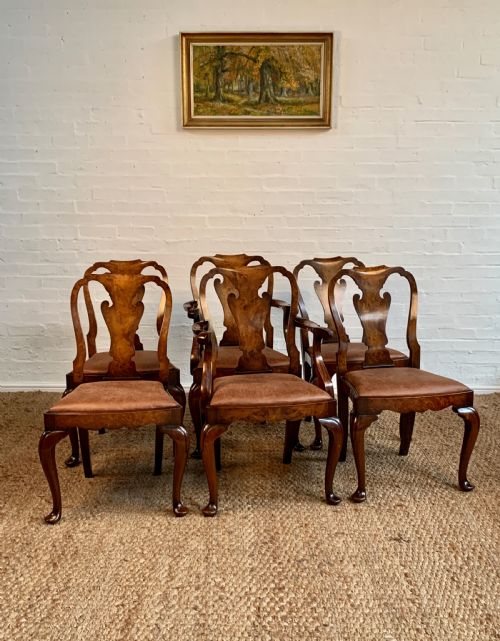


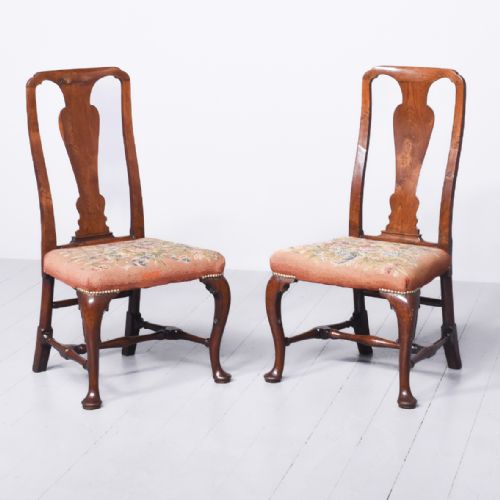


Vasiform Splat Side Chairs
These vasiform splat side chairs bring enduring craftsmanship to a room, offering robust seating shaped by classical design and traditional joinery.
How they were made
Cabinetmakers constructed these frames using dense hardwoods such as mahogany, oak, and walnut, often employing burr veneers to add rich grain patterns to the splats and back rails. Traditional joinery techniques ensured the tall, curved uprights and vase-shaped splats withstood daily use without relying on metal fasteners.
Seating portions typically comprise drop-in pads upholstered in fabric or leather, allowing for straightforward reupholstery while maintaining the clean lines of the wooden frame.
What varies in quality
The distinction between ordinary and exceptional pieces lies in the fluidity of the carved splat profile and the selection of timber figures. Superior examples display crisp joinery angles and carefully matched grains across a matched set.
Subtleties in proportion, such as the rake of the back legs and the subtlety of the carved shoulders, separate standard production from master craftsmanship.
Listings feature pieces spanning from seventeen hundred through the nineteenth century, executed in mahogany, oak, and walnut.
The Vasiform Splat Side Chairs Glossary
- Vasiform splat
- A central vertical wooden element in the chair back shaped to resemble a classical vase. This silhouette defines the profile of many eighteenth-century seating designs.
- Drop-in seat
- A removable wooden frame upholstered separately and dropped into a rebate within the chair seat rails. This method simplifies recovering the fabric over time.
- Cabriole leg
- A furniture leg that curves outward at the knee and tapers inward toward the ankle, finishing in a pad or claw foot. It is frequently seen on chairs from the Georgian and Queen Anne eras.
- Splati
- The vertical central slat of a chair back connecting the crest rail to the seat. Grain selection on this component dictates much of the visual character.
Vasiform Splat Side Chairs: Frequently Asked Questions
How do I date these chairs?
Dating relies on examining timber species, tool marks, and construction methods visible beneath the seat frame. Early pieces often show hand-sawn surfaces and pegged mortise and tenon joints.
Revival pieces from later centuries utilise more uniform machining and modern adhesives, helping distinguish eighteenth-century originals from subsequent interpretations.
Are these chairs comfortable for dining?
Their supportive vase-shaped splats provide firm lumbar contact, making them suitable for long periods at a dining table. The upright stance encourages proper posture during meals.
Adding a well-padded drop-in cushion further enhances comfort without altering the historic wooden frame.
Can I mix different wood tones?
Matching disparate woods depends on the unifying style of the carved splats and leg profiles. Walnut and mahogany pieces often sit comfortably together if the room shares a consistent period palette.
Focusing on uniform chair heights and similar back proportions ensures a cohesive arrangement around a table.
How should I care for the wood?
Maintaining the finish requires regular dusting with a soft, dry cloth and avoiding placement near direct heat sources or strong sunlight. Excessive warmth causes timber to dry and split.
Applying occasional specialist wax feeds the grain and preserves the historic patina developed over generations of use.