
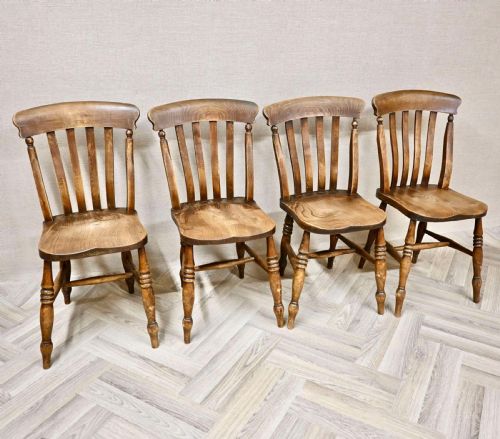
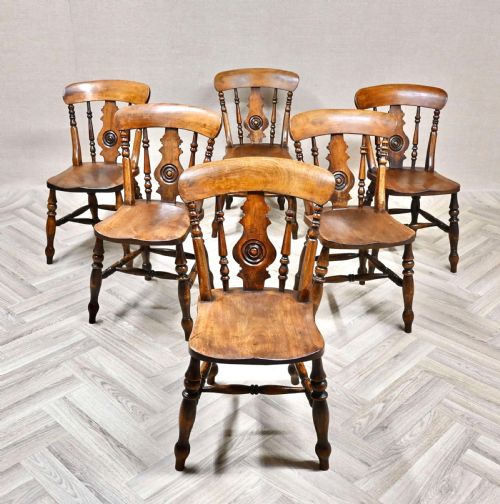
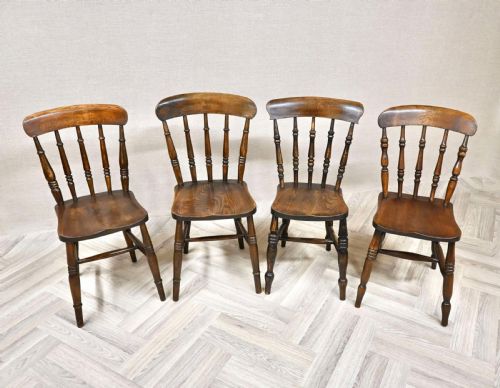
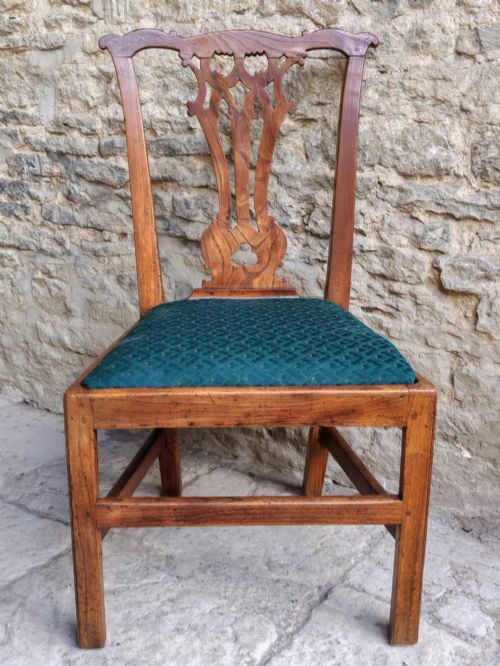
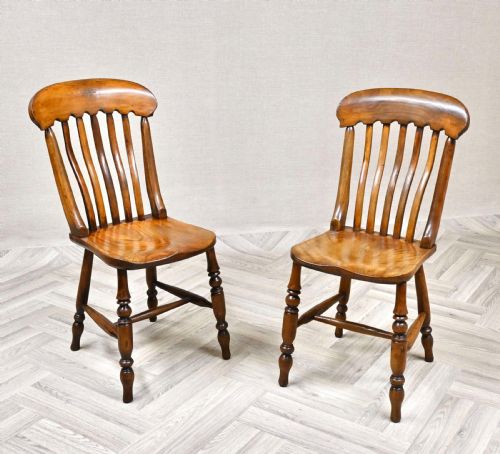
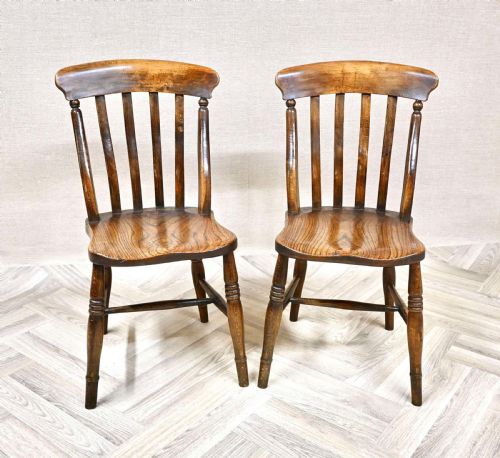
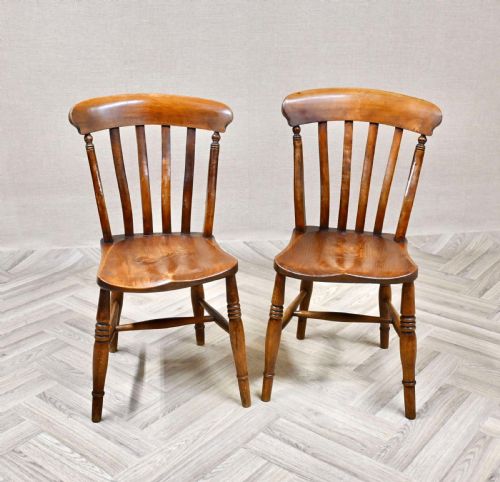
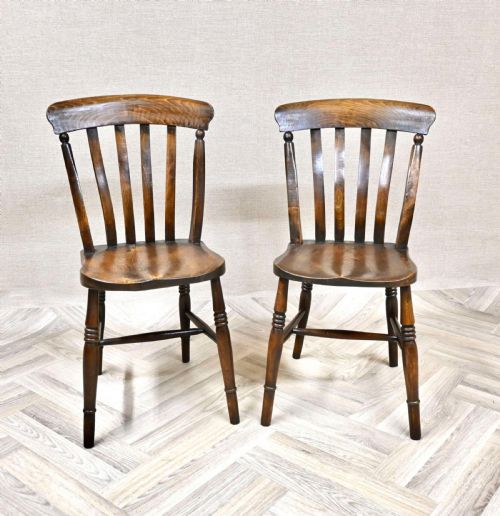
Elm Country Side Chairs
Elm country side chairs bring honest vernacular character to a room, offering sturdy wooden seats shaped for daily kitchen use.
Elm Country Side Chairs
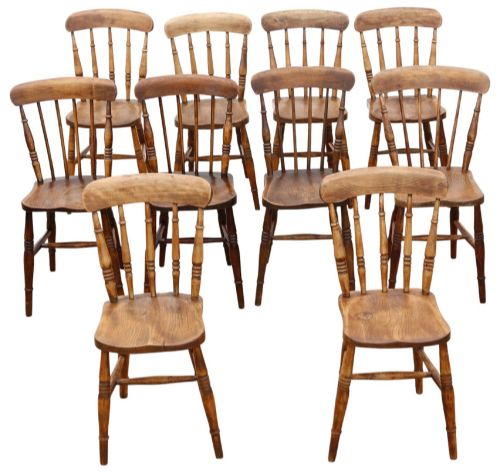
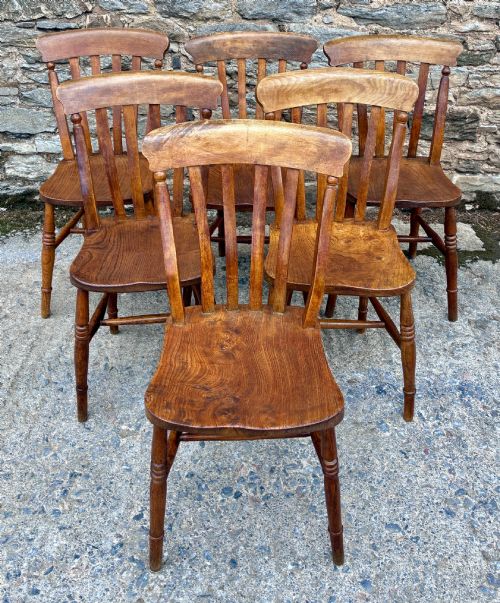
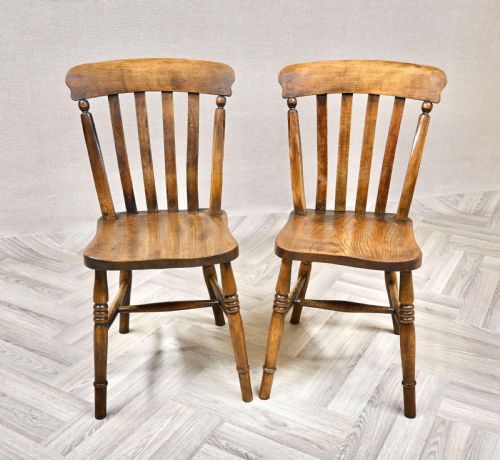
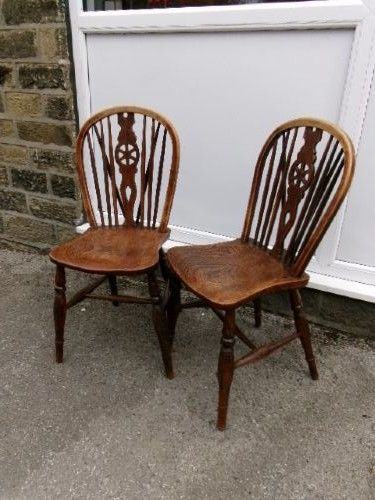
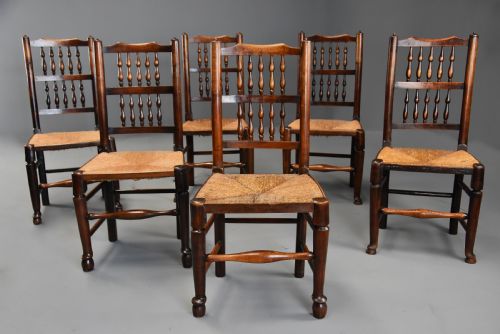
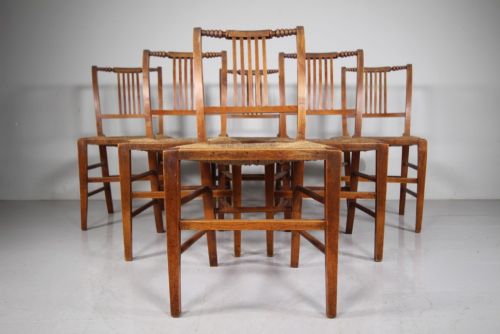
Elm country side chairs represent the practical domestic seating of English farmhouses and rural homes, emerging primarily from the eighteenth and nineteenth centuries. Buyers searching this phrase look for solid timber construction, saddle-shaped seats, and vernacular framing that prioritises utility over formal design. The pieces available range from provincial spindle backs and ladderbacks to robust Windsor models.
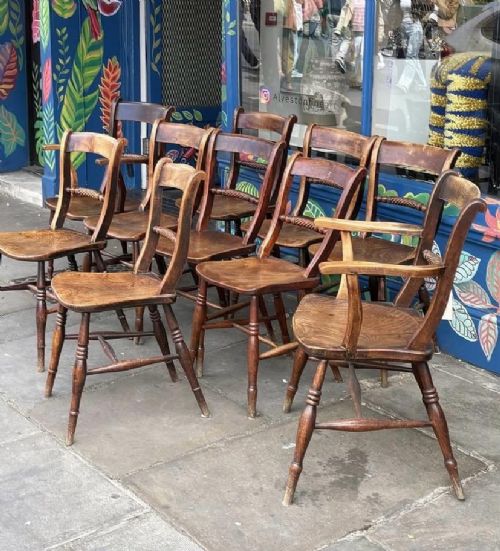
Most examples encountered on this page belong to the nineteenth century, including Victorian kitchen chairs and Thames Valley stick backs. Sets appear alongside pairs and single chairs, often featuring turned legs and supportive stretchers. These furnishings carry the marks of rural life, reflecting the local traditions of regional joiners and chairmakers.
How They Were Made
Makers relied on elm for the seats because its interlocking grain resisted splitting when drilled and shaped into saddles. This tough timber was commonly paired with ash or beech for the bentwood bows, spindles, and legs, balancing flexibility with rigid support.
Joinery methods combined traditional wedged tenons and steam-bent components to withstand heavy domestic service. Rush, fabric, or plain wooden boards completed the seats, secured without complex adhesives.
Listings feature elm, beech, oak, and ash across eighteenth and nineteenth-century periods.
What Varies in Quality
The standard of an elm country side chair depends on the depth and comfort of the adzed seat carving and the balance of its turned components. Superior examples maintain their original timber thickness without excessive sanding or structural replacement.
Consistency across a matched set elevates a group above a harlequin collection assembled later. The crispness of the turnery and the integrity of the wedged joints determine the enduring stability of the frame.
Worksop
The Elm Country Side Chairs Glossary
- Windsor chair
- A chair built with a solid wooden saddle seat into which the back and legs are independently inserted. This design creates a strong, lightweight frame typical of rural production.
- Lathe back
- A chair back featuring vertical flat wooden splats turned or shaped on a lathe. They provide rigid upright support for the sitter.
- Thames Valley
- A regional style of nineteenth-century chairmaking known for combining elm seats with yew or ash framework. These pieces often display distinctive wheelback or comb-back details.
- Stretcher
- A horizontal wooden brace connecting the legs of a chair to provide rigidity and strength. Double stretchers appear on sturdier provincial models.
- Penny seat
- A saddle-shaped wooden seat with a central circular depression resembling a coin, hollowed out for comfort.
Elm Country Side Chairs: Frequently Asked Questions
How do I identify a Windsor chair?
A Windsor chair is characterised by its heavy solid wooden seat, into which the legs and back spindles are bored directly rather than joined through a traditional frame.
Look for a saddle-shaped depression on the seat and an arched wooden bow forming the upper back and armrests.
What timber is used for the seats?
Elm is the primary timber chosen for the seats because its twisted grain prevents it from splitting when workers hollow out the saddle shape.
Other timbers such as beech, ash, and oak appear frequently in the legs, spindles, and stretchers.
Can I use these chairs for daily dining?
These pieces were built for heavy domestic labour in farmhouses and kitchens, making them exceptionally durable for modern dining use.
Ensure the joints remain tight and the seat boards are stable before placing them into daily service around a table.
How do I spot an 18th-century chair?
Eighteenth-century examples typically display slimmer proportions, finer hand-carved details, and aged patination accumulated over generations of use.
Check for pegged joints and early regional styles like Chippendale country forms or early comb backs.