
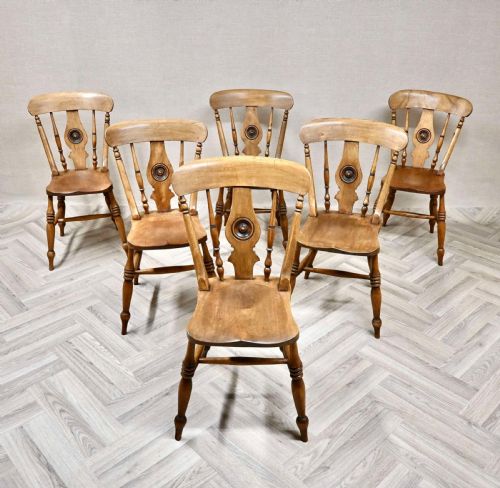
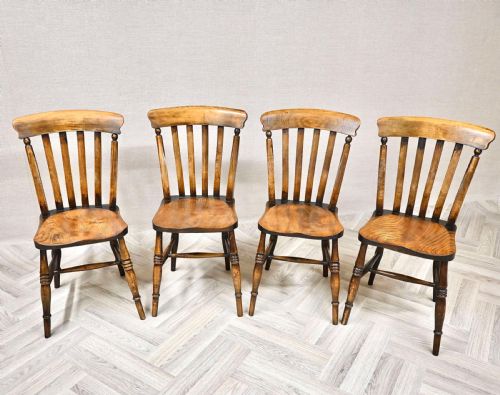
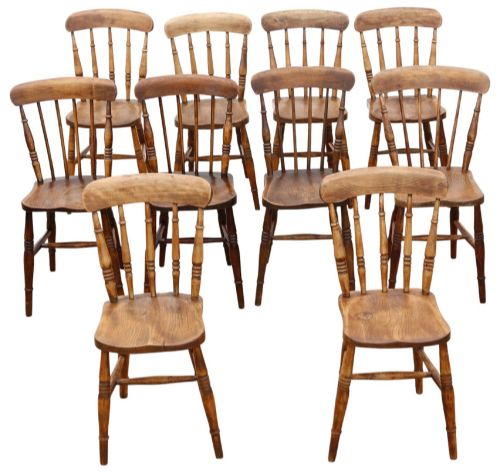
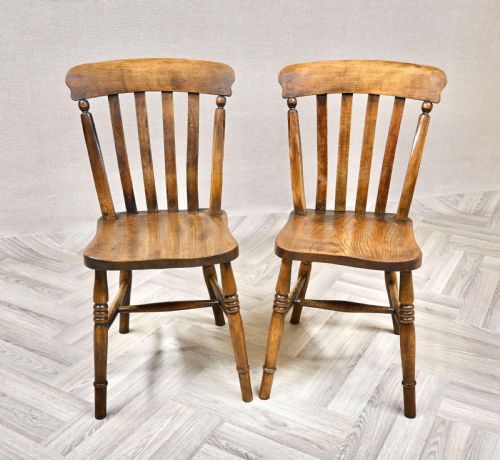
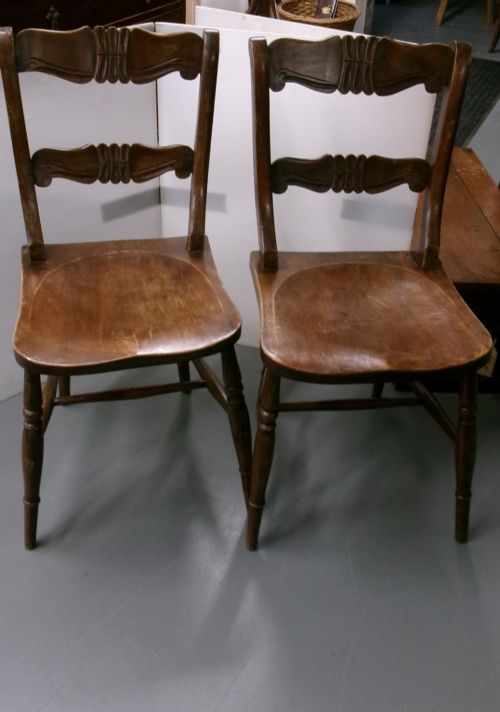


Beech Kitchen Side Chairs
Beech kitchen side chairs offer honest utility and sturdy daily service, making them essential seating for any rustic or traditional interior.
Beech Kitchen Side Chairs
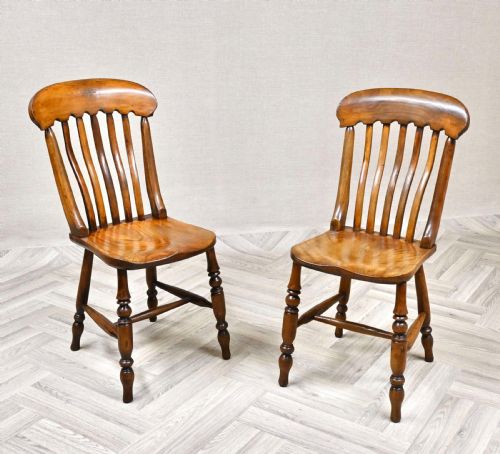
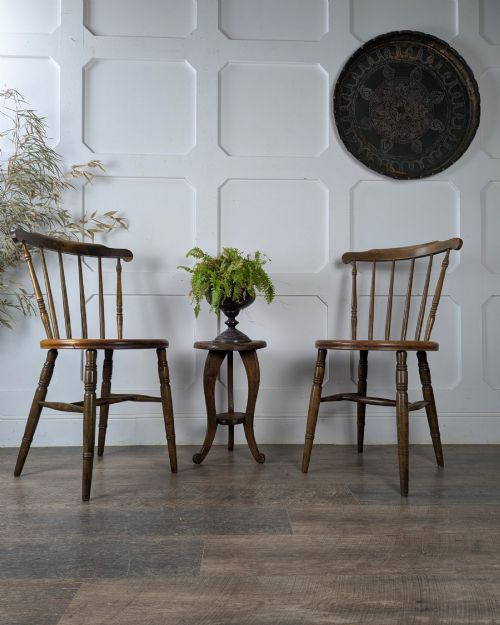
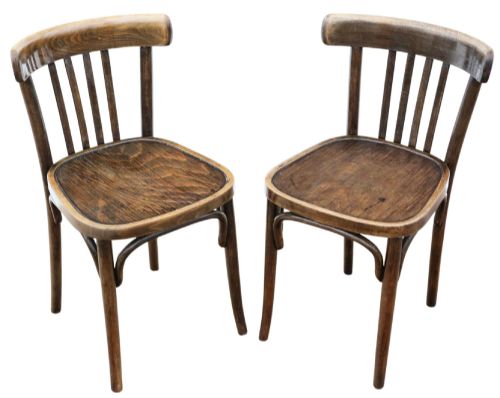
Beech kitchen side chairs combine domestic utility with robust timber construction, designed primarily for daily dining and functional kitchen use. You encounter various vernacular forms here, ranging from mid-century bentwood to nineteenth-century Windsor designs.
The prevailing examples on this page date from the nineteenth century through the mid-twentieth century, encompassing Victorian country models and Edwardian variations. Elm and beech combinations appear frequently, providing contrasting wood tones and strong structural integrity.
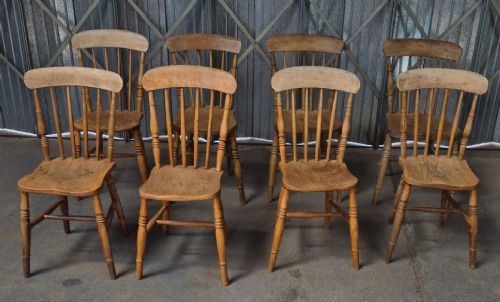
Most pieces function as side chairs or dining chairs, often appearing in matched pairs, larger sets, or harlequin groupings. Their straightforward profiles reflect decades of practical service in domestic interiors across Britain.
How they were made
Makers utilised solid beech for turned legs, spindles, and steam-bent components, often pairing it with shaped elm seats for added durability. This combination of timbers took advantage of beech's smooth grain and elm's interlocking fibres.
Construction techniques relied on traditional joinery, including turned spindles fitted into steam-bent rails and wedged tenons securing the seats. Bentwood methods emerged later in the period, allowing for graceful curved frames produced with heat and pressure.
Materials recorded across these items consist strictly of beech, elm, and plywood.
What varies in quality
Quality rests in the proportional balance of the turned spindles and the careful shaping of the solid wood seats. Better examples show superior timber selection, where the grain runs cleanly through structural stress points.
Original surface patination and the tightness of the traditional joints distinguish finer specimens from heavily restored alternatives. The integrity of the steam-bent elements also indicates the skill involved in the original workshop production.
The Beech Kitchen Side Chairs Glossary
- Windsor
- A traditional chair type featuring a solid timber seat into which the legs and back spindles are directly socketed. This form relies on robust stick-back construction for everyday strength.
- Stick back
- A chair back composed of simple turned spindles or rods rather than a solid carved splat. These members offer comfortable support while keeping the frame visually light.
- Bentwood
- Wood that has been rendered pliable via steam and then shaped in moulds before drying. This method creates continuous curves without the weakness of angled joints.
- Harlequin set
- A collection of chairs that match in general style and period but vary slightly in individual detail. Such groupings were assembled over time rather than purchased as a uniform factory batch.
Beech Kitchen Side Chairs: Frequently Asked Questions
What defines a kitchen side chair?
These are un-upholstered wooden seats designed specifically for domestic dining and food preparation spaces. Their straightforward construction prioritises easy cleaning and robust daily use.
Most examples lack arms, allowing them to tuck neatly beneath standard kitchen tables. Their modest scale suits informal dining areas and cottage interiors.
How do elm and beech work together?
Elm provides a tough, resilient surface for the seat because its interlocking grain resists splitting under pressure. Beech offers uniform density, making it ideal for turned legs and slender back spindles.
Cabinet makers combined these two timbers to balance structural strength with visual variety. The contrasting grain patterns develop a rich patina over decades of service.
Can I mix different chair styles?
Harlequin sets demonstrate that combining similar vernacular forms creates an authentic, collected interior. Matching chairs by timber and general period ensures a cohesive appearance around the table.
Mixing stick-back and Windsor variants introduces subtle texture without disrupting the room's overall harmony. Uniform height and seat proportions remain the key factors for comfortable seating.
How should I care for beech wood?
Routine maintenance requires only a soft cloth and occasional application of appropriate furniture wax to nourish the grain. Avoiding direct sunlight and sudden temperature changes protects the nineteenth-century and early twentieth-century timber from drying out.
Natural movement in old wood is normal and requires no intervention unless structural joints loosen. Keeping the surface clean preserves the historic patina accumulated over generations.