

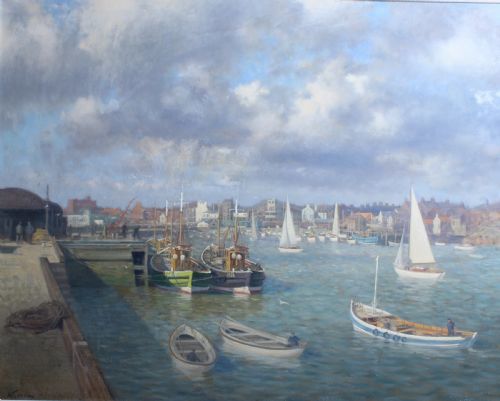


Traditional Coastal Oil Artwork
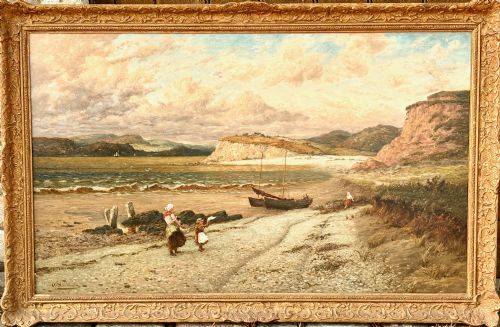
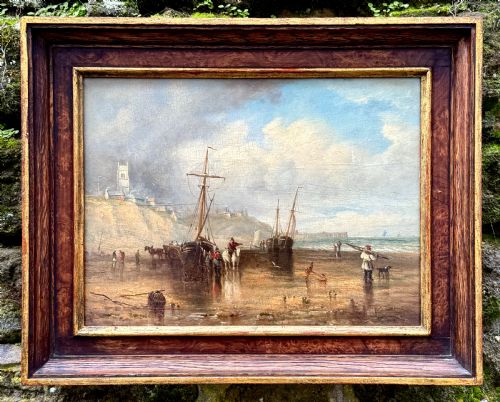
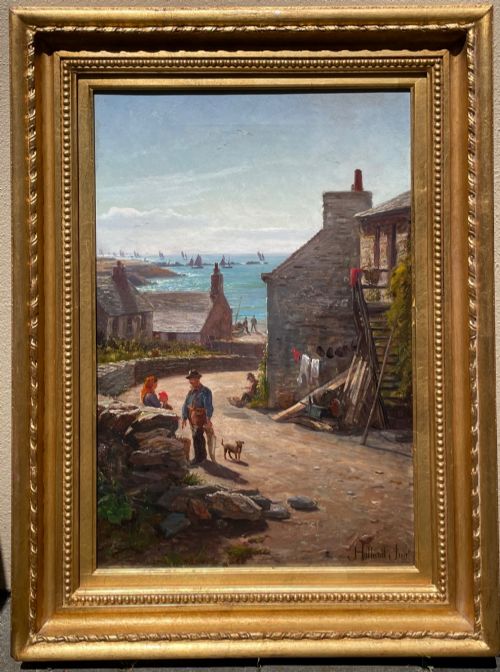
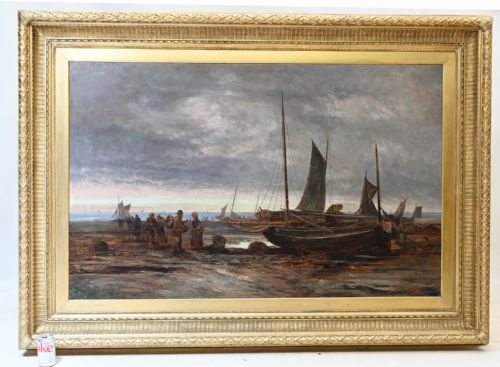
Traditional coastal oil artwork brings the maritime heritage of harbours, seascapes, and coastal shores directly to the interior wall.
Traditional Coastal Oil Artwork
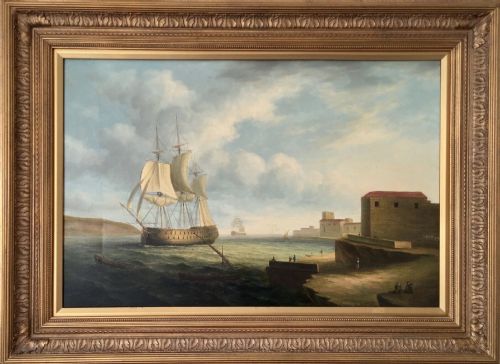
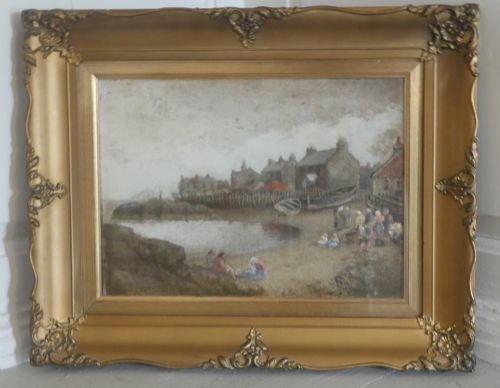
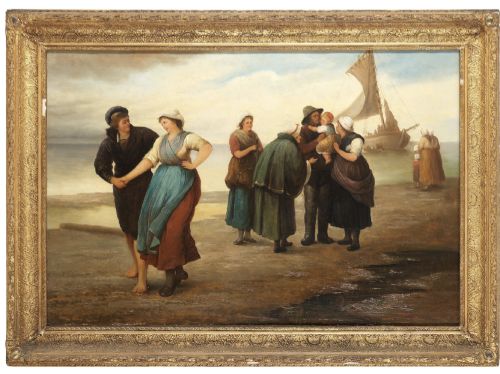
Traditional coastal oil artwork encompasses maritime scenes, harbour views, and seaside landscapes rendered in oil paint across various historical periods. These pieces capture historical vessels, fishing fleets, lighthouses, and coastal communities from viewpoints ranging from Victorian shorelines to mid-century maritime vistas.
The selection on this page relies primarily on nineteenth-century and twentieth-century British and European canvases and panels. Buyers encounter works depicting specific locations such as Isle of Man harbours, Cornish coastal scenes, and busy estuaries.
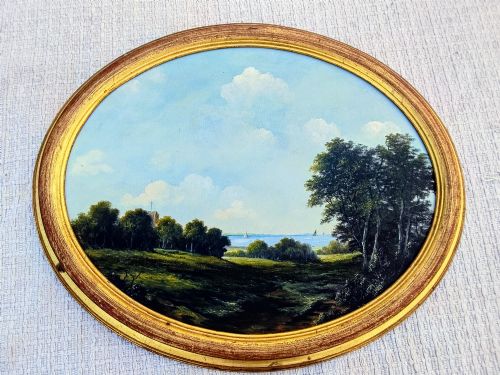
Formats range from intimate oval panels to large six-foot maritime canvases suited for prominent display. Many arrive housed in period giltwood or gesso frames that complement the marine subject matter.
Materials and construction methods
These works utilise oil paint applied to prepared canvas, wooden panel, or board surfaces. The medium allows for rich layering of pigment, building the atmospheric textures of open water, stormy skies, and rugged shorelines.
Many surviving examples retain their original frames constructed from wood, gesso, and giltwood. These ornate or simple surrounds protect the perimeter of the canvas and define the visual boundary of the maritime scene.
The listings combine nineteenth-century Victorian works with twentieth-century British examples, utilising oil paint on canvas, wood, and panel.
Distinctions in quality
Quality rests on the artist's ability to render light upon water, atmospheric depth, and convincing maritime architecture. Stronger compositions handle the movement of waves and the rigging of vessels with assured brushwork rather than rigid illustration.
The integration of the painting with its frame affects the overall integrity of the piece. Period frames that complement the palette and era of the canvas elevate the presentation considerably.
Thomas Creswick·John Holland·Walter Goodin·William Edward Webb·Eugene Joseph Verboeckhoven·Alfred Henry Vickers·Thomas Rose Miles
The Traditional Coastal Oil Artwork Glossary
- Canvas
- A heavy woven fabric stretched across a wooden frame to serve as a foundation for oil paint. It provides a flexible and durable surface historically favoured by marine artists.
- Giltwood
- Wood carved and coated with a thin layer of gold leaf or metallic gilt. This material appears frequently in period frames surrounding traditional maritime oil paintings.
- Gesso
- A plaster-like mixture applied to wood panels or frames to create a smooth surface for gilding or painting. It supports intricate decorative moulding on nineteenth-century frames.
- Panel
- A flat piece of wood used as a rigid support for oil paint instead of stretched fabric. Panel paintings often survive from earlier periods with stable structural integrity.
Traditional Coastal Oil Artwork: Frequently Asked Questions
How do I identify a nineteenth-century coastal oil painting?
Examine the canvas preparation, stretcher bars, and framing materials for signs of age consistent with the period. Stylistic cues such as the depiction of sailing vessels and traditional maritime clothing also help date the work.
Signatures, artist inscriptions on the reverse, and historical dealer labels provide further documentation regarding the origin and date of execution.
Are these paintings created on canvas or panel?
Artists utilised both woven canvas stretched over wooden frames and rigid wooden panels for their coastal compositions. Both supports were standard practice throughout the nineteenth and twentieth centuries.
Panel supports frequently appear in smaller works, while larger maritime scenes typically utilise heavy canvas to accommodate broader brushstrokes.
How should I display a framed maritime oil painting?
Position the artwork away from direct sunlight and fluctuating heat sources to protect the oil pigments and the wooden support structure. Adequate wall space allows larger canvases, such as six-foot Victorian pieces, to sit comfortably within the room.
Ensure the hanging fixings match the weight of the piece, particularly when supporting heavy giltwood or gesso frames.
What subjects are common in these coastal scenes?
Common subjects include bustling fishing harbours, merchant shipping vessels, lighthouses, and quiet estuaries along British and European shores. Artists frequently recorded daily maritime life, from packing catches on the quay to ships navigating choppy seas.
Views often feature specific geographical locations, documenting regional maritime history through topography and local architecture.