



English Nautical Wall Art
English nautical wall art encompasses maritime watercolours, oil paintings, and dioramas depicting coastal scenes, vessels, and harbours, prized for capturing maritime heritage.
English Nautical Wall Art
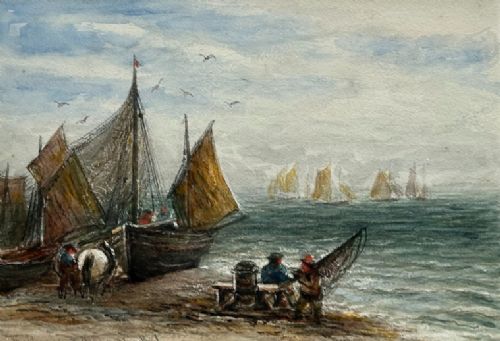
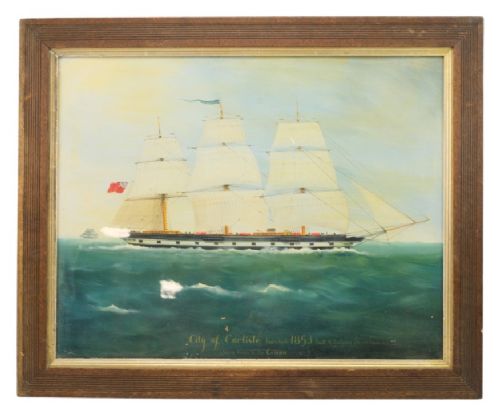
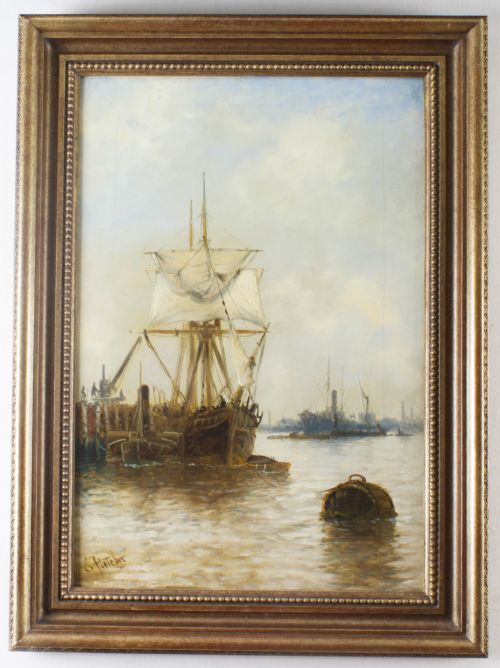
English nautical wall art comprises framed paintings, watercolours, aquatints, and three-dimensional dioramas centred on marine subjects. Buyers searching this phrase encounter coastal landscapes, fishing vessels, and historic ships rendered across various periods.
The selection leans heavily towards nineteenth-century works alongside mid-twentieth-century examples. Common formats include oil on canvas, watercolour paintings on paper, and detailed maritime dioramas representing ships and coastal views.
Materials and construction
Makers utilised traditional artist materials such as oil paint, watercolour, paper, and canvas, frequently housing completed works in gilt wood frames. Support bases range from standard stretched canvas and card to robust wooden panels.
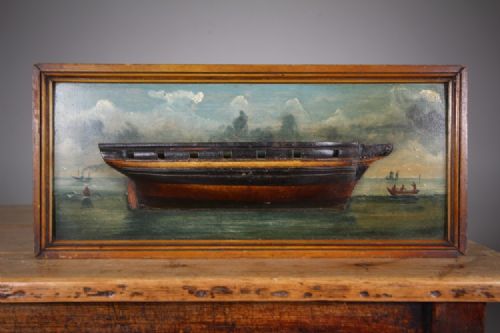
Three-dimensional pieces like maritime dioramas involve scratch-built ship models constructed from wood, carefully integrated into framed glass-fronted boxes to create depth and perspective.
English Nautical Wall Art Retail Price Guide 2026
Typical asking prices for english nautical wall art among the pieces listed under this phrase on Sellingantiques today, from the lower quarter to the upper quarter. They describe what is for sale here now, not the wider market.
Listings feature works spanning the nineteenth century through to the 1960s, utilising oil paint, watercolour, and wood.
Assessing quality and execution
Quality rests upon the artist's command of light, water movement, and atmospheric conditions in the depiction of the sea. Stronger examples display confident brushwork and precise anatomical rendering of rigging and hull structures.
The preservation of the paper, canvas, or wood support directly influences desirability, alongside the originality and suitability of the accompanying frame.
James Orrock·Charles Napier Hemy·Richard Harry Carter·William Wyld·Joseph Newington Carter·Robert Leslie Howey·Thomas Rose Miles·Edward Fletcher·Henry Bright
The English Nautical Wall Art Glossary
- Watercolour
- A painting method where fine pigment is suspended in water-based solution on paper. This medium captures translucent effects suited for coastal skies and open water.
- Aquatint
- A printmaking technique that produces tonal areas resembling watercolour washes. It was frequently utilised for multi-plate series depicting coastal views.
- Oil on canvas
- Pigment bound in drying oil applied to a woven fabric support. This combination allows for rich textures and deep colour layering in marine scenes.
English Nautical Wall Art: Frequently Asked Questions
How do I date an oil painting?
Dating relies on stylistic evidence, canvas stamps, and framing techniques typical of specific periods.
Examining signatures and known exhibition dates provides further chronological clarity.
What is a maritime diorama?
A diorama combines a scratch-built ship model with a painted backdrop inside a framed box.
This creates a realistic three-dimensional perspective of vessels at sea or moored in harbour.
Are watercolours prone to fading?
Watercolours executed on paper are sensitive to prolonged direct sunlight and humidity.
Proper framing behind protective glass helps preserve the original pigment tones over time.
How should I hang nautical art?
These pieces require stable interior walls away from direct heat sources and damp environments.
Secure picture hooks matched to the weight of the wooden frame ensure safe wall placement.