





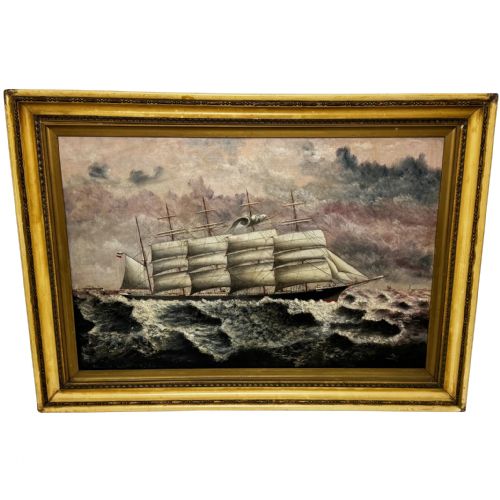
Large Framed Seascape
A large framed seascape brings the weight of open water and coastal air directly onto a room's wall.
Large Framed Seascape
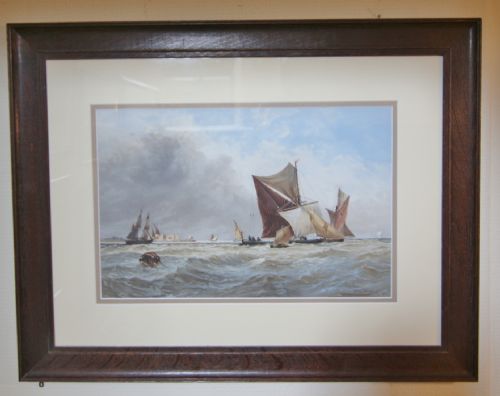
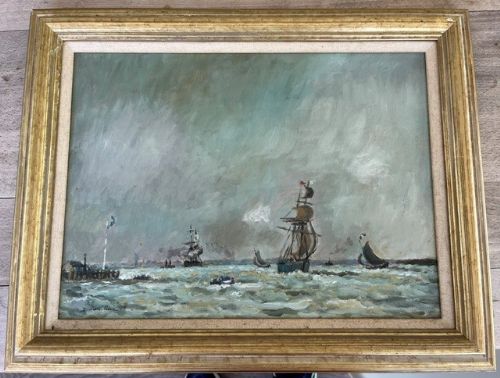
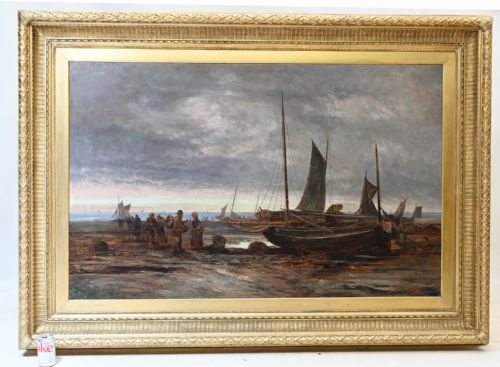
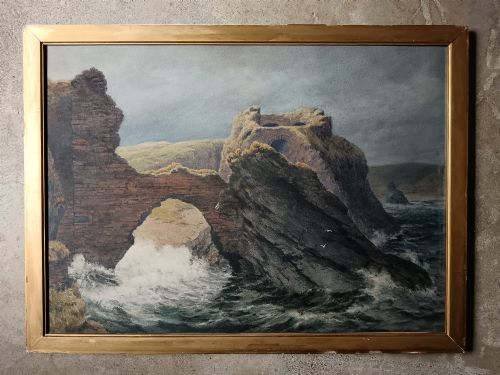
A large framed seascape represents expansive maritime views, encompassing rugged shores, bustling harbours, and open ocean expanses scaled for generous wall spaces. These works draw the eye through sweeping perspectives of water, sky, and vessel traffic rendered on a substantial scale.
The selections encountered here span from nineteenth-century Victorian marine art and maritime realism through to mid-century impressionism and modernist interpretations. Traditional oils and watercolours dominate the selection, housed within heavy wood, gesso, and gilt frames that complete the presentation.
Origins stretch across British, French, Italian, and Belgian schools, capturing specific localities from Cornish fishing ports and Scottish castles to Mediterranean harbours and distant polar passages. Each piece serves as a window into historical maritime activity and changing coastal landscapes.
Materials and Technique
Painters relied principally on oil paint applied to canvas or wood board, building rich textures that captured the dense atmosphere of sea spray and churning water. Watercolour and gouache on paper also appear, offering luminous transparency for coastal light and subtle atmospheric effects.
Substantial wooden frames, frequently finished with moulded gesso and heavy gilding, provide the structural support and visual boundary required for large canvases. These surrounds range from elaborate nineteenth-century Victorian mouldings to simpler mid-century wooden profiles.
Listings feature oil on canvas and watercolour works across nineteenth-century Victorian, Edwardian, and mid-century modern periods.
Determinants of Quality
The distinction between ordinary and superior works rests in the painter's command of light, movement, and spatial depth across a large format. Masterful brushwork conveys the genuine weight of a rolling swell or the palpable humidity of a coastal haze, whereas lesser hands produce static, unconvincing water.
Original framing plays a vital role in the overall integrity of the piece, as period-correct giltwood or carved mouldings complement the artistic ambition of the canvas. The relationship between the scale of the painting and the depth of the frame dictates the visual impact on the wall.
TB Hardy·Erich Mercker·John Moxon·George Morland·Stephen John Batchelder·George Henry Knight·Thomas Rose Miles·Paul Jean Clays·Herbert James·Hirst Walker·Fred Dade·Donald McIntyre·John William Gilroy
The Large Framed Seascape Glossary
- Gesso
- A plaster-like mixture applied to wooden frames before gilding or painting to create a smooth, workable surface for decorative moulding. It allows crisp architectural details and relief ornaments to be cast along the frame edges.
- Gilt
- A thin layer of gold leaf or metallic powder applied to the surface of a wooden frame to impart a rich, luminous finish. This traditional technique protects the underlying gesso while catching ambient room light.
- Watercolour
- A painting method where coloured pigments are suspended in a water-soluble vehicle, typically applied to heavy paper surfaces. It achieves delicate washes and luminous effects particularly suited to skies and calm coastal inlets.
- Maritime Realism
- An artistic style focused on the accurate, detailed portrayal of ships, coastal topography, and marine weather conditions. Practitioners prioritized observational precision regarding rigging, hull construction, and nautical terminology.
Large Framed Seascape: Frequently Asked Questions
How do I hang a heavy framed painting?
Secure fixings must be mounted directly into wall studs or masonry to support the substantial weight of large canvases and heavy timber frames. Professional picture hangers utilise dual-point hanging wire systems to distribute weight evenly and prevent tilting.
Position the centre of the canvas at approximately eye level to ensure optimal viewing angles within the room. Consider the ambient lighting in the space to avoid distracting glares on varnished oil surfaces.
What distinguishes Victorian marine art from mid-century works?
Victorian marine art typically emphasises meticulous maritime realism, documenting specific vessels, rigging details, and dramatic weather with academic precision. Tones tend to be rich and traditional, housed within elaborate giltwood frames.
Mid-century paintings lean toward impressionistic brushwork and simplified coastal forms, prioritizing atmosphere and colour harmony over strict topographical accuracy. Frames from this later era are generally cleaner in profile.
How do I protect canvas from humidity?
Maintain stable indoor humidity and temperature levels to prevent the canvas from expanding, contracting, or developing mould. Avoid placing large paintings near direct heat sources, fireplaces, or exterior damp walls.
Ensure adequate air circulation behind the frame by using small spacers against the wall if necessary. Seasonal checks of the canvas tension ensure the fabric remains properly seated.