
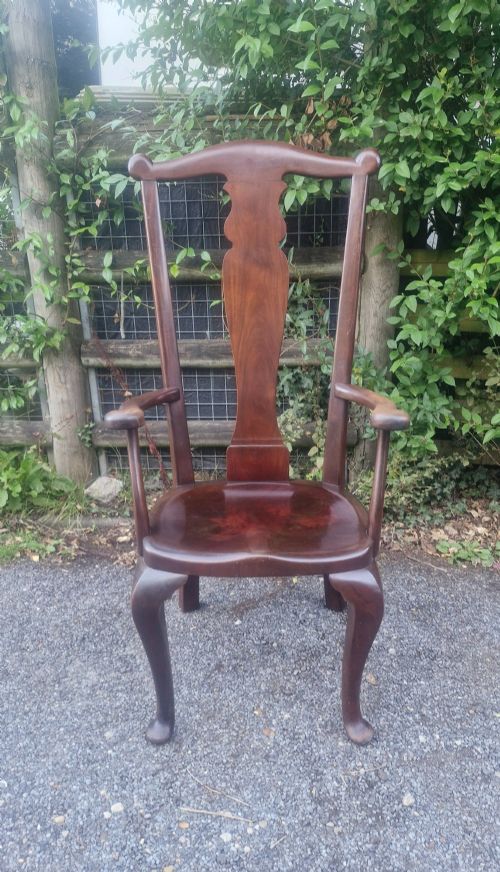
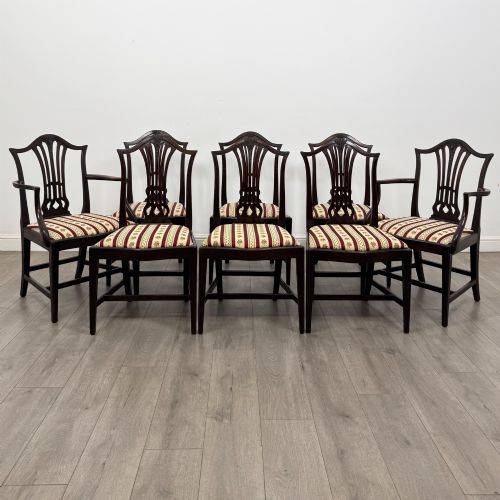
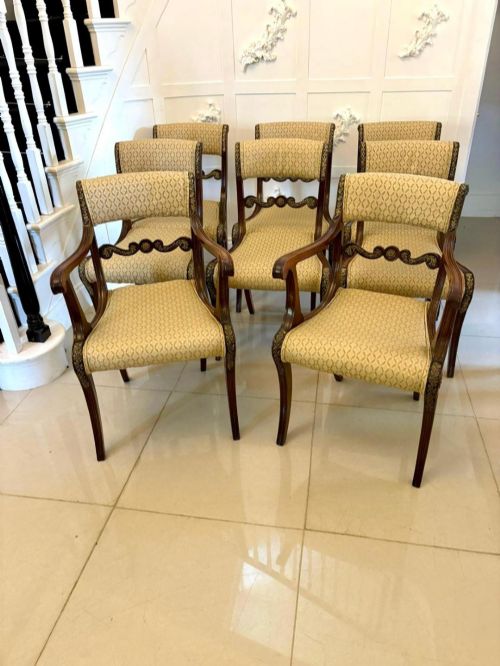
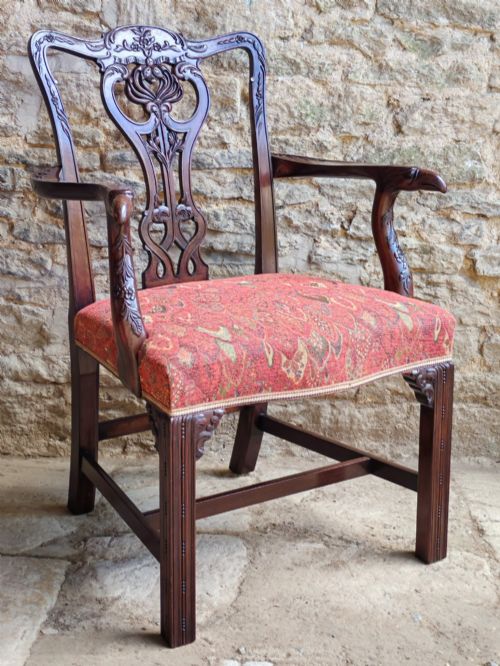


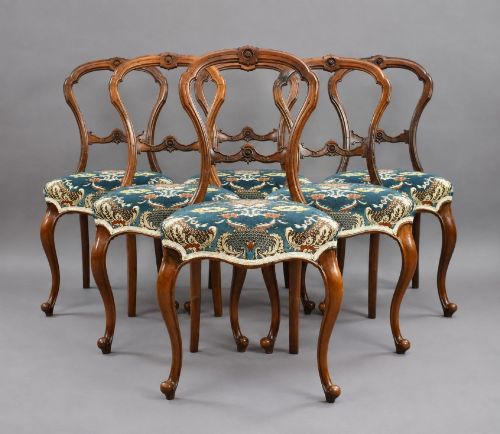
Traditional Carved Dining Chairs
Traditional carved dining chairs bring substantial timber frames and period detail to the dining room, offering both formal presence and durable seating.
Traditional Carved Dining Chairs
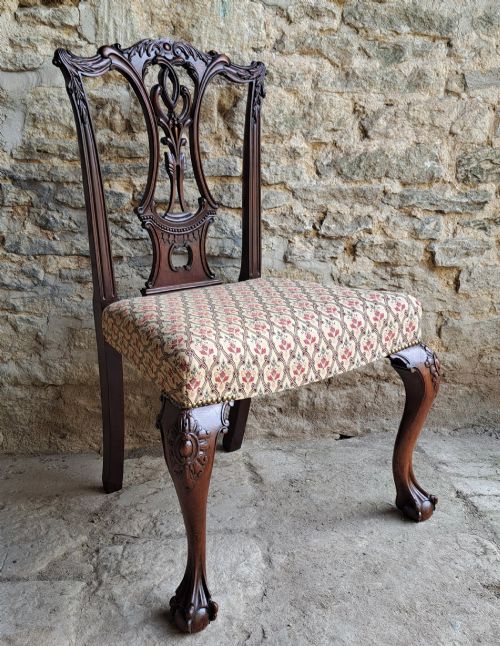
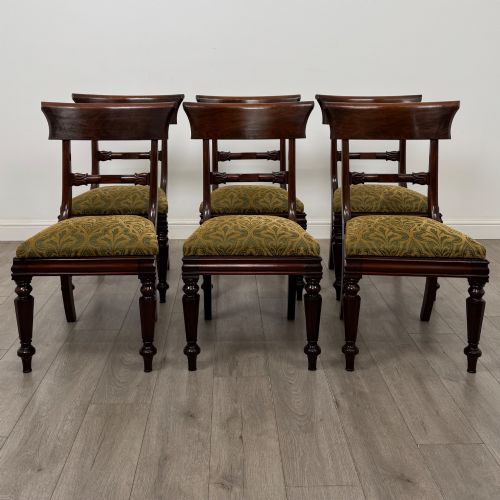
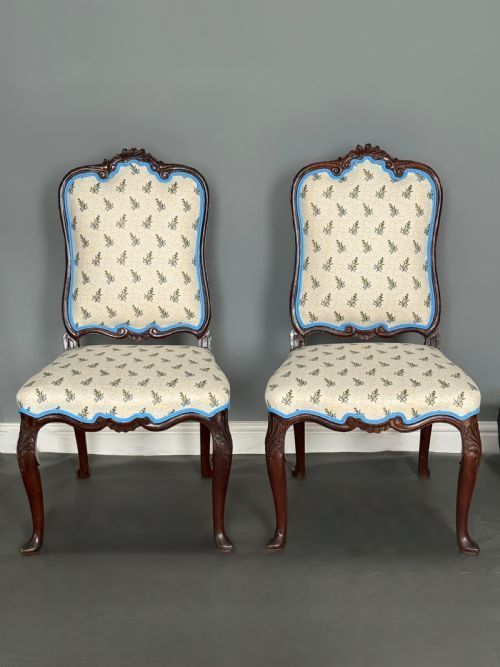
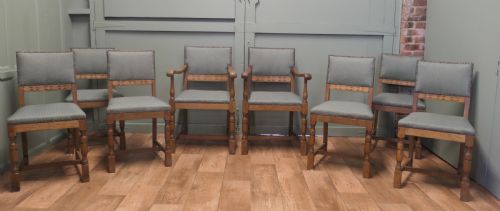
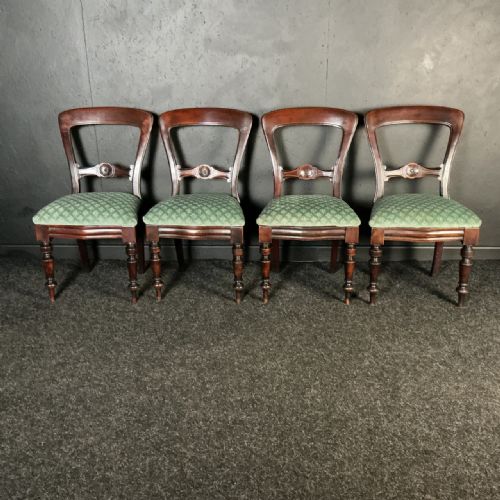
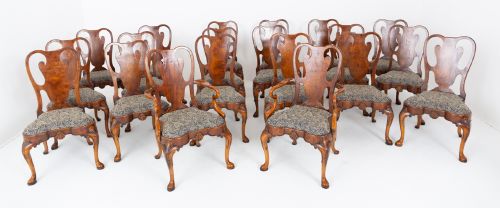
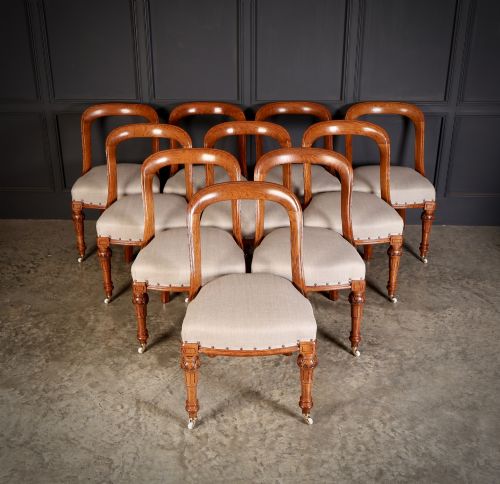
Traditional carved dining chairs encompass seating designed for formal dining rooms across multiple centuries, ranging from compact side chairs to expansive sets of twenty. Buyers searching for traditional carved dining chairs frequently encounter Victorian mahogany balloon back designs and Edwardian oak sets alongside Georgian and William IV iterations.
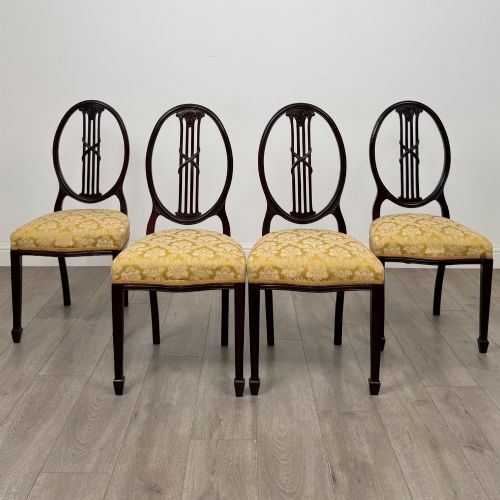
The forms extend from single pairs to large matched suites, often accompanied by matching carvers or armchairs for the heads of the table. Regional and revival styles also appear, including Chippendale revival, Hepplewhite style, and Jacobean revival interpretations.
Originating predominantly from British workshops across the 18th, 19th, and early 20th centuries, these pieces utilise robust joinery to withstand daily use. The selection spans straightforward ladderbacks and shield backs to elaborate baroque and Dutch forms.
What varies in quality
The depth and crispness of the hand carving separate standard production pieces from exhibition grade examples. Superior specimens display sharp relief work on the crest rails and splats without softening of the design edges.
Timber selection and frame integrity dictate the upper tier of the range, where heavy mahogany or figured walnut exhibits minimal movement and tight joinery. Lesser examples show simpler turnings and lighter framing timbers that may require stabilisation.
An exotic touch appears among the traditional timber frames via an Indian wedding chair featuring rams heads and silver metalwork.
Howard and Sons·Charles Tozer·Warings·Maple and Co
The Traditional Carved Dining Chairs Glossary
- Balloon back
- A rounded, oval-shaped backrest popular on Victorian dining chairs. This curved wooden form provides ergonomic support.
- Shield back
- A chair back shaped in the outline of a heraldic shield, commonly associated with late 18th century and revival dining seats. The openwork splat often incorporates carved wheat ears or drapery.
- Bar back
- A chair back featuring a horizontal crossbar or slats resembling a ladder or rail. These rails are frequently carved or reeded.
- Draw leaf
- An extendable table mechanism where leaves pull out from beneath the main top. It often accompanies large sets of dining chairs.
Traditional Carved Dining Chairs: Frequently Asked Questions
How do I care for antique dining chairs?
Maintain the timber by applying appropriate wax polish periodically and keeping the chairs away from direct heat sources and strong sunlight. Check the frame joints regularly for stability.
Avoid using harsh chemical cleaners on the upholstery fabrics or the polished wood surfaces. Professional conservation is recommended for fragile antique textiles or loose joinery.
Can I mix these chairs with modern tables?
Traditional carved dining chairs pair effectively with contemporary tables when timber tones or design lines share a common denominator. Contrast can highlight the detailed carving.
Ensure the seat heights match the clearance of the table apron to provide comfortable legroom for diners during meals.
How do I identify a Victorian dining chair?
Victorian chairs frequently display dark mahogany or walnut timbers with balloon back or carved scroll details. They often possess heavier proportions than earlier Georgian equivalents.
Look for construction methods and secondary woods typical of the 19th century, such as turned front legs and drop-in upholstered seats.