

Traditional Bracket Clock
Traditional bracket clocks are mechanical timepieces housed in elegant wooden cases, prized for their historical movements and striking presence on a mantel or table.
Traditional Bracket Clock
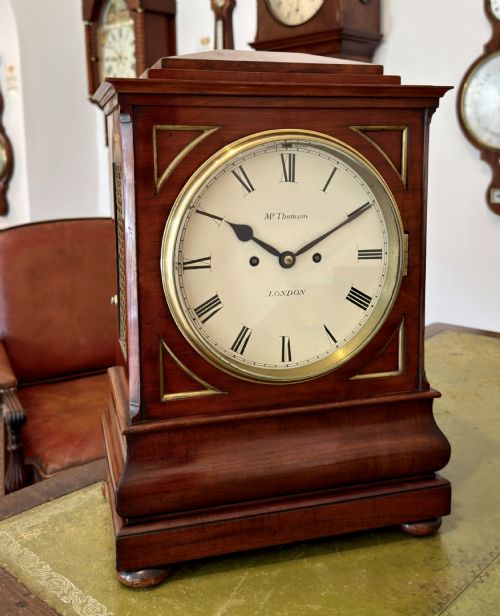
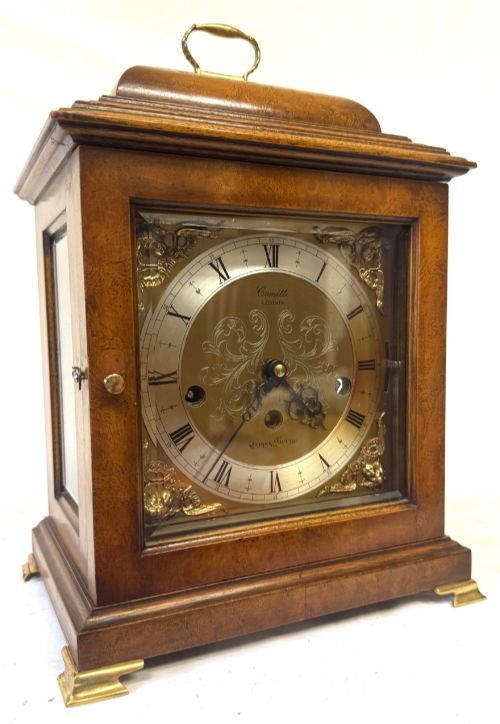
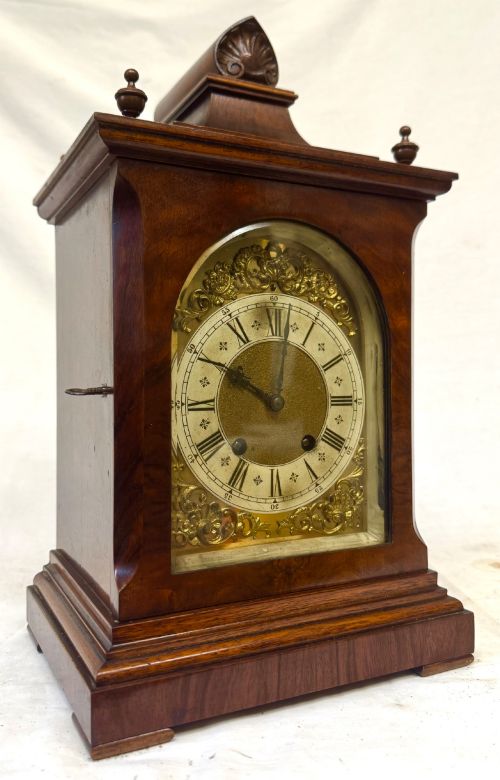
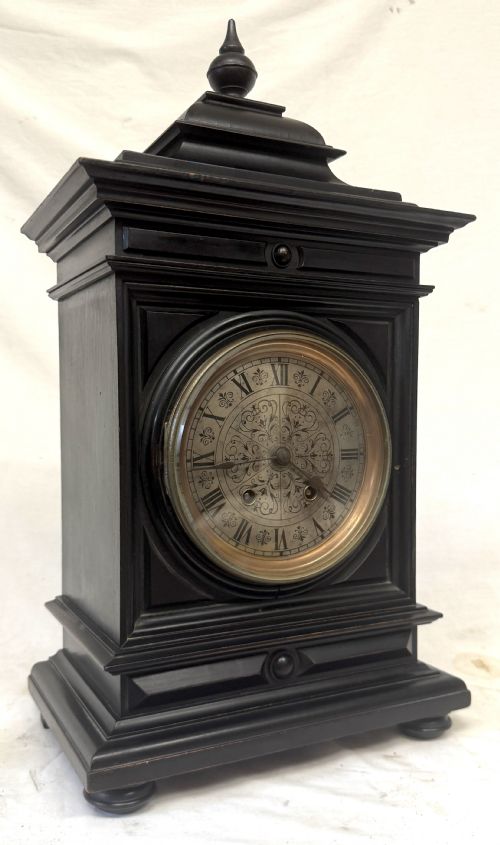
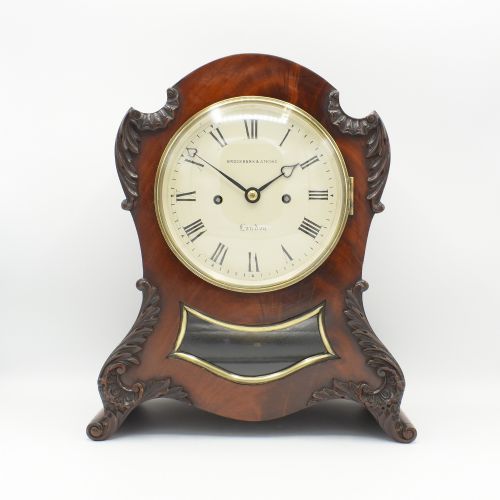
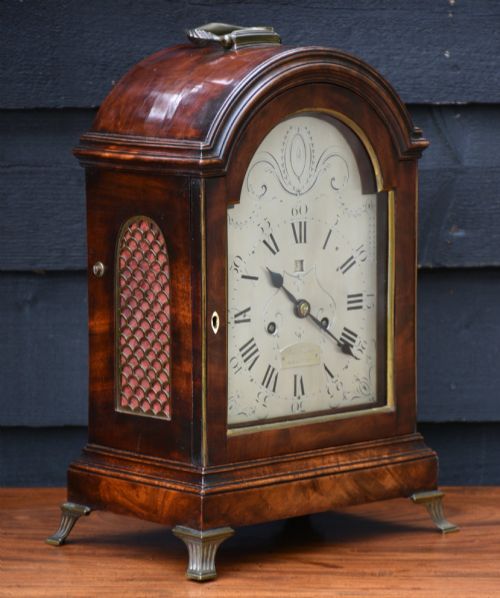
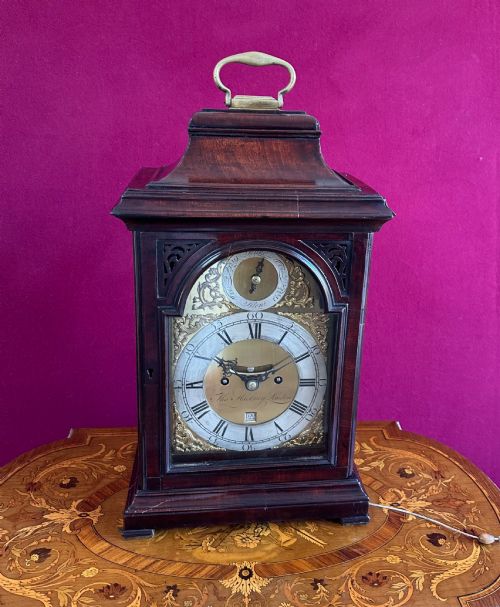
A traditional bracket clock is a portable timekeeper designed historically to sit on a wall bracket or a tabletop. The examples seen here span from the eighteenth century through to the mid-twentieth century, encompassing periods such as Georgian, Victorian, and Edwardian eras.
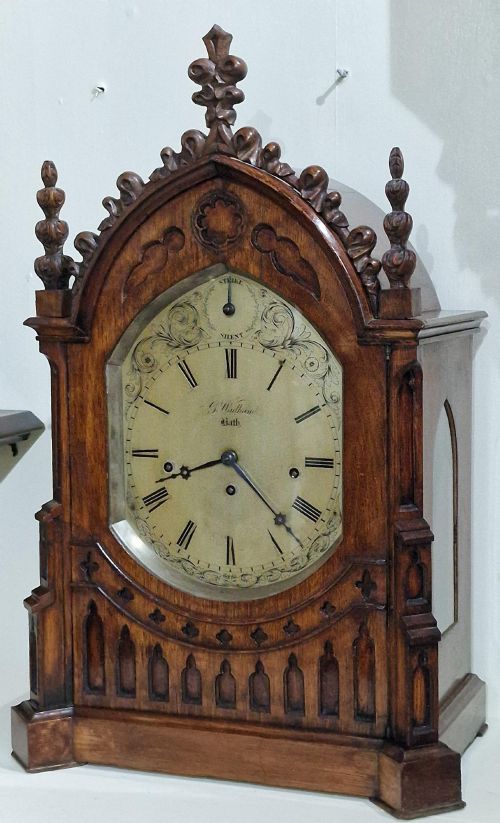
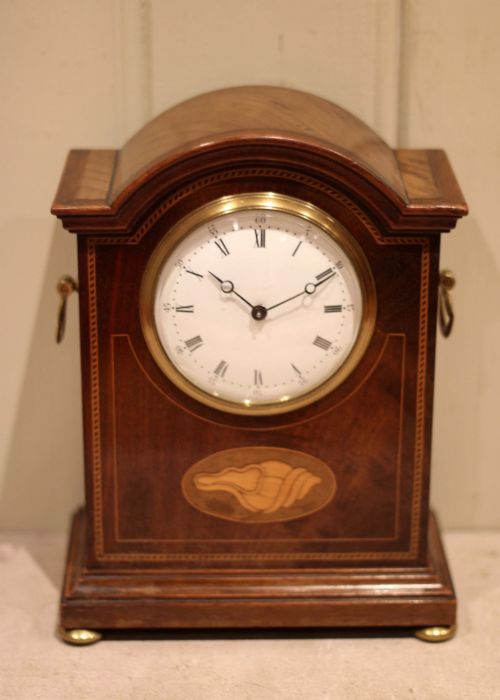
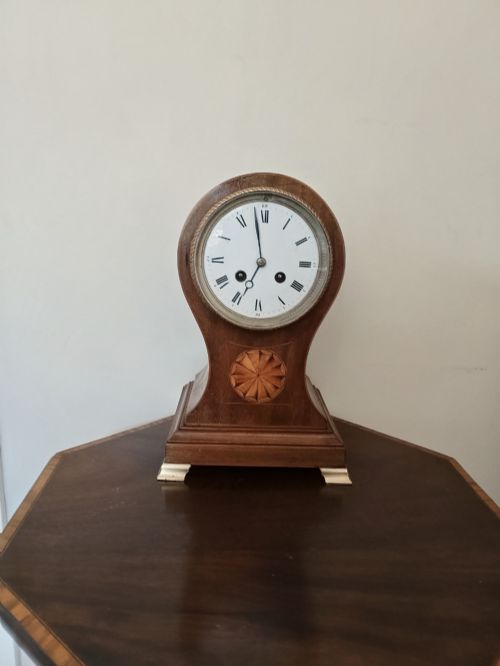
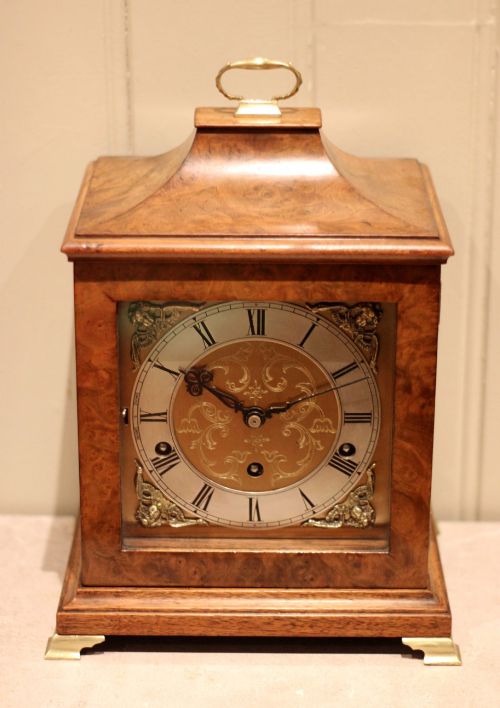
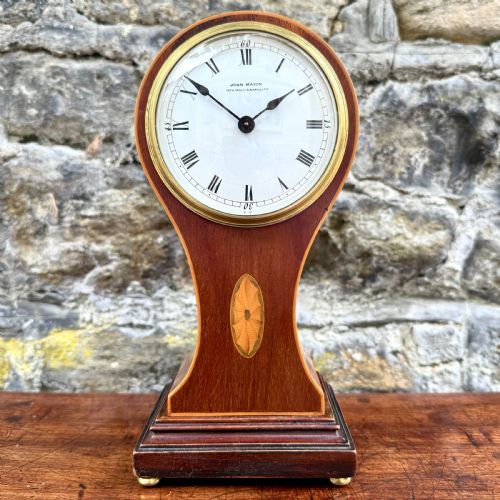
The dominant material format on this page is mahogany, often inlaid, alongside walnut, oak, and ebonised wood. Alongside standard bracket clocks, the selection includes mantel clocks, lantern clocks, and table clocks sharing similar mechanical qualities.
Origins range across English makers from London, Bath, and Stroud, as well as continental workshops from Germany and France. These pieces vary from simple timepiece movements to complex triple fusee and chiming mechanisms.
How they were made
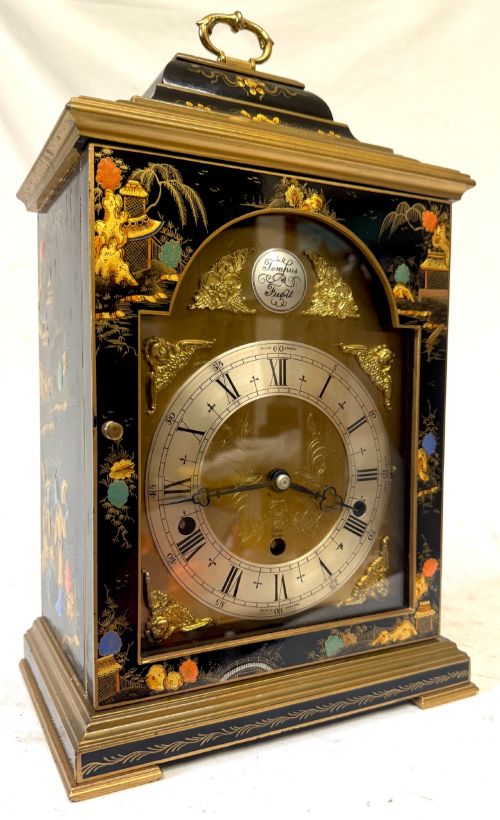
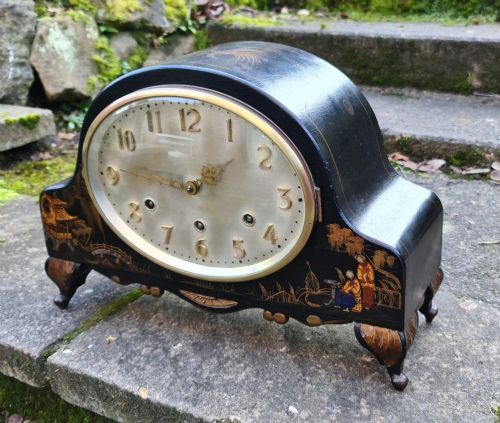
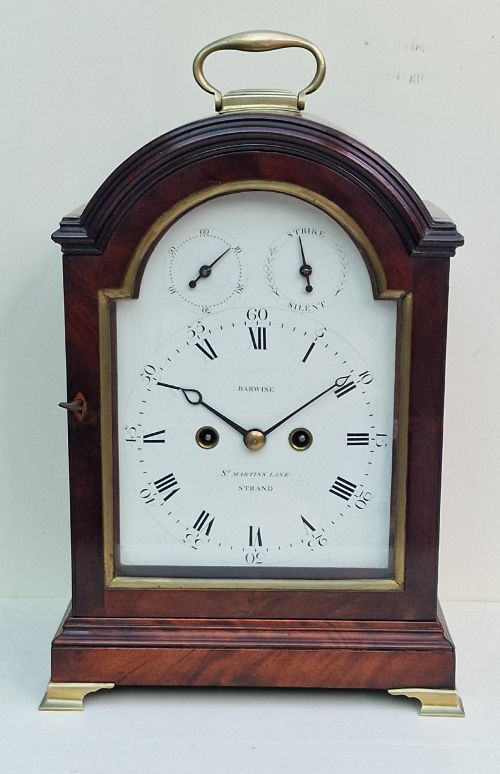
Cases utilise solid and veneered timbers such as mahogany, walnut, and oak, frequently decorated with brass dials, silvered chapters, and fine inlay work. Some examples feature lacquered finishes, Chinoiserie decoration, or faux tortoiseshell.
Internal mechanics rely on traditional brass gear trains, ranging from simple spring-driven movements to fusee and three-train configurations. Dials are protected by glazed bezels, housing enamel or metal chapter rings with intricate hands.
Some models are small enough to be called balloon clocks, resembling small hot air balloons frozen in polished mahogany.
What varies in quality
The distinction between ordinary and superior examples lies in the sophistication of the movement and the crispness of the case joinery. Triple fusee and quarter-striking mechanisms represent a higher tier of horological engineering than simple timepieces.
Case materials and secondary embellishments dictate visual merit, where figured mahogany veneers, fire-gilt brass mounts, and hand-painted lacquer work elevate an item. Signatures from documented makers add substantial weight to an object's pedigree.
Thomson of London·Lenzkirch·George Wadham Bath·Brockbanks And Atkins·Mappin And Webb·Barwise London·Ellicott And Smith·Winterhalder·John Spershott·L Vick Stroud·Webster Cornhill London·Spurge Dunmow·Thomas Moss·Turner Of London·S Simpson Southampton·Comitti Of London·Elliott London
The Traditional Bracket Clock Glossary
- Fusee
- A conical pulley used in spring-driven clocks to maintain equal power as the mainspring unwinds. This mechanism ensures more consistent timekeeping throughout the duration of the winding cycle.
- Verge escapement
- An early type of escapement mechanism that controls the release of the gear train. It works with a balance wheel or pendulum to regulate the speed of the clock.
- Chapter ring
- The outer ring on a clock dial that bears the hour numerals. On better pieces, these are individually silvered and engraved.
- Quarter-striking
- A mechanism that chimes the quarters of the hour on bells or gongs. Such movements often involve multiple gear trains to power the additional chime sequence.
- Lantern clock
- An early form of brass chamber clock, typically wall-mounted with exposed weights or spring drives. They represent the stylistic ancestors of the later bracket clock.
Traditional Bracket Clock: Frequently Asked Questions
What is a bracket clock?
A bracket clock is a portable mechanical clock historically built to rest on a wall-mounted bracket or a table surface. They originated when clocks were heavy and expensive items that needed a dedicated shelf to keep them secure and visible.
Over time, the term evolved to describe any fine table or mantel clock enclosed in a wooden case with a carrying handle. The selections on this page demonstrate this form across multiple centuries of cabinetmaking.
How do fusee movements work?
A fusee is a cone-shaped pulley connected to the mainspring by a cord or chain. As the spring unwinds and loses tension, the chain moves to a wider part of the cone, maintaining steady torque.
This clever mechanical device ensures the clock maintains consistent power and accuracy as the hours pass between windings. It is a hallmark of better quality British horology.
Where should I place my clock?
These clocks belong on sturdy, level surfaces away from direct sunlight, dampness, and rapid temperature fluctuations. A heavy mantelpiece or a dedicated wooden wall bracket provides the ideal environment.
Ensuring the surface is level is crucial for the pendulum or balance wheel to beat evenly. Proper placement helps preserve both the delicate internal movement and the polished wooden case.
How do I date a bracket clock?
Dating relies on a combination of case style, wood types, dial construction, and signature signatures. Georgian pieces often feature architectural mahogany cases with brass bracket feet, while Victorian and Edwardian examples show greater variety in inlay and revival styles.
Examining the backplate of the movement often reveals a maker's name or serial number. Cross-referencing these details against historical maker records provides a reliable date of manufacture.