



Traditional Boteh Carpet
A traditional boteh carpet brings enduring tribal pattern and hand-knotted warmth to a room through centuries-old motifs.
Traditional Boteh Carpet
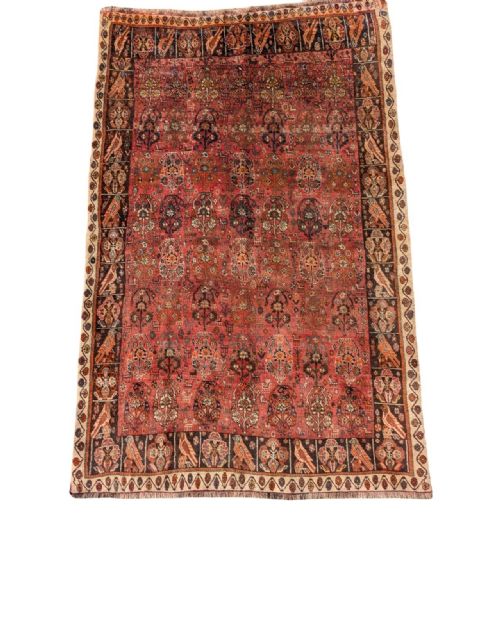
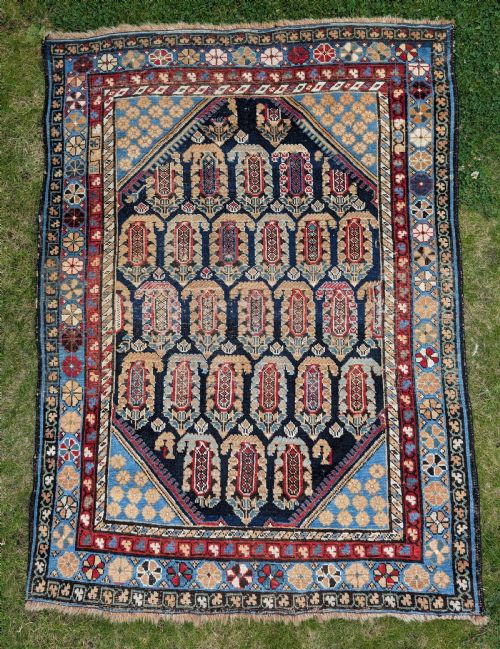
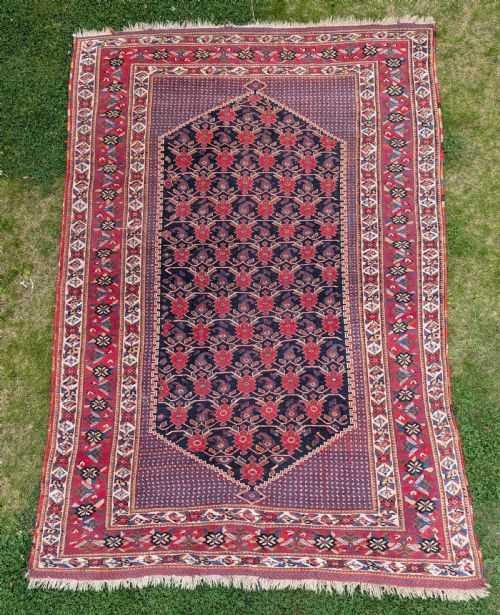
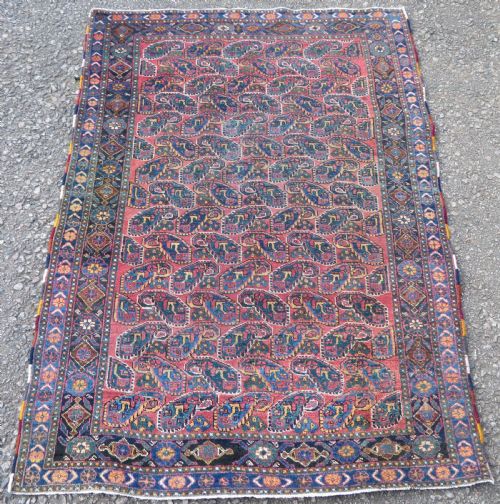
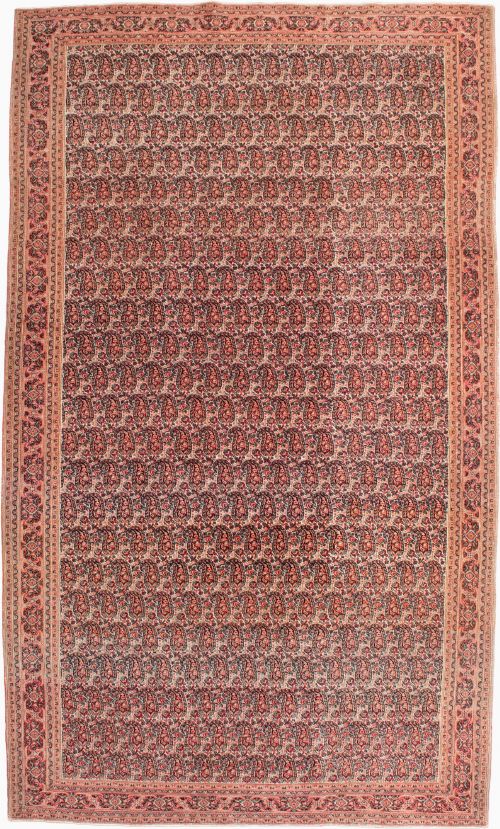
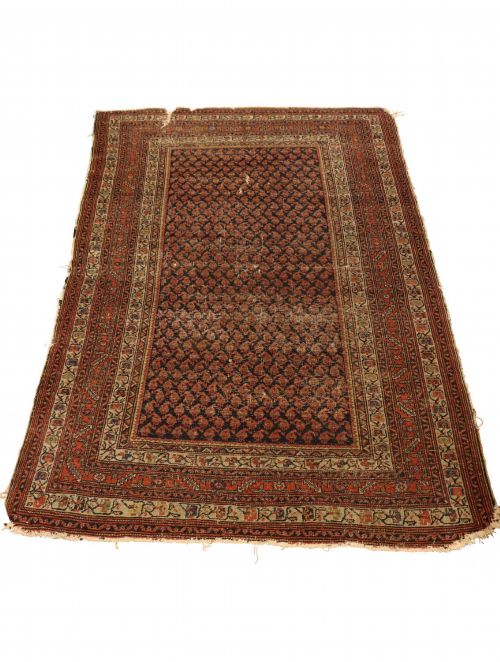
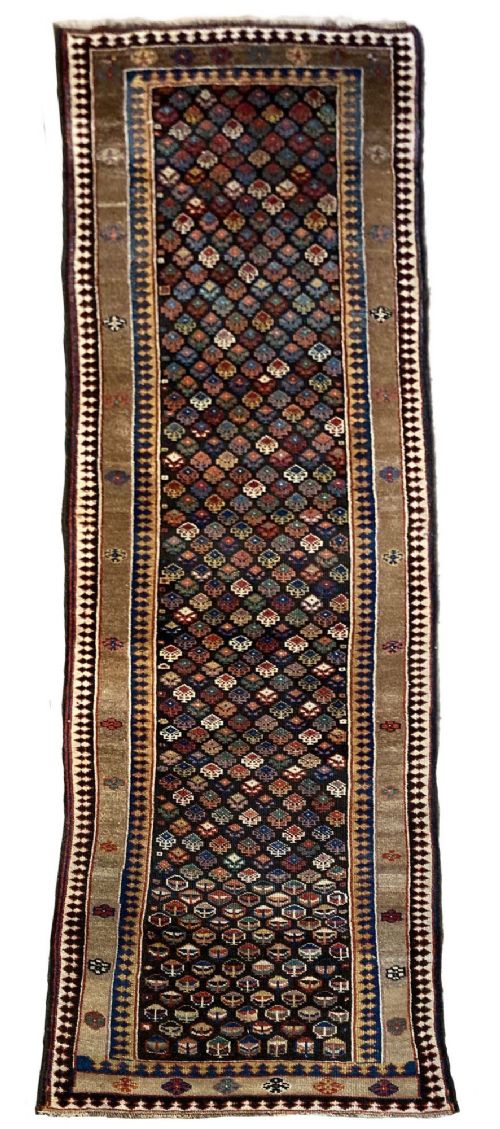
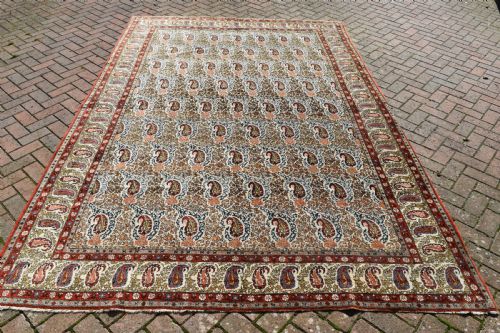
When searching for a traditional boteh carpet, buyers examine hand-knotted room-size carpets, long runners and smaller scatter rugs created across Persia and the Caucasus. These woven pieces display the characteristic flame or seed-like boteh motif, arranged in repeating overall patterns or around central medallions.
The selections available here span the late nineteenth century through to the early decades of the twentieth century, originating from tribal workshops and village weavers in regions such as Afshar, Kurdistan, Kirman and the Caucasus.
How they were made
Weavers constructed these carpets using hand-spun wool and cotton foundations, tied with dense wool knots that yield resilient pile surfaces. Natural dyes provided the deep indigos, madders and earthy tones seen across the regional groups.
The production relied entirely on manual labour, from shearing and carding the wool to vegetable dyeing and knotting each individual tuft by hand on upright looms.
Traditional Boteh Carpet Retail Price Guide 2026
Typical asking prices for traditional boteh carpet among the pieces listed under this phrase on Sellingantiques today, from the lower quarter to the upper quarter. They describe what is for sale here now, not the wider market.
Listings on this marketplace feature pieces dated from the late nineteenth century through to the 1930s, utilising hand-spun wool, cotton and natural dyes.
What varies in quality
The fineness of the knotting and the complexity of the wool preparation set superior examples apart from standard village work. Tightly packed knots allow intricate rendering of the boteh motif and ensure long-term durability under foot traffic.
The depth and harmony of the natural dyes also influence the character of the piece, with well-preserved colour palettes creating greater visual resonance across the field.
The Traditional Boteh Carpet Glossary
- Boteh
- A stylised teardrop, almond or flame-shaped motif of ancient Persian origin representing a floral cluster or cypress tree. It remains one of the most enduring designs in oriental rug production.
- Pile
- The upright wool yarn that forms the soft surface of a carpet, created by individual knots tied around the warp threads. The height and density of this layer determine the tactile feel.
- Warp
- The stationary vertical threads stretched tightly on the loom that form the structural skeleton of the rug. The foundation strength relies heavily on these parallel strands.
- Natural Dyes
- Colourants derived from plant, insect and mineral sources used historically to pigment wool before synthetic alternatives emerged. These dyes yield rich patinas that age gracefully over time.
Traditional Boteh Carpet: Frequently Asked Questions
What is a boteh motif?
A boteh is a curved, flame or almond-shaped design element that symbolises life and eternity. It appears frequently as a repeating overall pattern or arranged in formal rows across the field of the rug.
In many regional styles, the orientation of the boteh alternates from row to row, creating a dynamic visual rhythm across the woven surface.
Where were these carpets made?
These floor coverings originate primarily from the weaving centres and nomadic tribal regions of Persia and the Caucasus. Specific provenance areas include Afshar, Kurdistan, Serab, and Gendje.
Each region developed distinct structural characteristics and colour combinations that allow experienced observers to identify the local tradition.
How do I care for an antique rug?
Protect the wool pile by vacuuming gently without a rotating brush bar and keeping the textile away from direct, prolonged sunlight. Professional cleaning by specialists in antique oriental carpets maintains the integrity of the natural fibres.
Using a quality underlay prevents slipping and reduces friction between the wool foundation and the hard floor beneath.
How are the ages of these rugs determined?
Experts date these textiles by examining the wool characteristics, structural materials, knot density, and chemical makeup of the dyestuffs. Changes in regional weaving practices over time provide reliable clues for chronological placement.
Comparative analysis with documented museum pieces and dated examples further refines the estimated period of manufacture.