


Traditional Bokhara Carpet
Steeped in tribal heritage, a traditional bokhara carpet brings rich madder red tones and rhythmic geometric guls straight into your living space.
Traditional Bokhara Carpet
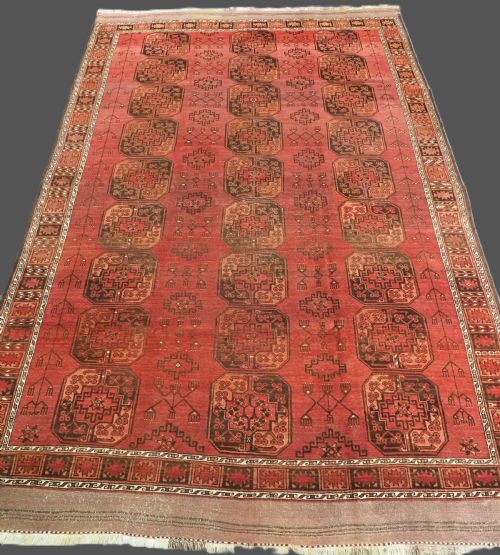
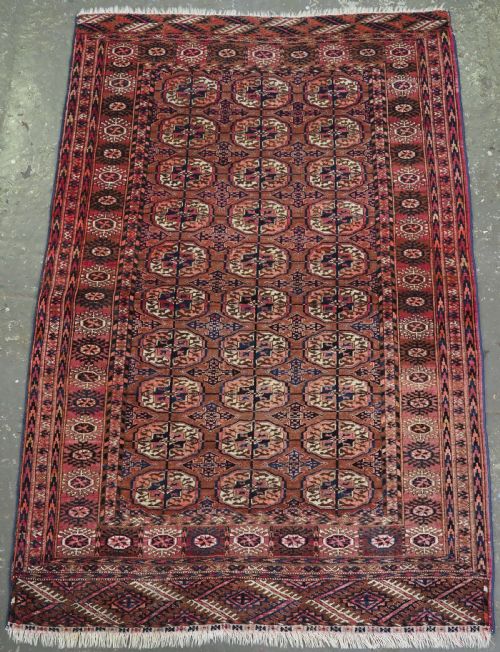
A traditional bokhara carpet represents the rich weaving traditions of Central Asian tribes, most notably the Tekke and Ersari groups of Turkmenistan and Afghanistan. Buyers exploring this page will encounter antique room-size main carpets, smaller dowry or wedding rugs, and practical runners dating from the nineteenth and early twentieth centuries. These woven pieces typically display repeating guls, which are the octagonal motifs characteristic of Turkmen tribal design.
The format ranges from compact square rugs to exceptionally large main carpets produced for domestic use or export. Many examples originate from the nineteenth century, carrying the distinct aesthetic of tribal weaving communities before commercial standardisation took hold. Collectors find these textiles gathered under various stylistic labels, including Turkmen, Central Asian tribal, and Afghan village work.
How they were made
Weavers constructed these textiles primarily using wool for the pile and foundation, supplemented by cotton and occasionally silk highlights. The wool provides a durable, dense surface that withstands decades of daily use while retaining a soft handle. Natural dyes achieved deep red, burgundy, and gold palettes, often featuring cochineal highlights to brighten specific details.
The knotting technique creates a tight, resilient pile that defines the crisp geometry of the repeating guls. Foundation yarns of cotton or wool hold the heavy pile securely in place, ensuring structural integrity across large main carpets and smaller runners alike.
Listings span the nineteenth and twentieth centuries, featuring materials such as wool, cotton, and silk across Turkmen and Afghan tribal designs.
What varies in quality
The fineness of the knotting and the precision of the geometric repeat separate standard village work from exceptional examples. Higher quality pieces display intricate drawing within the guls and a tightly packed pile that maintains its integrity across the entire field.
Colour saturation and the presence of special materials like silk or cochineal highlights elevate certain dowry rugs and main carpets above ordinary production. The clarity of the secondary borders and the overall preservation of the original wool pile determine the standing of each individual piece.
The Traditional Bokhara Carpet Glossary
- Gul
- Gul. An octagonal or medallion motif repeated across the field of Turkmen and Central Asian carpets, serving as the primary design element for tribal attribution.
- Dowry rug
- Dowry rug. A smaller textile woven specifically for a bride's wedding trousseau, often distinguished by particularly fine wool, careful knotting, and expressive colour highlights.
- Main carpet
- Main carpet. A large floor covering traditionally utilised in nomad tents or village houses, requiring considerable time and labour to complete.
- Dip khali
- Dip khali. A specific term used to describe certain traditional rugs within this tribal tradition, often denoting particular colour arrangements or formatting.
- Beshir
- Beshir. A sub-style associated with Ersari weavers residing along the Amu Darya river, known for departing from strict tribal layouts into more spacious designs.
Traditional Bokhara Carpet: Frequently Asked Questions
How do I identify a Tekke rug?
Tekke pieces are characterised by orderly rows of primary guls, usually octagonal in shape, set against a deep red or burgundy ground. They often feature neat elem panels at the shorter ends.
The weave is typically fine and dense, reflecting the settled tribal traditions of the region during the nineteenth century.
Where were these carpets made?
These textiles originate from Central Asia, specifically the regions inhabited by Turkmen and Afghan tribes such as the Tekke and Ersari. Production spanned nomadic encampments and settled villages.
Many examples reflect the aesthetic output of the Emirate of Bukhara, which served as a major trading hub for these tribal goods.
Can I use an antique rug on the floor?
Many nineteenth and early twentieth century examples were built with heavy duty and hard wearing wool piles designed for practical domestic use. Using a quality underlay helps protect the foundation from premature wear.
Regular gentle vacuuming without a beater bar keeps the dense wool pile clean and preserves the original structure.