




Gold Wool Carpet
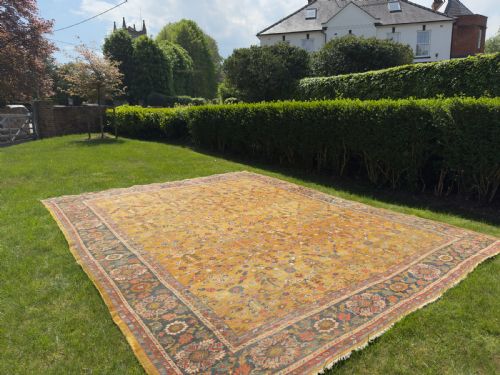
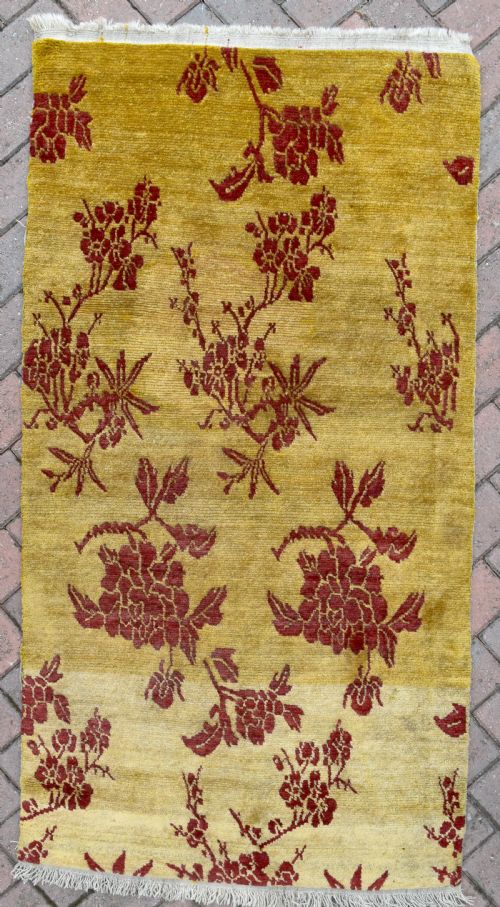
These gold wool carpet pieces bring warmth and heritage into a room, offering rich textures and historic patterns from diverse origins.
Gold Wool Carpet
A gold wool carpet selection brings together hand-knotted and woven floor coverings spanning several centuries and distinct regional traditions. You will encounter pieces originating from Anatolia, Northern India, China, the Caucasus, and Afghanistan alongside Persian and Tibetan examples.
The assortment includes large carpets, area rugs, smaller seating mats, and long runners suited for hallways. Many items feature traditional medallions, prayer designs, and repeat patterns executed in gold, ivory, burgundy, and other regional colourways.
Dating across the nineteenth and early twentieth centuries, these floor coverings reflect the specific weaving traditions of their makers. The gold wool carpet category gathers diverse geographic styles under a shared palette and fibrous material.
Materials and Construction
These textiles rely principally on wool for the pile and surface texture, paired with cotton foundations for structural stability. The fibres are spun by hand and knotted or woven on traditional looms according to local regional customs.
Natural dyestuffs and historical colour mixing create the characteristic gold, ivory, and burgundy tones seen across the inventory. Artisans in regions such as Anatolia, India, and China employed time-honoured techniques passed down through generations of workshops.
Several pieces include inscribed Ottoman script, ensuring that your floor covering can double as historical correspondence.
Assessing Quality and Execution
Quality rests upon the density of the knotting and the precision with which the design and medallions are articulated across the field. Finer execution results in sharper pattern definition and greater durability under foot traffic.
The handling of wool and dye creates depth in the gold and neutral fields, distinguishing more accomplished examples from simpler village work. Structural integrity in the foundation cotton and secure edge bindings further separate robust items from those requiring extensive conservation.
The Gold Wool Carpet Glossary
- Pile
- The upright yarn loops or cut ends that form the soft surface of a carpet. This layer absorbs wear and displays the woven pattern.
- Medallion
- A central ornamental motif positioned in the middle of the carpet field. It serves as the primary focal point of the design composition.
- Warp
- The vertical threads stretched lengthwise on the loom before weaving begins. The pile knots are tied around these foundational elements.
- Weft
- The horizontal threads passed alternately over and under the warp threads to bind the knots in place. This stabilizes the woven structure.
- Runner
- A long and narrow carpet format specifically designed for hallways, corridors, or staircases. These pieces accommodate restricted floor spaces.
Gold Wool Carpet: Frequently Asked Questions
How do I clean a antique wool carpet?
Regular gentle vacuuming without a beater bar removes surface dust and grit from the wool pile. Professional specialist cleaning is recommended for deeper maintenance to protect the natural fibres and dyes.
Avoid harsh chemical detergents or excessive moisture which can damage the cotton foundation and alter the historical colours. Promptly blot liquid spills rather than rubbing them into the pile.
Where should I place a runner rug?
Runners suit narrow spaces such as hallways, entryways, and corridors where a long format fits the floor plan. They protect high-traffic wooden floors while adding warmth and pattern to transitional areas.
Ensure you use a suitable underlay to keep the rug stable and prevent slipping on smooth surfaces. Measure your corridor carefully to allow a uniform margin of exposed floor around the edges.
What is an Oushak carpet?
Oushak carpets originate from the town of Ushak in western Turkey and are known for their softer colour palettes and larger scale motifs. They frequently feature wool piles on wool or cotton foundations with distinctive floral or geometric designs.
These carpets became popular in Western interiors due to their harmonious integration with traditional and contemporary furnishings alike. The regional weave tends to be slightly looser and more pliable than other Persian or Caucasian counterparts.
How do I date an old wool rug?
Dating relies on stylistic analysis, structural examination of the weave, and the types of dyes employed in the wool. Comparing knot density and motif execution against documented regional examples helps narrow down the period of production.
Wear patterns and the condition of the selvedges also provide clues regarding the age and history of use. Written inscriptions or specific regional signatures, where present, offer direct evidence of origin and date.