
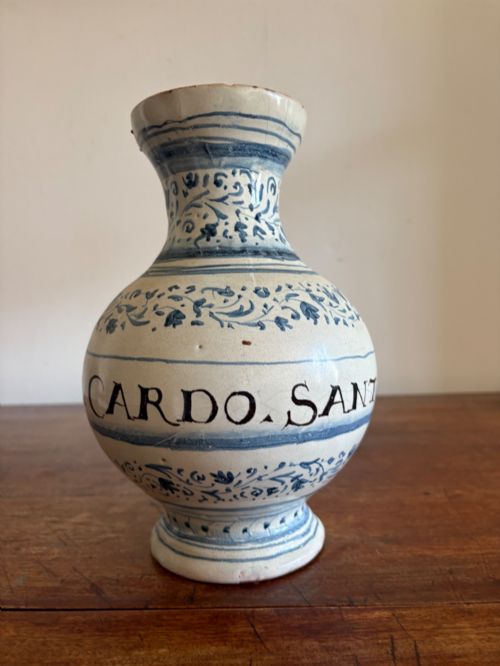


Tin Glazed Pharmacy Jar
A tin glazed pharmacy jar is a utilitarian apothecary vessel of earthenware coated in an opaque white glaze, prized by collectors for its hand-painted drug inscriptions and rich historic character.
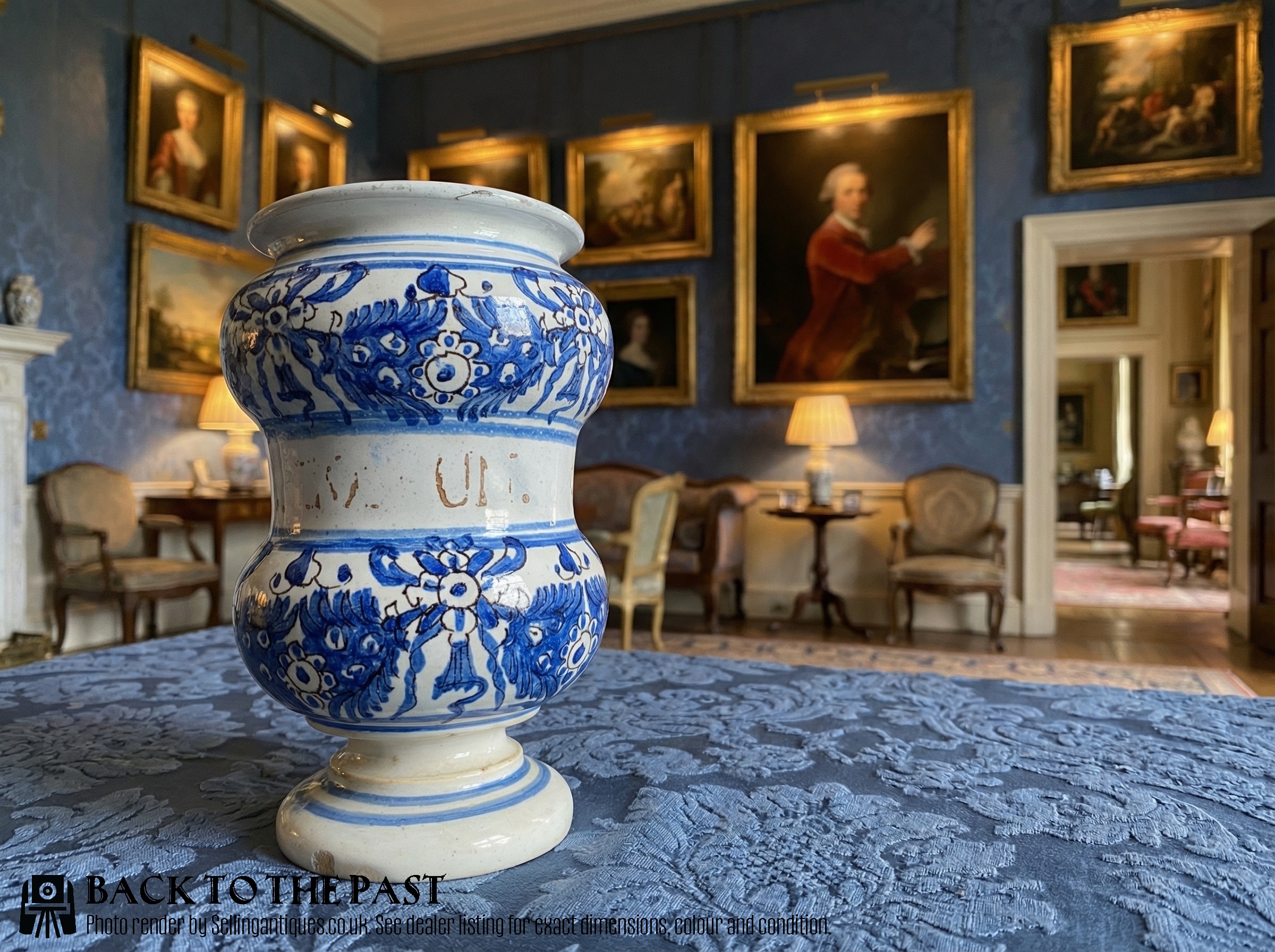
Tin Glazed Pharmacy Jar
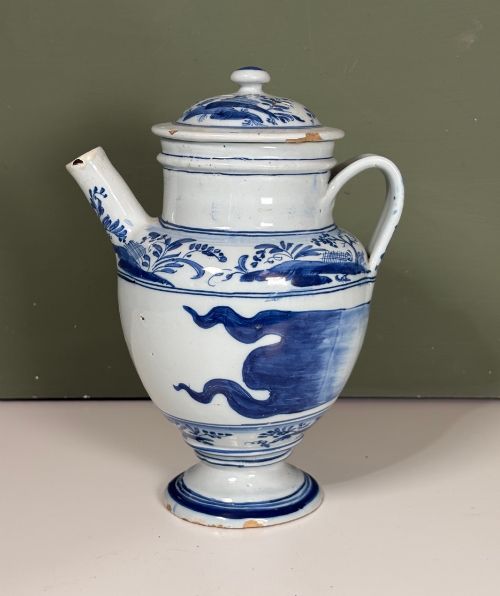
When you search for a tin glazed pharmacy jar, you encounter historical containers created to hold dry drugs, syrups, and ointments in apothecary shops and dispensaries. The pieces available here span from the seventeenth century through to the nineteenth century, alongside early twentieth-century examples.
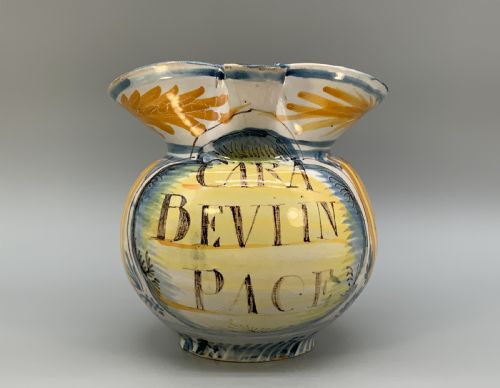
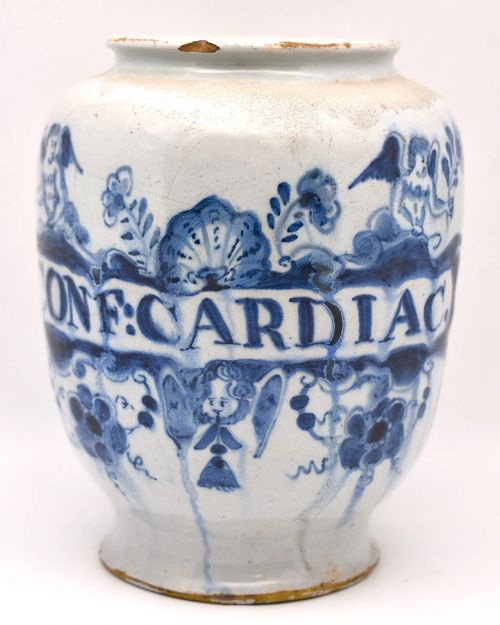
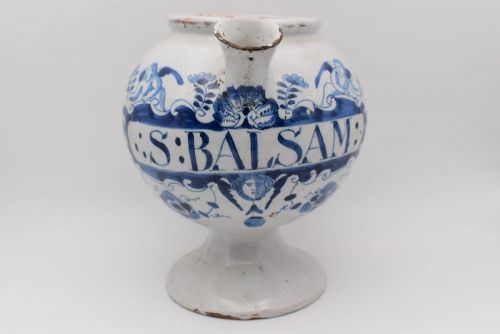
The form most frequently met on this page is the albarello, a waisted cylindrical jar designed for dry drugs, accompanied by pharmacy jugs and wet drug jars featuring spouts or handles. These vessels originate from English, Dutch, and Italian kilns, demonstrating distinct regional styles such as Dutch Delft and Italian Majolica.
Makers shaped these utilitarian objects to sit neatly on apothecary shelves, often painting them in cobalt blue or polychrome palettes that included manganese and yellow. Each vessel carries a specific apothecary label or painted cipher to identify its medicinal contents.
How they were made
Potters formed these containers from earthenware clay, shaping them on the wheel into albarellos, jugs, and vessels before firing the body. Once bisqued, the pottery received an opaque white tin glaze that provided a smooth, flat canvas for subsequent painting.
Painters applied cobalt pigment, cobalt oxide, and various coloured pigments directly onto the unfired tin glaze, absorbing the colours permanently during the glost firing. This technique allowed workshops to produce detailed botanical decorations, cherubs, shells, and precise pharmacy inscriptions.
Listings feature earthenware vessels spanning the seventeenth, eighteenth, nineteenth, and early twentieth centuries from English, Dutch, and Italian origins.
What varies in quality
The clarity and sophistication of the hand-painted decoration distinguish finer examples from standard workshop output. Master painters achieved fluid lines and expressive shading in motifs such as cherubs and heraldic cartouches, whereas lesser pieces display rigid or hasty brushwork.
The retention of original lids, particularly on wet drug jars and pharmacy jugs, elevates a piece's integrity. Additionally, the depth of the tin glaze and the control shown in the polychrome or blue and white pigment application reveal the technical competence of the kiln.
The Tin Glazed Pharmacy Jar Glossary
- Albarello
- A waisted cylindrical earthenware jar originally used by apothecaries to store dry drugs, electuaries, and ointments. Its indented waist allowed handlers to grip the jar securely on crowded shelves.
- Tin Glaze
- A pottery glaze made opaque by the addition of tin oxide, creating a white surface suitable for painted decoration. It formed the technical basis for European delftware, majolica, and faience.
- Majolica
- A type of tin-glazed earthenware developed in Italy during the Renaissance and continued in later centuries. It is celebrated for its bright polychrome pigments and white glazed ground.
- Delftware
- Tin-glazed earthenware produced in England and the Netherlands, typically decorated in blue and white or polychrome. English delftware drug jars often bear abbreviated Latin inscriptions for medical ingredients.
- Faience
- A continental European term for tin-glazed earthenware produced in France, Italy, and other regions. These vessels served both domestic and pharmaceutical purposes.
- Wet Drug Jar
- A specialised pharmacy vessel featuring a spout and handle for holding liquid medicines, syrups, and oils. They frequently display painted labels identifying specific botanical extracts.
Tin Glazed Pharmacy Jar: Frequently Asked Questions
What did they hold?
These jars contained dried herbs, botanical powders, medicinal syrups, and chemical preparations used by apothecaries and chemists. The painted inscriptions on the front ensured the apothecary could identify the contents quickly during busy dispensary hours.
Over time, as pharmacopoeias changed and glass bottles took over dispensary shelving, these ceramic vessels were emptied and preserved for their decorative and historic merit.
How do I date them?
Dating relies on stylistic shifts in the tin glaze, the lettering of the drug inscriptions, and the profile of the vessel. Seventeenth-century examples often display robust proportions and dark cobalt palettes, whereas eighteenth-century pieces frequently adopt lighter tones and more refined cartouches.
Examining the footring, glaze pooling, and any visible potting flaws provides further clues to the period of manufacture.
Are lids usually original?
Original matching lids are uncommon because lids were handled constantly and suffered breakage during daily apothecary use. Many surviving jars and albarellos have spent centuries uncovered or now retain later replacement covers.
When a jar retains its authentic, period-matching lid, it represents a more complete survival of the original apothecary set.
How do I clean them?
Historic tin-glazed earthenware requires gentle dusting with a dry, soft cloth to remove surface particles. Avoid immersing porous historical ceramics in water, as moisture can infiltrate old glaze cracks and destabilise the earthenware body.
Professional conservation advice should be sought if deeper cleaning is required to address stubborn surface grime.