
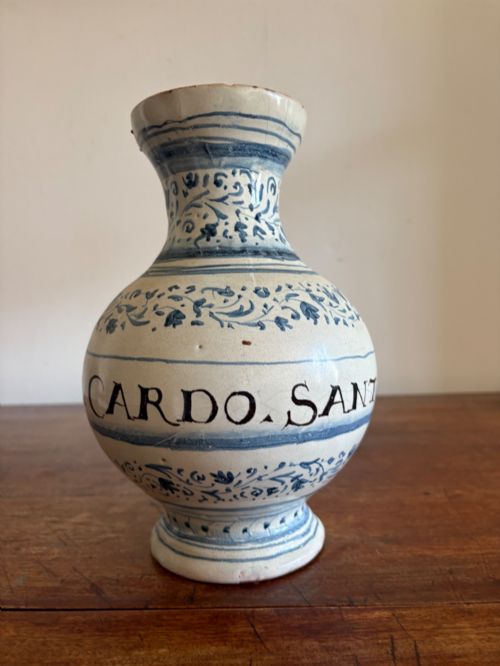


Tin Glaze Apothecary Vessel
Tin glaze apothecary vessel pieces are historical drug jars and jugs shaped for dry and liquid medicines, prized for their tin-glazed earthenware surfaces.
Tin Glaze Apothecary Vessel
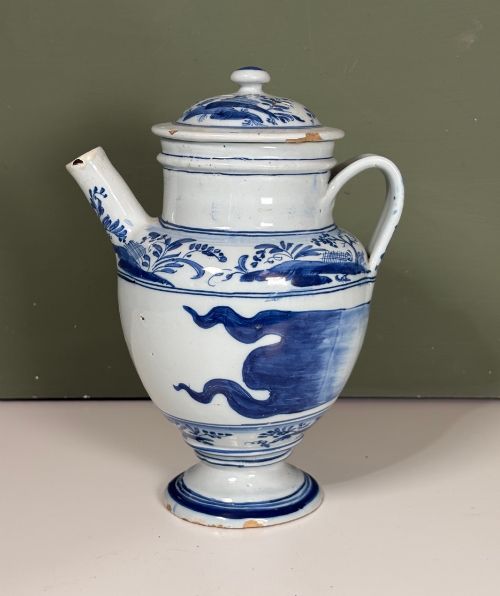
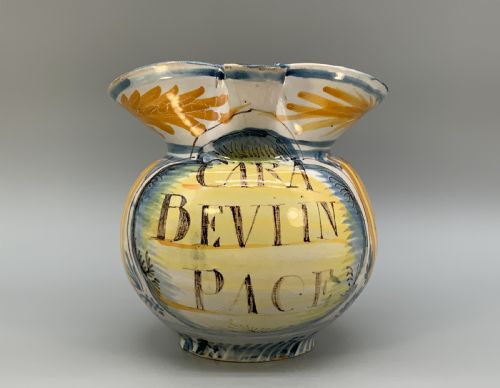
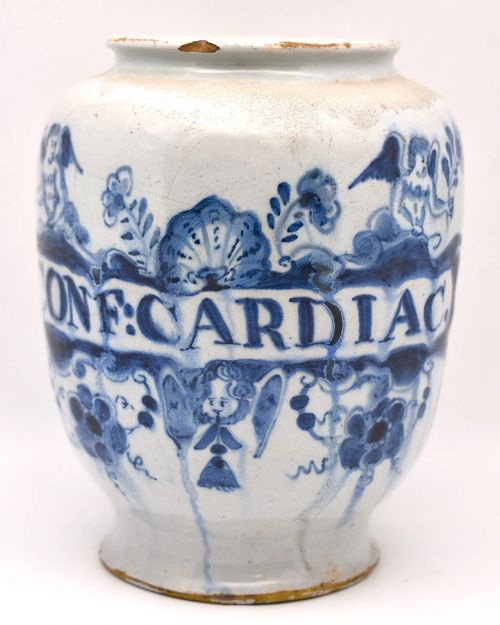
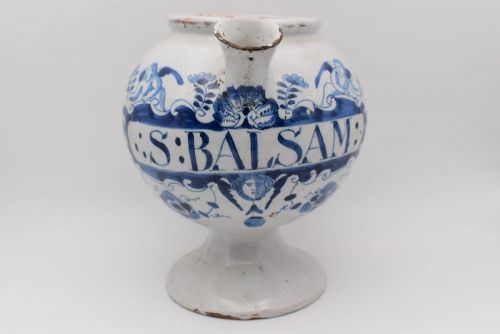
A tin glaze apothecary vessel serves as a storage jar or drug container for historical pharmacies, taking the form of traditional albarellos, cylindrical jars, and handled wet drug jugs. These items emerge primarily from the eighteenth and nineteenth centuries, spanning Georgian Britain, Dutch Delft production, and Italian regional workshops.
Buyers will most frequently encounter eighteenth-century English and Dutch delftware alongside Italian majolica and faience pieces. The selection includes both dry storage jars and specialised wet drug jugs designed for syrups and liquids.
Quality factors in tin glaze apothecary vessels
Excellence in a tin glaze apothecary vessel rests upon the clarity of the painted decoration and the precision of the tin glaze opacity. Superior examples display sharp, well-defined apothecary lettering and skilled brushwork in the cobalt pigment or polychrome schemes.
The structural integrity of the earthenware body and the survival of the original tin glaze surface dictate the standing of individual pieces. Well-balanced proportions on waisted albarellos and pharmacy jugs further separate standard workshop output from finer studio execution.
Materials recorded across the inventory include earthenware, tin glaze, ceramic, and mineral pigments such as cobalt oxide and yellow.
The Tin Glaze Apothecary Vessel Glossary
- Albarello
- A waisted earthenware jar traditionally used in pharmacies to hold dry drugs, ointments, and electuaries. This cylindrical form allowed pharmacists to stack containers efficiently on apothecary shelves.
- Tin Glaze
- A ceramic glaze made opaque by the addition of tin oxide, creating a white surface suitable for painted decoration. It forms the defining exterior layer of delftware, majolica, and faience.
- Faience
- European tin-glazed earthenware, particularly associated with French, Dutch, and Italian traditions. The term describes pottery covered in a white opaque tin enamel.
- Wet Drug Jar
- A specialised apothecary vessel featuring a spout and handle designed to hold liquid medicines, syrups, and oils. These jugs allowed precise pouring in historical dispensary settings.
- Majolica
- Italian tin-glazed earthenware decorated with colourful metal oxides on an opaque white glaze. The technique flourished during the Renaissance and continued through subsequent centuries in regional workshops.
Tin Glaze Apothecary Vessel: Frequently Asked Questions
What is an albarello jar?
An albarello is a cylindrical, waisted ceramic jar designed to hold dry medical preparations in historical pharmacies. The incurved waist allowed dispensers to grip the jar securely while handling powders and ointments.
Potters produced these vessels extensively in Italy, the Netherlands, and England using earthenware covered in a white tin glaze. They frequently bear painted pharmacy labels and decorative motifs.
How do I tell wet and dry jars apart?
Wet drug jars feature a pouring spout and a handle for dispensing liquid syrups, oils, and medicated waters. Dry jars take a straight-sided or waisted albarello form without handles or spouts, suited for holding solids.
Both types utilise the same tin-glazed earthenware construction and painted labelling system. The presence of a pouring spout remains the primary indicator of a wet drug vessel.
What are these vessels made from?
These pieces consist of a buff or earthenware clay body shaped on a potter's wheel and fired into biscuitware. Artisans then coated the hardened clay in a liquid tin glaze containing tin oxide to produce an opaque white surface.
Painters applied cobalt pigment, manganese, and yellow colours directly onto this absorbent glaze before a final kiln firing. This technique fixed the mineral oxides permanently into the glossy surface.
Where were these pharmacy jars made?
Production centres spread across Europe, with notable traditions in England, the Netherlands, and Italy. English delftware workshops, Dutch delft potteries, and Italian majolica centres each developed distinct regional styles.
Italian makers produced extensive polychrome and blue-and-white pharmacy wares, while Dutch and English workshops focused on delft drug jars with Latin or abbreviated English labels.
How should I display them at home?
These vessels display well on open wooden shelving, in glazed display cabinets, or arranged in matched pairs on side tables. Their historical pharmacy labels and painted motifs create strong visual focal points in a room.
Keep them away from direct sunlight and moisture to protect the porous earthenware and tin glaze surface. Handle them carefully by the base rather than by painted rims or spouts.