


White Earthenware Apothecary Vessel
A white earthenware apothecary vessel holds centuries of medicinal history, prized by collectors for its hand-painted cobalt labeling and utilitarian origins in period dispensaries.
White Earthenware Apothecary Vessel
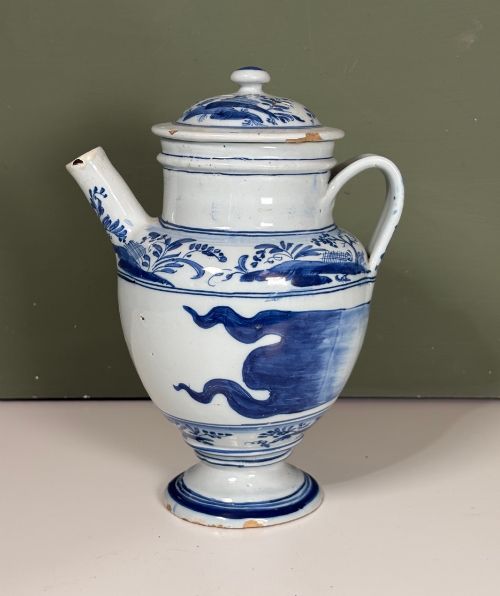
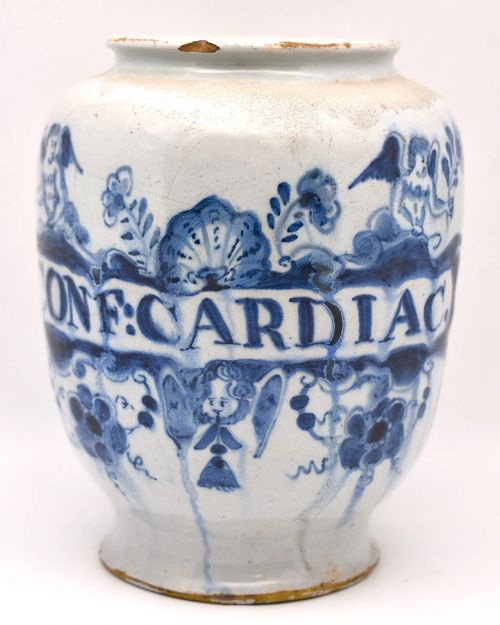
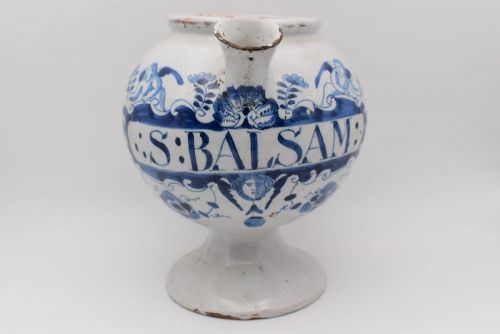
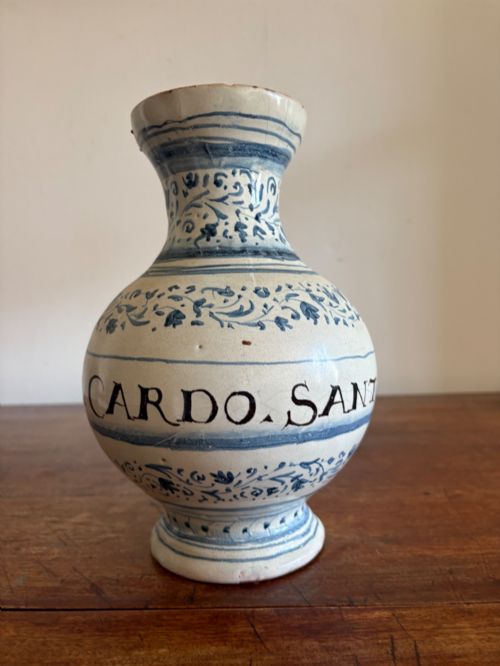
A white earthenware apothecary vessel serves as a tangible link to eighteenth-century medicine, encompassing dry drug jars, wet drug jars, albarellos, and storage jars designed for herbs and concoctions. These ceramic containers range from English delftware examples bearing specific drug inscriptions to Italian majolica and Dutch delft pieces featuring botanical motifs or cherubs.
Buyers encountering this selection will find items predominantly originating from the eighteenth century, reflecting regional European pottery traditions from England, Italy, and the Netherlands. Forms include waisted albarellos and handled wet drug jugs, often decorated in blue and white pigments or occasionally polychrome tin glaze.
The aesthetic appeal lies in the interplay between the stark white tin-glazed surface and the cobalt oxide pigment used for lettering and ornamentation. Each vessel tells a specific story through painted labels that name historical remedies such as cardiac preparations or balsams.
Materials and production techniques
Potters formed these vessels from basic earthenware clay, shaping them on the wheel into traditional pharmacy forms like the cylindrical albarello or the bulbous wet drug jar. Once shaped and fired to create a porous biscuit body, the pieces received a tin glaze to achieve an opaque white background.
Painters applied cobalt pigment or assorted pigment directly onto the unfired tin glaze, a technique that required a steady hand as the porous surface absorbed the colour instantly. A final high-temperature firing fused the glaze and pigments together, producing the characteristic glossy finish.
Some eighteenth-century apothecary jars bear labels for bizarre historical remedies that sound entirely like potion ingredients from a fairy tale.
Quality variations in historical pharmacy ceramics
Quality in an eighteenth-century apothecary vessel rests upon the clarity of the painted decoration and the crispness of the pharmacy label lettering. Pieces featuring well-defined portraits, cherubs, or elaborate scrollwork demonstrate superior artistic capability compared to hastily executed utilitarian lettering.
The preservation of the tin glaze and the stability of the ceramic body also determine the standing of a piece within the range. Examples retaining their original covers or showing minimal glaze flaking represent the higher end of surviving domestic dispensary ware.
The White Earthenware Apothecary Vessel Glossary
- Albarello
- A cylindrical earthenware jar used in pharmacies to hold ointments and dry drugs, typically pinched inwards at the waist for a secure grip. This shape originated in the Middle East and was widely adopted by Italian and Dutch potters.
- Tin-Glazed Earthenware
- Pottery coated with a lead glaze made opaque by the addition of tin oxide, creating a white surface suitable for painted decoration. It is known as delft in England and the Netherlands, and majolica or faience in Italy and France.
- Cobalt Pigment
- A metallic oxide used under the glaze to produce deep blue painting on ceramics. It withstands high firing temperatures without losing intensity.
- Wet Drug Jar
- A specialised pharmacy vessel designed with a spout or handle to dispense liquid medicines, syrups, and oils. These jars required interior glazing to prevent liquids from seeping through the porous earthenware body.
- Delftware
- Tin-glazed earthenware produced in the Netherlands and England, famously characterised by blue and white designs influenced by imported Chinese porcelain. English delft centres included London, Bristol, and Liverpool during the eighteenth century.
White Earthenware Apothecary Vessel: Frequently Asked Questions
What did apothecary jars hold?
These ceramic vessels contained dry herbs, powders, ointments, and liquid medicines in historical dispensaries and apothecaries.
Labels painted on the front identified specific contents like balsams or medicinal syrups for quick retrieval by the apothecary.
How do I date an apothecary jar?
Dating relies on stylistic clues, including the shape of the vessel, the character of the tin glaze, and the typography of the painted drug label.
Eighteenth-century examples often exhibit characteristic tin-glaze pooling and hand-mixed cobalt pigments typical of period European potteries.
Are wet and dry jars different?
Wet drug jars featured spouts or handles for pouring liquids and oils, while dry jars remained open-topped to dispense powders and solid drugs.
Both utilised white earthenware bodies, but wet vessels required complete interior glazing to contain moisture effectively.
How should I display these vessels?
Displaying these ceramics requires stable shelving away from direct sunlight and fluctuating humidity to protect the historical tin glaze.
Grouping jars by region or form highlights the subtle variations in blue and white pigment application across different European traditions.