



Tin Glazed Earthenware Platter
A tin glazed earthenware platter brings centuries of tin-glazed pigment and bold blue and white decoration straight to the table.
Tin Glazed Earthenware Platter
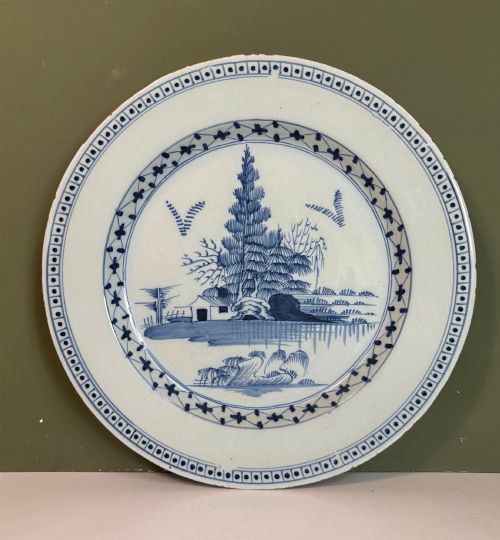
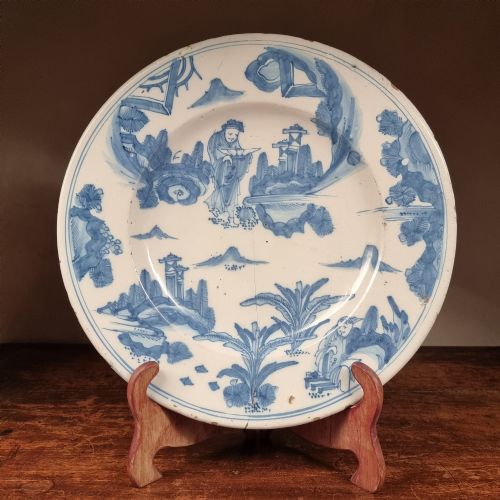
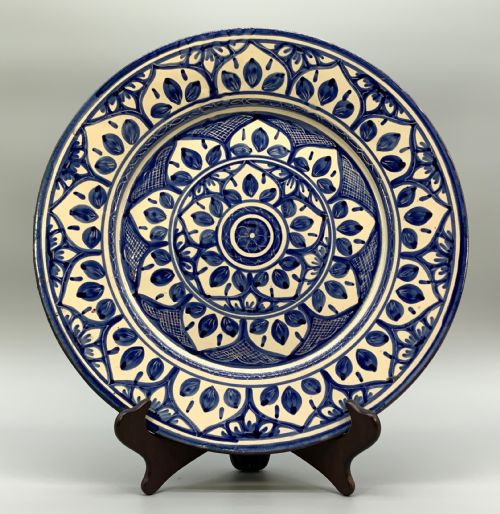
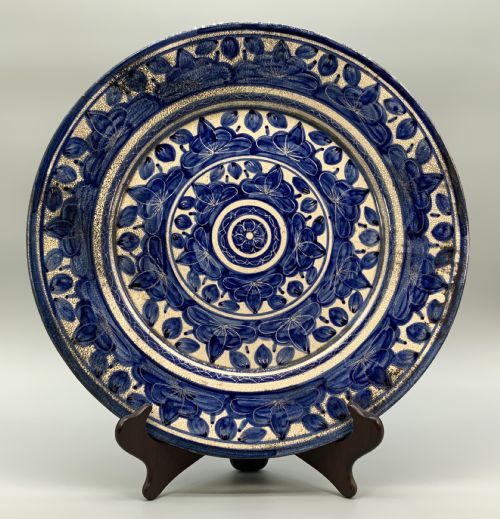
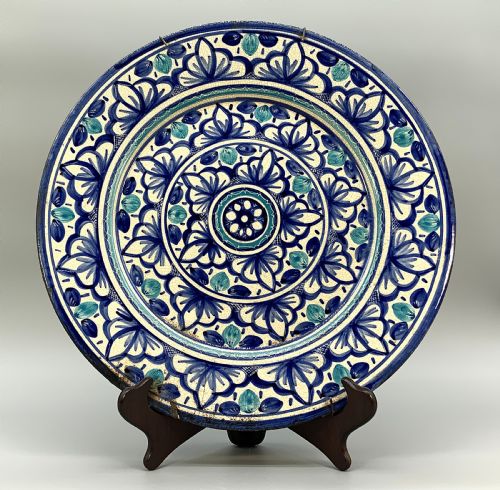
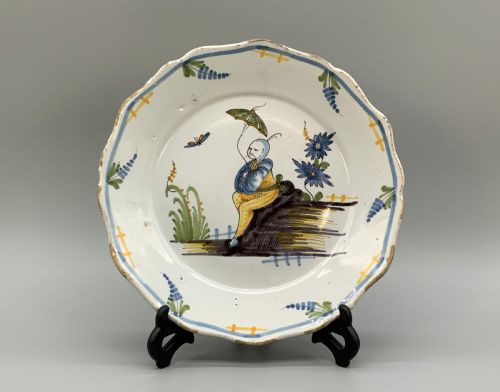
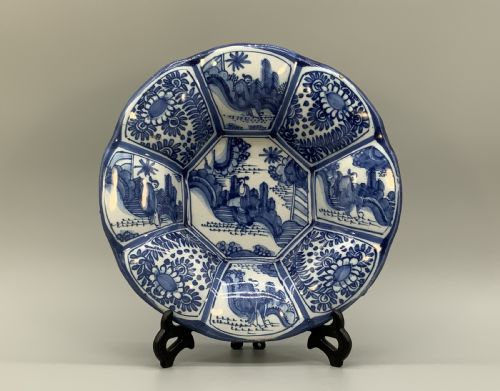
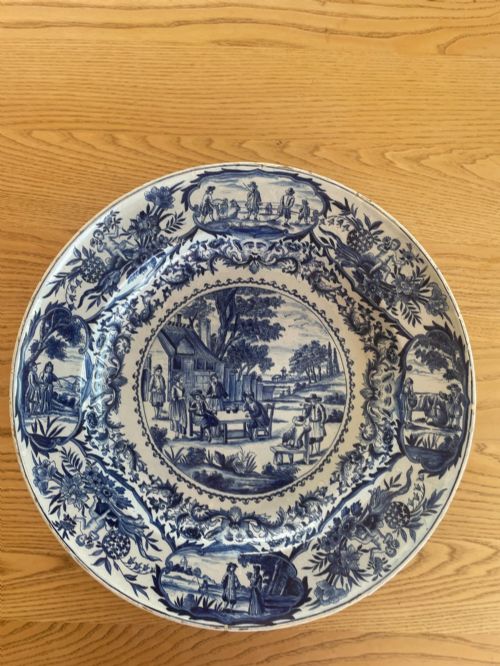
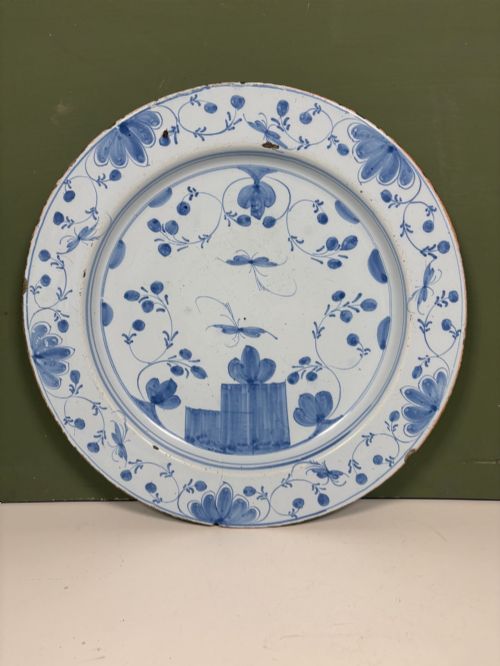
A tin glazed earthenware platter typically presents as a large charger, serving dish, or decorative plate shaped from earthenware clay. These pieces span the seventeenth, eighteenth, and nineteenth centuries, alongside mid-twentieth-century examples.
The buyer most often meets English, Dutch, and French regional forms on this page, including delftware and faience styles. Dutch and English delft chargers dominate the selection, alongside continental maiolica and French regional pieces.
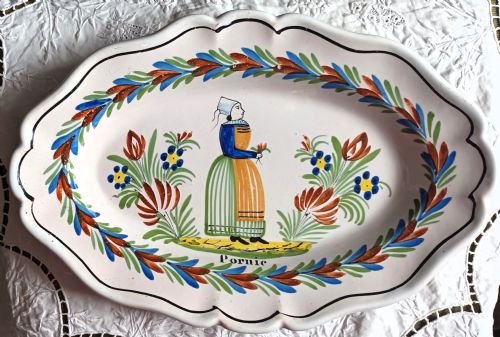
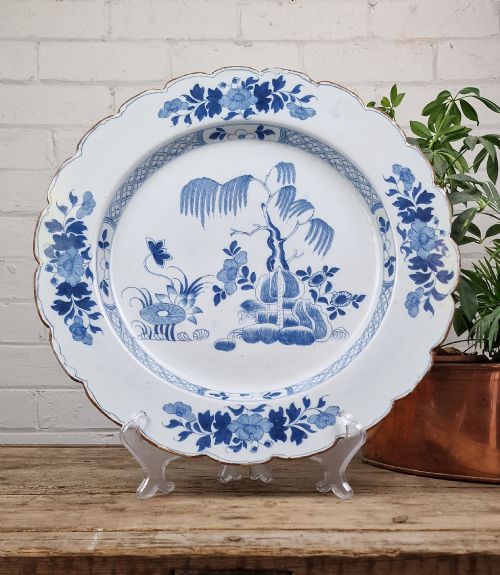
Forms range from simple blue and white serving dishes to large decorative platters decorated with manganese, yellow, and polychrome pigments. Many examples display historic influences such as Chinoiserie, Kraak style, and Moorish revival motifs.
Materials and construction methods
Potters formed these items using earthenware clay, coating the surface in a tin glaze that provided an opaque white base for painting. Artisans then applied cobalt pigment, cobalt oxide, and other mineral colours directly onto the unfired glaze.
The absorption of the metallic oxides into the porous tin glaze required a steady hand, as the pigment locked into the surface permanently upon firing. Workshops often utilised grand feu techniques or painted polychrome scenes that fused into the glossy glaze during the kiln process.
Tin Glazed Earthenware Platter Retail Price Guide 2026
Typical asking prices for tin glazed earthenware platter among the pieces listed under this phrase on Sellingantiques today, from the lower quarter to the upper quarter. They describe what is for sale here now, not the wider market.
Listings span seventeenth-century origins through to twentieth-century revivals, utilising earthenware, tin glaze, and cobalt pigment.
Separating the ordinary from the exceptional
Quality rests heavily on the crispness of the hand-painted brushwork and the complexity of the design, whether depicting a classical historical scene or intricate Chinoiserie motifs. Superior pieces display confident, expressive linework and rich variation within the cobalt or polychrome palette.
The depth and consistency of the tin glaze also dictate standing, with smoother surfaces and minimal kiln distortion marking out superior execution. Finer examples retain strong colour vibrancy and well-preserved painted details across the entire face of the charger.
De Witte Ster
The Tin Glazed Earthenware Platter Glossary
- Tin-glazed earthenware
- Pottery coated with an opaque white glaze containing tin oxide, which creates a smooth canvas for painted decoration.
- Charger
- A large ornamental or serving plate, typically measuring well over thirty centimetres in diameter, designed to be displayed on walls or sideboards.
- Delftware
- Tin-glazed earthenware produced in the Netherlands or England, famous for blue and white or polychrome pictorial designs.
- Maiolica
- Italian tin-glazed earthenware, often characterised by colourful, narrative painting known as istoriato.
- Grand feu
- A high-temperature kiln firing technique that allows tin glaze and metallic oxides to fuse into a brilliant, durable surface.
- Polychrome
- Decoration employing multiple distinct colours beyond traditional blue and white, frequently featuring manganese purple, yellow, and green.
Tin Glazed Earthenware Platter: Frequently Asked Questions
What is a tin glazed earthenware platter?
A tin glazed earthenware platter is a wide serving dish or decorative plate coated in a tin-opacified glaze. Potters then painted designs directly onto this surface before firing.
These items functioned primarily as display chargers or grand serving vessels in historic households. Their large surfaces offered an ideal canvas for narrative scenes and floral patterns.
How do I care for antique delftware?
Antique tin-glazed ceramics require gentle handling because the earthenware body and glaze can chip or craze under stress. Keep them away from dishwashers and harsh modern detergents.
Display these platters securely using padded wall hooks or stable plate stands designed for heavy chargers. Dust them lightly with a dry, soft cloth.
How do I tell English and Dutch delft apart?
English and Dutch delft share similar tin-glazed techniques, but subtle differences in clay bodies and palette often point to an origin. English pieces frequently display slightly heavier bodies and distinct regional painting styles.
Examining the foot ring and glaze pooling on the reverse can also provide clues regarding the workshop tradition. Local pottery centres in Bristol, London, and Delft developed distinct potting habits over generations.
Were these chargers meant for food?
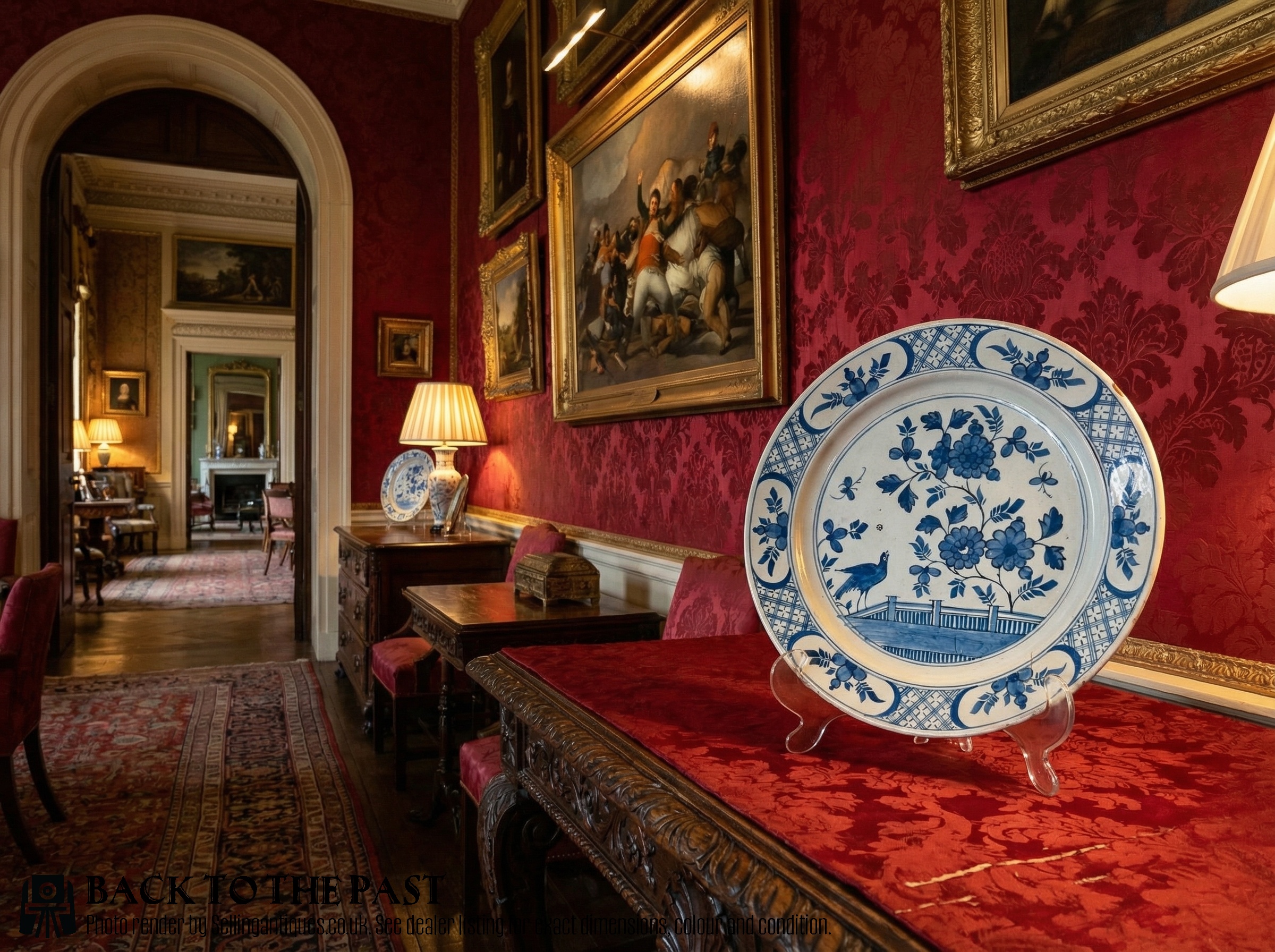
Large chargers served dual purposes in historic dining rooms, transitioning from functional serving platters to purely decorative wall displays. Many seventeenth and eighteenth-century examples show wear patterns consistent with table use.
Over time, as porcelain and refined earthenware gained popularity for dining, these fragile tin-glazed chargers moved permanently to the drawing room wall.