



Tin Glaze Ceramic Platter
A tin glaze ceramic platter brings centuries of painterly blue and white earthenware decoration directly to a table or wall.
Tin Glaze Ceramic Platter
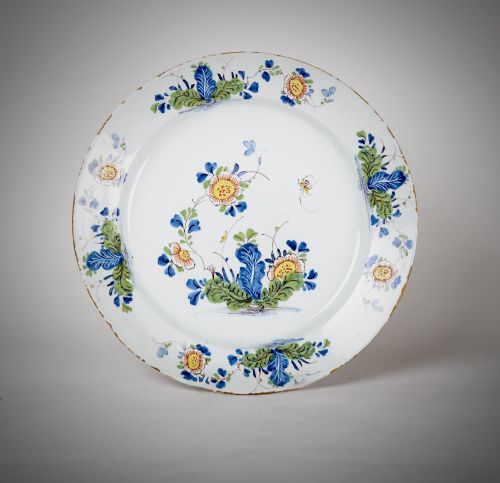
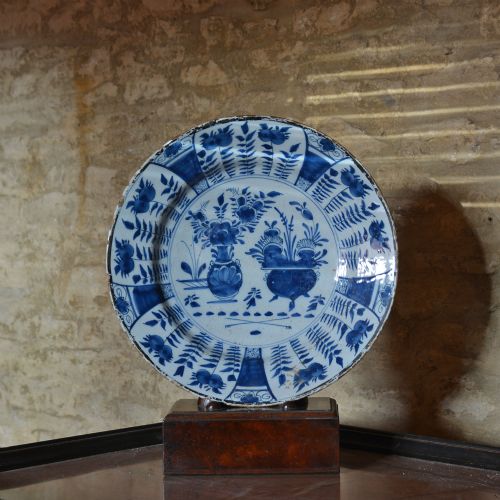
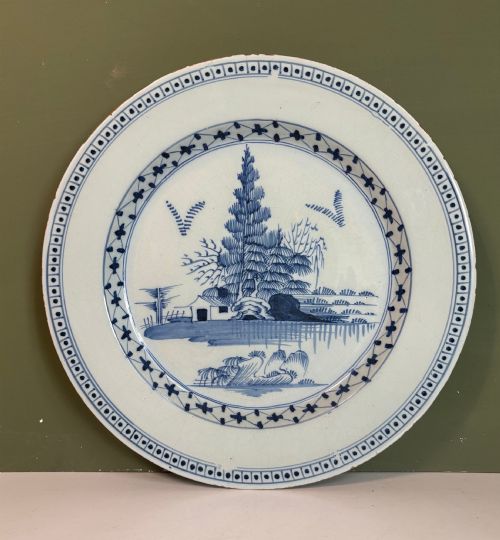
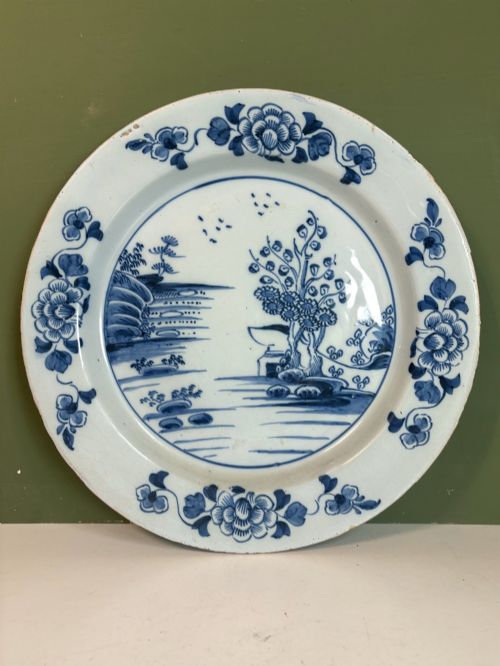
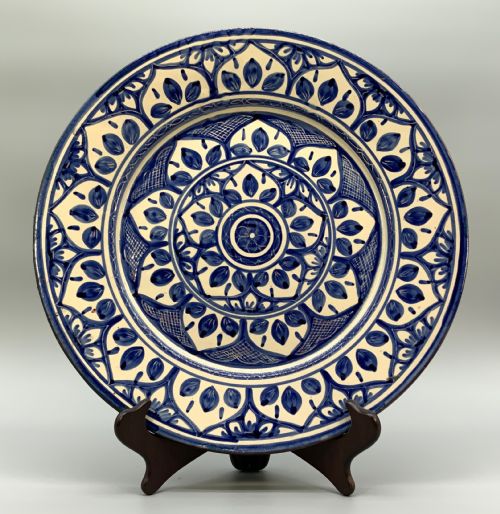
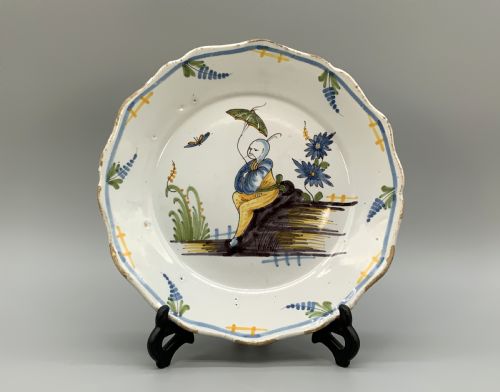
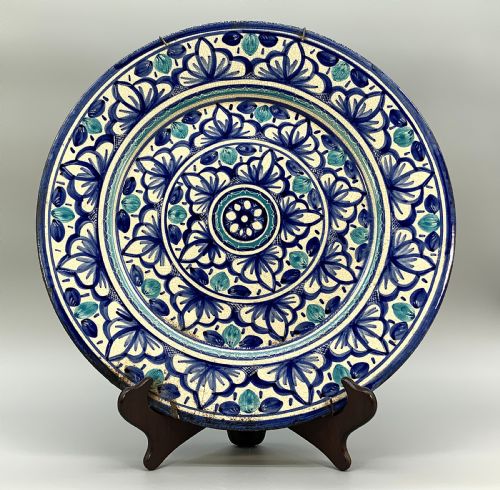
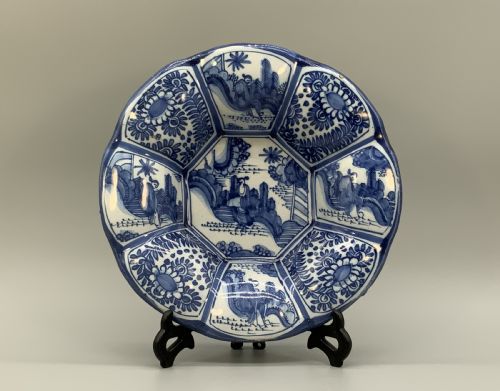
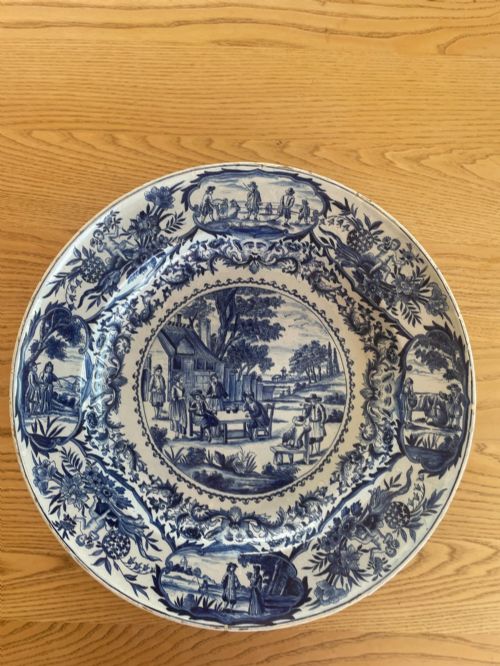
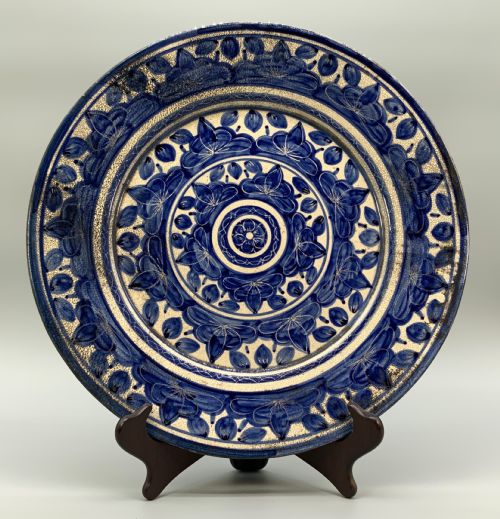
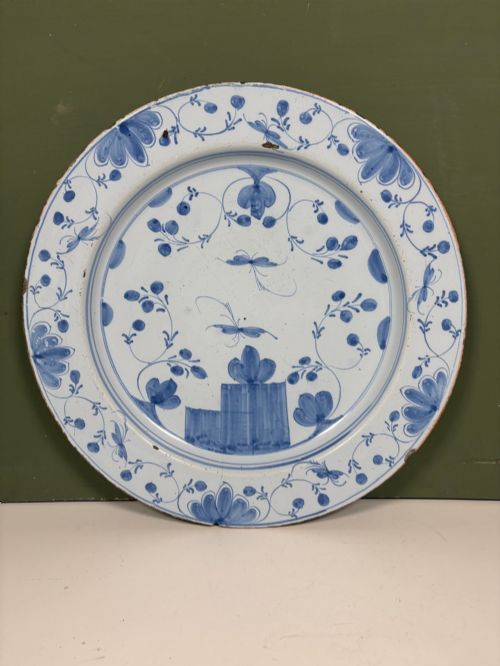
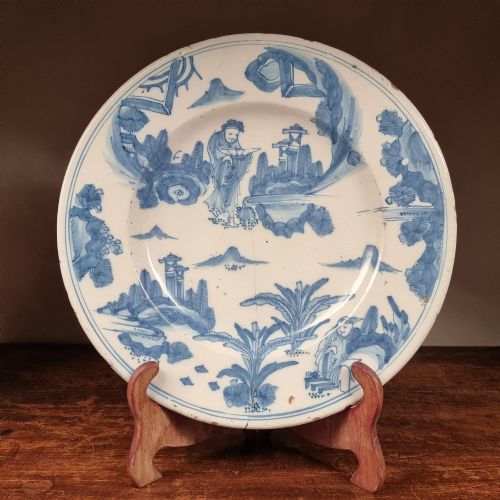
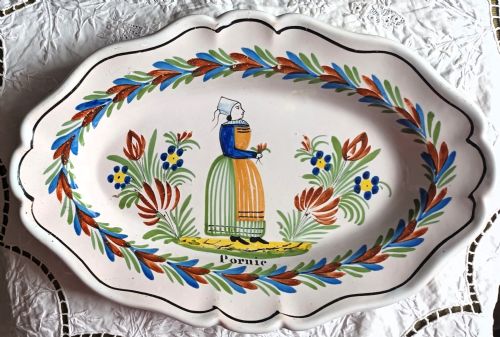
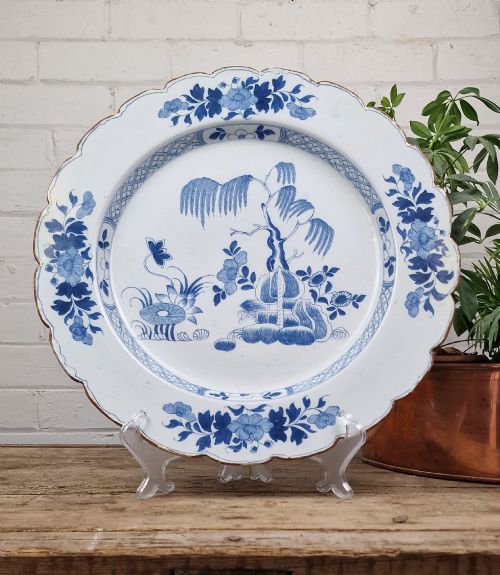
A tin glaze ceramic platter takes the form of a large charger, decorative plate, or serving dish intended for display. The pieces met most often on this page belong to the seventeenth, eighteenth, and nineteenth centuries, originating from English, Dutch, French, and Italian workshops.
Makers shaped earthenware bodies into wide, shallow circles, applying an opaque white glaze containing tin oxide to create a smooth surface for painting. Common decorative treatments range from blue and white floral motifs to polychrome scenes, manganese highlights, and yellow accents.
Styles span Dutch Baroque, English delftware, French faience, and Italian maiolica alongside revival designs such as Moorish and Renaissance patterns. Buyers encounter everything from simple domestic serving dishes to massive wall chargers measuring significant diameters.
Materials and construction
Potters formed the base of each platter using common earthenware clay, shaping the body on a wheel or pressing it into a mould. Once dried and bisque-fired, the porous clay received a liquid tin glaze that dried to a chalky white coating.
Artists painted directly onto this absorbent unfired glaze using metallic oxides, most notably cobalt pigment for blue, alongside manganese and polychrome colours. This technique required swift precision because the porous surface absorbed the pigment instantly, leaving no room to correct brushstrokes before the final glost firing.
Tin Glaze Ceramic Platter Retail Price Guide 2026
Typical asking prices for tin glaze ceramic platter among the pieces listed under this phrase on Sellingantiques today, from the lower quarter to the upper quarter. They describe what is for sale here now, not the wider market.
Some historic chargers feature cheerful yellow and manganese splashes that make even a humble vegetable dish look delightfully rebellious.
Assessing quality in tin-glazed earthenware
Quality rests upon the clarity of the tin glaze, the crispness of the painted brushwork, and the stability of the earthenware body. Superior examples display an even, glossy glaze free from excessive pitting, crazing, or pooling that obscures the design beneath.
The hand of the painter dictates much of the appeal, separating mechanical repetition from confident, fluid brushwork in the cobalt or polychrome pigments. Well-preserved surfaces retain their original gloss and decorative depth despite centuries of handling and age.
De Witte Ster
The Tin Glaze Ceramic Platter Glossary
- Tin Glaze
- A ceramic glaze made opaque by the addition of tin oxide, providing a white background for painted decoration. This coating defines the entire category of delftware, faience, and maiolica.
- Delftware
- Tin-glazed earthenware produced in the Netherlands and England, famously decorated in cobalt blue and white. Potters often utilised this technique for large decorative chargers and serving dishes.
- Charger
- A large decorative plate or platter intended primarily for display on a wall or dresser rather than everyday dining. These wide surfaces provided ample space for elaborate historical or floral scenes.
- Maiolica
- Italian tin-glazed earthenware known for vibrant polychrome painting and Renaissance revival styles. Artisans frequently covered the white surface with intricate historical or mythological narratives.
- Faience
- French tin-glazed earthenware produced across various regional centres such as Quimper and Desvres. These pieces often incorporate distinct local colour palettes including manganese and yellow.
Tin Glaze Ceramic Platter: Frequently Asked Questions
What is a tin glaze ceramic platter?
A tin glaze ceramic platter is a broad earthenware dish coated in an opaque white glaze containing tin oxide. Artisans painted directly onto this surface using metallic oxides before firing the piece.
These large dishes served primarily as decorative chargers or formal serving vessels in European households. Surviving examples date back to the seventeenth century and showcase diverse regional traditions.
How do I care for antique delftware?
Antique tin-glazed earthenware requires gentle handling because the ceramic body beneath the glaze is relatively soft. Keep these platters away from moisture and avoid using modern dishwashers entirely.
Display the chargers securely on stable plate stands or wall hangers designed for heavy ceramics. Dust them softly with a dry cloth to preserve the historic glaze.
How can I tell English delft from Dutch delft?
Distinguishing English delft from Dutch counterparts often involves examining the clay body and the tint of the white glaze. English pieces frequently display a slightly pinker or coarser earthenware body beneath the tin glaze.
Glaze colour and footrim characteristics also offer clues to origin when compared against documented regional styles. Many pieces remain attributed based on stylistic conventions rather than factory marks.
Were these chargers used for food?
Many large chargers functioned primarily as decorative wall displays or centrepieces for formal dining tables. The soft earthenware and porous tin glaze meant frequent use with acidic foods could wear down the surface over time.
Smaller dishes saw domestic service, while massive chargers remained status symbols displayed on dressers. Their survival in collections is largely due to this ornamental role.