
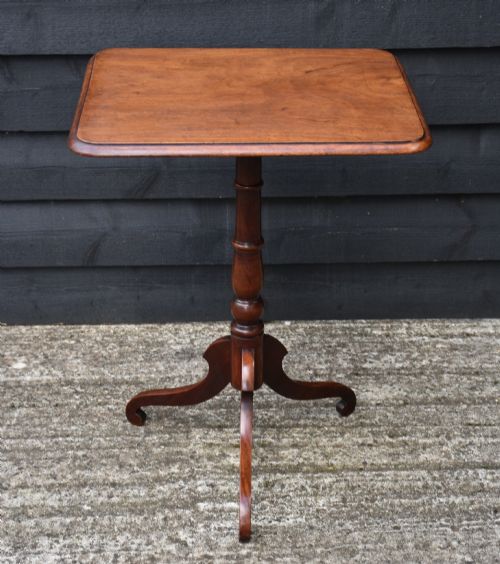
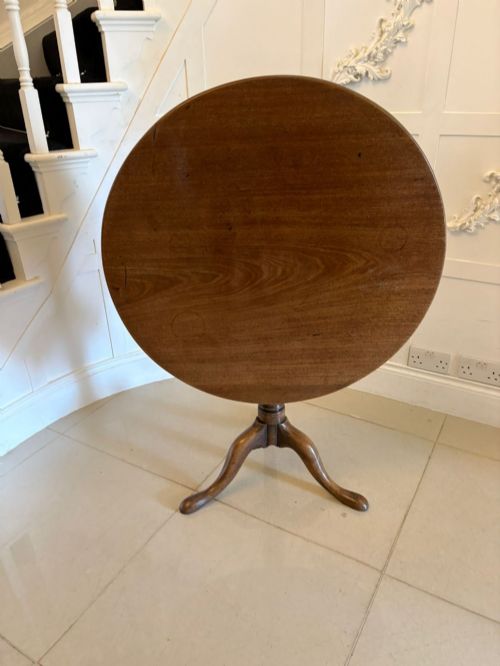
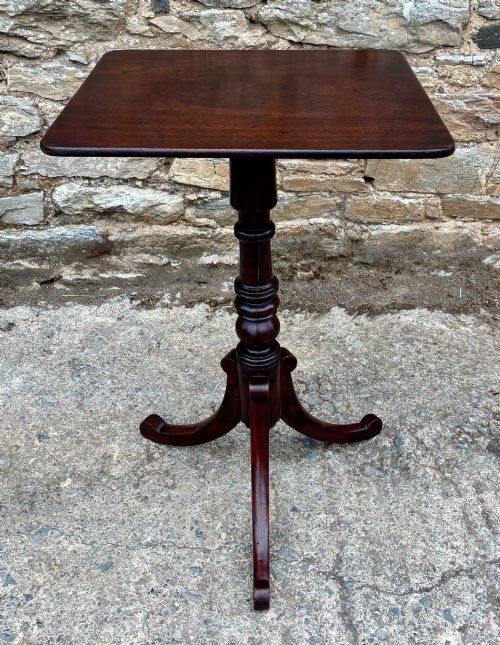
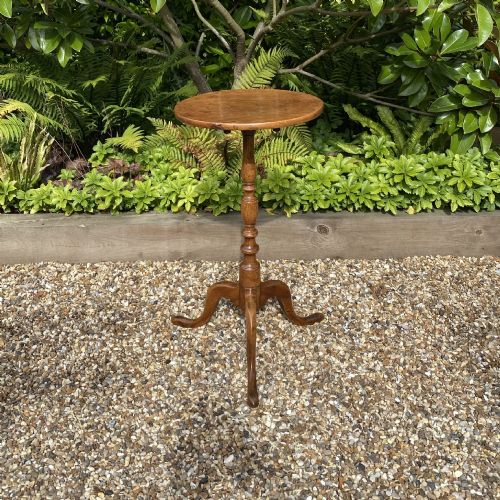

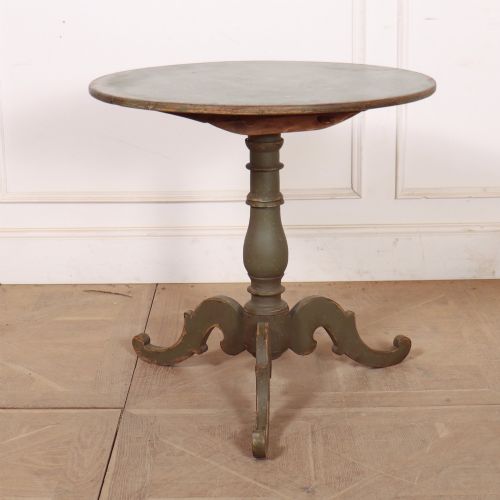
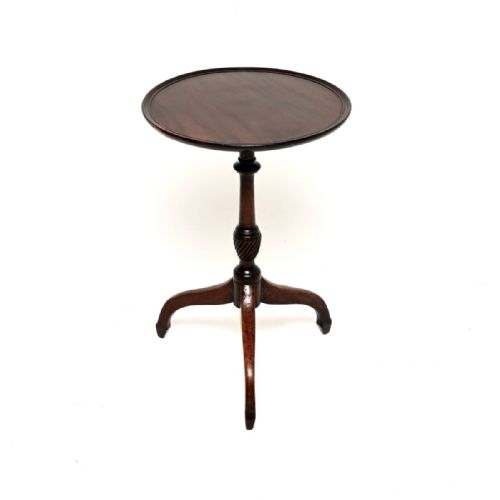
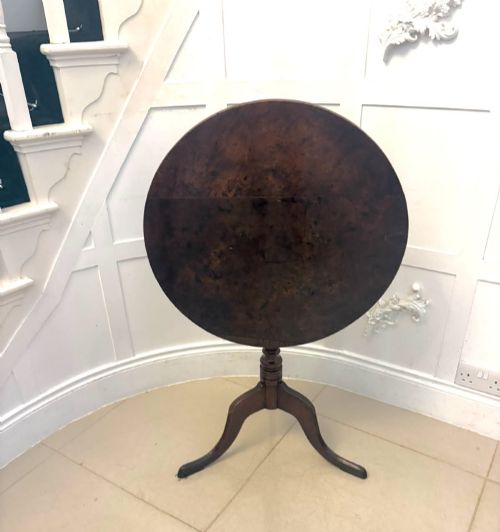
Tilt Top Lamp Table
When you search for a tilt top lamp table, you are looking for a versatile piece designed to pivot flat for storage and hold lighting or small objects in period interiors.
Tilt Top Lamp Table
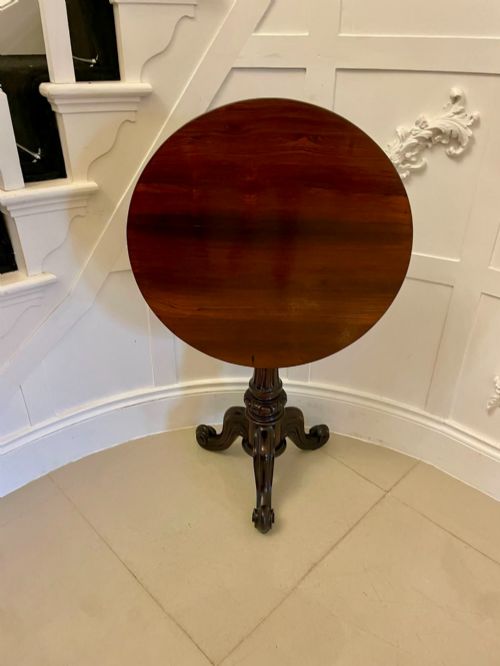
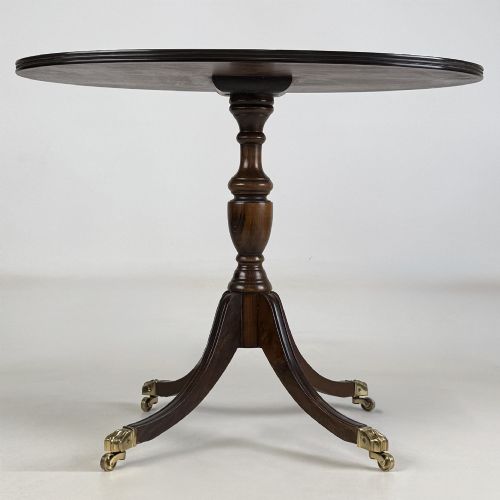
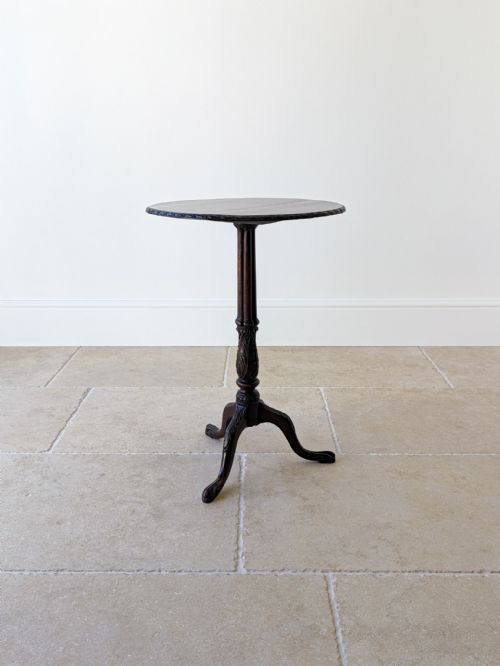
A tilt top lamp table serves as a compact surface for illumination and small items, equipped with a mechanism that allows the tabletop to pivot vertically against its base when not in use. You will most frequently encounter Georgian and Victorian examples featuring circular or oval tops supported by tripod legs.
The form developed across the eighteenth and nineteenth centuries to save floor space in parlours and drawing rooms. Regional vernacular pieces in oak and country walnut sit alongside more formal mahogany and rosewood designs from urban workshops.
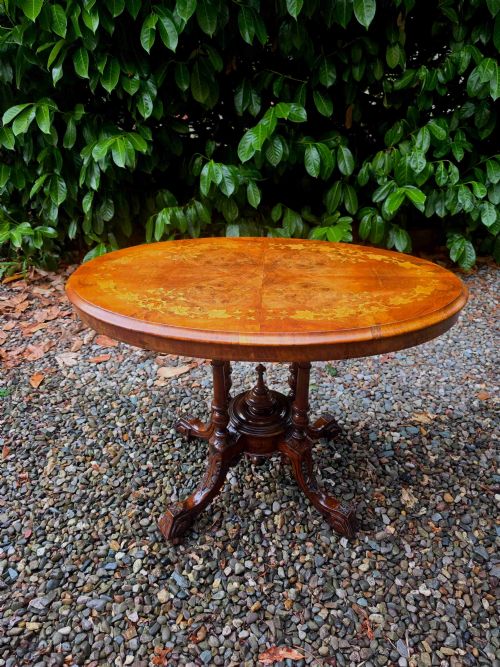
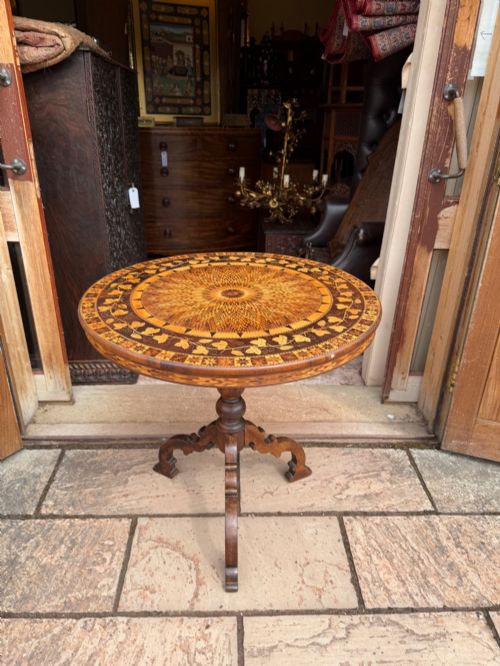
Many survive from the George III and Regency periods, often retaining their original birdcage or block pivots. Later nineteenth-century versions introduce inlaid burr walnut, scalloped edges, and decorative painting.
What varies in quality
Quality rests upon the crispness of the timber carving, the selection of highly figured veneers, and the stability of the tilt mechanism. Superior examples display well-proportioned tripod legs ending in neat pad or claw feet rather than clumsy replacements.
The integrity of the pivot mechanism determines much of the worth, as tight joints and original brass catches indicate careful manufacture. Finer pieces also show attention to detail in edge mouldings, such as pie crust carving or fine string inlay.
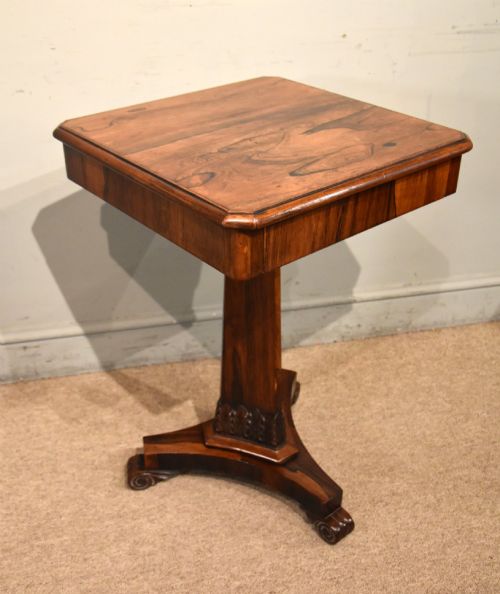
Listings demonstrate a strong preference for mahogany and oak across the eighteenth and nineteenth centuries, alongside decorative walnut and rosewood.
The Tilt Top Lamp Table Glossary
- Tilt top
- A tabletop mounted on a pivot mechanism that allows it to turn flat for use or stand vertically for storage. This clever space-saving design is characteristic of many eighteenth and nineteenth-century occasional tables.
- Tripod base
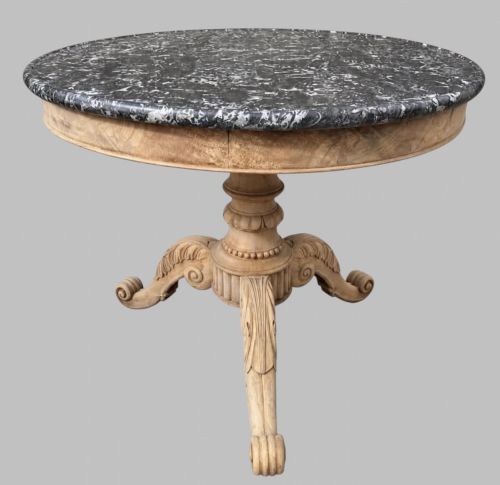
- A support structure comprising three legs radiating from a central turned column. It provides a stable stance on uneven floorboards.
- Birdcage
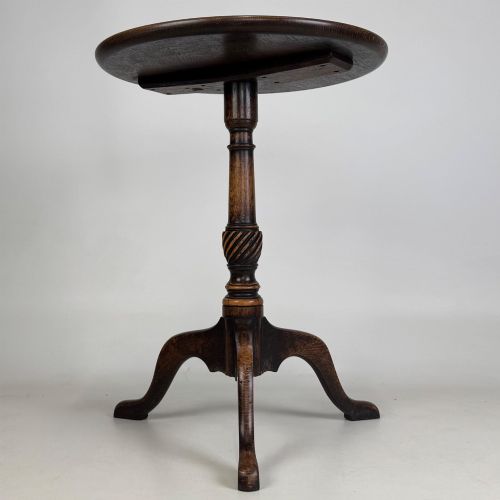
- A revolving wooden framework beneath the tabletop that permits both rotation and tilting. It is usually found on better quality eighteenth-century examples.
- Snap top
- An alternative term for a tilt top table, referencing the spring or catch that locks the surface into the horizontal position. The latch prevents accidental tipping during everyday use.
- Pie crust edge
- A raised, carved decorative border shaped in curves resembling a pastry crust. This refined detail appears on the circumferences of select Georgian tables.
Tilt Top Lamp Table: Frequently Asked Questions
How do I use a tilt top lamp table today?
These tables fit easily beside a sofa or armchair to hold a reading lamp or a drink. Their compact footprint makes them ideal for smaller rooms where surface space is at a premium.
When not in use, you can tilt the top vertical to admire the grain and save valuable floor space. They function just as their makers intended over two centuries ago.
How can I tell a Georgian table from a Victorian one?
Georgian pieces often display simpler, restrained lines in mahogany, oak, or walnut, relying on proportion and timber grain for effect. Look for clean tripod bases and traditional birdcage pivots on pieces from this era.
Victorian versions frequently introduce heavier ornamentation, such as burr walnut veneers, elaborate inlays, or scalloped edges. Revival styles from the later nineteenth century also mimic earlier Georgian and Chippendale forms.
Why do some tops tilt and others stay fixed?
The tilting function was an original space-saving device for rooms that needed to clear floor space quickly between social activities. Tables without this mechanism were built strictly as fixed-top side or centre tables.
Both types share similar tripod bases and proportions, but the pivoting hardware distinguishes the tilt top variant. Examining beneath the tabletop reveals the catch or block responsible for the movement.