


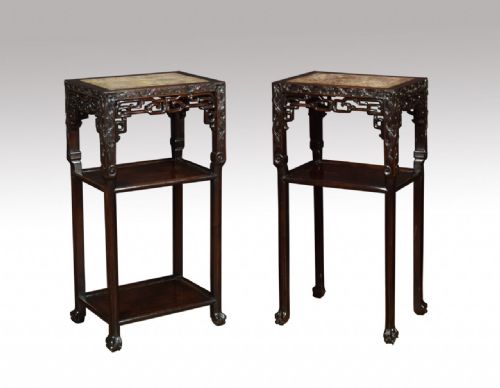
Tiered Hardwood Table
These tiered hardwood table examples offer multiple surfaces for display, combining practical levels with rich timber grains that anchor a room.

Tiered Hardwood Table
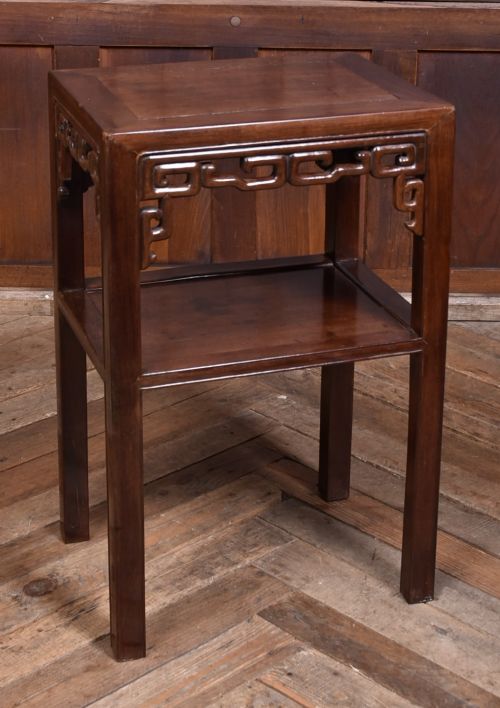
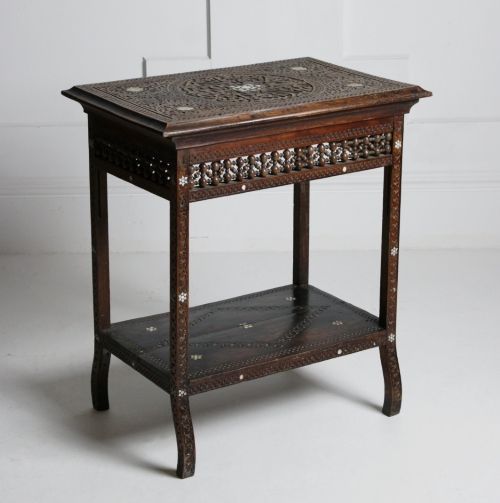
A tiered hardwood table provides stacked surfaces designed to hold plants, lamps, or decorative objects within a room. When buyers search for a tiered hardwood table, they encounter items originating from Chinese Qing Dynasty workshops, Japanese design influences, and Syrian craftsmanship.
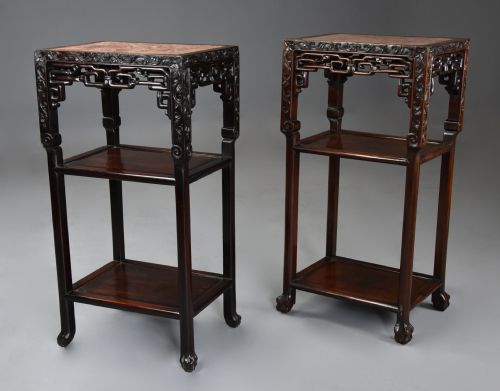
The selections available here lean heavily toward nineteenth-century production, featuring forms such as square two-tier stands, rectangular pot stands, and multi-level occasional tables. These pieces utilise dense timbers shaped for functional display in domestic spaces.
Makers and workshops from various traditions contributed to this group, including pieces associated with Liberty of London and Gabriel Viardot. The primary focus remains on multi-level structures intended to elevate objects of interest.
How They Were Made
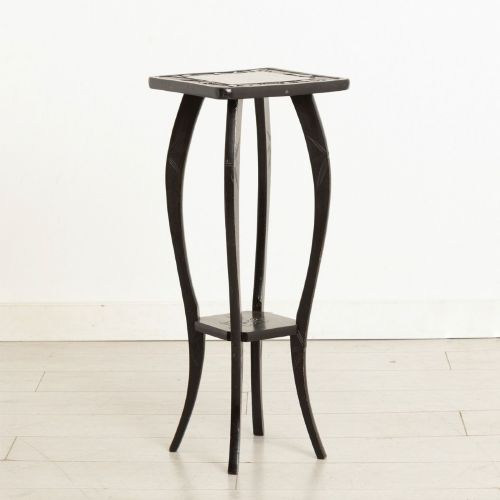
Cabinetmakers utilised dense timbers such as rosewood and hongmu, often finished with ebonised surfaces to achieve a uniform dark tone. Carved hardwood components demonstrate traditional joinery methods suited to supporting weight across multiple tiers.
Inlaid materials such as mother-of-pearl and fitted marble inserts provide contrasting textures against the dark wood structure. Carving techniques include intricate floral and geometric motifs executed by hand across the frame and legs.
Object forms span side tables, plant stands, occasional tables, and multi-tier pedestals.
What Varies in Quality
Depth and precision of the carved decoration distinguish standard examples from finer productions. Sharpness in the execution of foliage and geometric patterns indicates the skill of the original workshop.
The selection of timber grain and the integration of secondary materials like marble or mother-of-pearl affect the visual impact of the piece. Superior examples maintain structural integrity across multiple tiers while displaying harmonious proportions.
Liberty of London·Gabriel Viardot
The Tiered Hardwood Table Glossary
- Hongmu
- A dense Asian hardwood frequently utilised in traditional furniture making. It possesses a deep reddish-brown colour and heavy weight.
- Jardiniere stand
- A tall piece of furniture designed specifically to hold indoor plant pots or flower containers. These typically feature an elevated top surface and stable base.
- Ebonised wood
- Timber treated with a chemical stain or finish to simulate the appearance of solid ebony. This technique was popular in nineteenth-century decorative arts.
- Occasional table
- A small, versatile table designed for intermittent use around a sitting room. These pieces appear in various tier configurations.
Tiered Hardwood Table: Frequently Asked Questions
Where were these tables placed?
These pieces served practical roles in nineteenth-century interiors as plant stands, urn pedestals, and side tables. Their multi-tiered design allowed owners to display decorative ceramics or lamps without occupying excessive floor space.
In many households, they functioned near seating areas or in corners where elevated display surfaces were required. The construction supported heavy items like marble-topped jardinieres.
How do I identify a Qing Dynasty piece?
Pieces from the Qing Dynasty typically exhibit dense timbers such as hongmu or rosewood combined with deep, hand-carved motifs. The construction relies on traditional joinery techniques appropriate for multi-tiered stands.
Matching pairs and square two-tier formats frequently appear within this tradition. The integration of fitted marble inserts also points toward specific nineteenth-century workshop origins.
What is Japonisme furniture?
Japonisme describes nineteenth-century European design influenced by Japanese art and craftsmanship. Makers incorporated Asian structural principles and decorative themes into European furniture forms.
Attributions to makers like Gabriel Viardot often reflect this cross-cultural exchange. These items combine Western table formats with Eastern aesthetic details.
How should I clean the wood surfaces?
Hardwood and ebonised surfaces benefit from dusting with a dry, soft cloth to remove everyday particles. Avoid harsh chemical cleaners that might damage the original polish or inlay work.
Maintaining a stable room temperature helps protect dense timbers like rosewood and hongmu from movement. Natural wax can be applied sparingly to nourish the grain.