


Marble Inset Plant Table
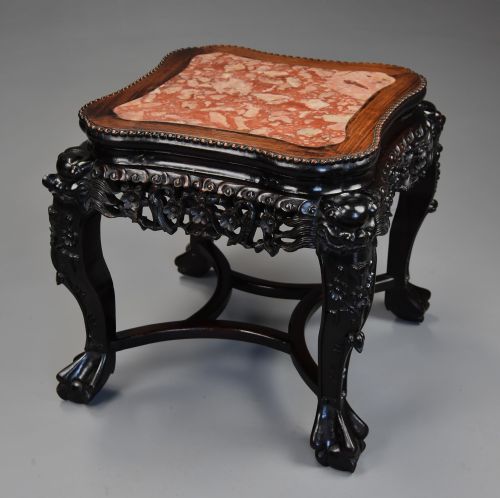
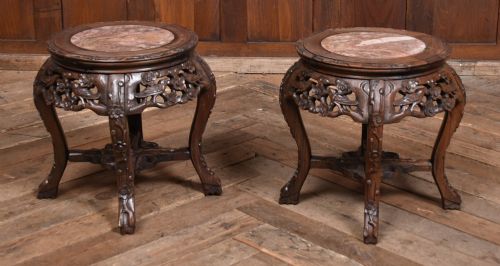
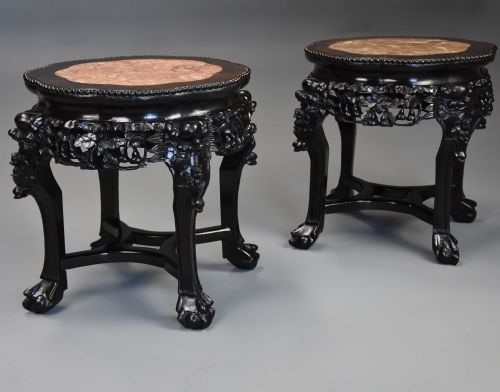
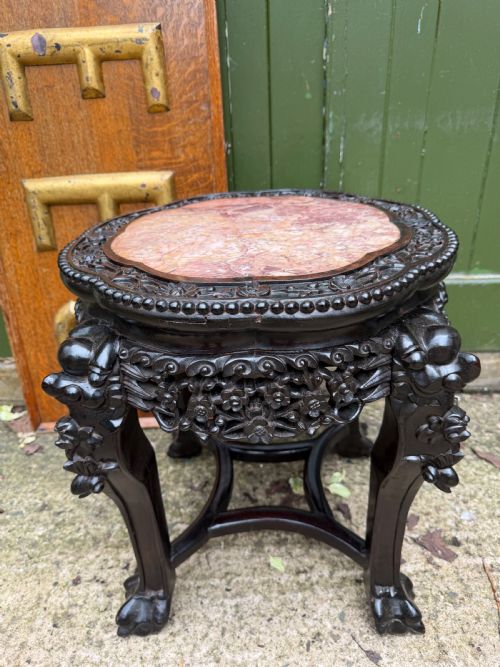
A marble inset plant table brings a stone surface together with turned or carved wood, creating a compact stage for foliage and urns.

Marble Inset Plant Table
A marble inset plant table serves primarily as a sturdy raised surface for botanical displays, jardiniere bowls and ornamental vases. These pieces appear in forms ranging from low occasional tables and barrel-shaped stools to tall pedestals.
The selections available here lean heavily towards nineteenth-century Chinese export workshops, alongside French Empire and Meiji period examples. Woods such as hongmu, padouk, rosewood and ebonised timber form the supporting frames for smooth stone tops.
How they were made
Carpenters shaped dense tropical hardwoods and European timbers into sturdy frames, utilising joinery designed to support heavy stone without warping. Turned legs and intricately carved aprons provide the structural foundation.
Slabs of marble, including variegated rouge varieties, were cut and polished to fit precisely into recessed wooden tops. Brass or gilt details sometimes accent the European examples, whilst Asian pieces rely on deep wood carving.
Listings span the nineteenth century up to nineteen thirty, including Victorian and Meiji period examples.
What varies in quality
The refinement of the wood carving dictates much of the distinction, separating stiffly cut decoration from fluid, deeply undercut foliage and framing. Heavier, denser timbers like hongmu and padouk generally indicate more substantial construction.
The quality of the stone insert matters greatly, with well-figured, evenly polished marble sitting flush within the wooden rebate. A tight, stable fit between the stone and the timber frame shows superior initial craftsmanship.
The Marble Inset Plant Table Glossary
- Jardiniere stand
- A tall or low table specifically built to hold a heavy ceramic flowerpot or plant container. These items require sturdy construction to bear the combined weight of damp soil, pottery and foliage.
- Hongmu
- A traditional Chinese term for dense, reddish-brown hardwoods used in fine furniture making. This heavy material takes a sharp carved edge and holds up well over centuries of use.
- Rouge marble
- A polished limestone variant showing rich red and white veining. It provides a striking contrast against dark ebonised wood or polished mahogany frames.
- Padouk
- A durable tropical hardwood with a reddish hue that darkens with age. It appears frequently in nineteenth-century Chinese export tables and stands.
- Meiji period
- The era in Japanese history spanning from eighteen sixty-eight to nineteen twelve. Pieces from this time demonstrate refined woodworking traditions alongside traditional export aesthetics.
Marble Inset Plant Table: Frequently Asked Questions
What is a marble inset plant table used for?
These tables were originally designed to elevate heavy ceramic planters, vases and urns away from damp floors. They allow botanical displays to catch more light and protect underlying floorboards from moisture.
In modern rooms, they function well as compact side tables, lamp stands or pedestals for decorative objects. Their small footprints make them useful for filling awkward corners.
How do I tell Chinese export pieces from European ones?
Chinese export pieces frequently employ dense tropical hardwoods like hongmu, padouk and rosewood with deeply carved floral aprons. They often date to the nineteenth century and reflect Qing Dynasty design motifs.
European examples from France tend to use walnut, mahogany or ebonised wood combined with brass mounts and gilt details. The carving styles and framing techniques align more closely with continental cabinetmaking traditions.
Are these tables strong enough for heavy plants?
The heavy stone inset rests within a solid wood frame designed to bear considerable weight. Dense hardwoods like padouk and hongmu provide immense structural stability.
Large ceramic planters and heavy urns sit securely on these surfaces without threatening the integrity of the legs. The primary concern is simply balancing the weight evenly across the top.
How do I care for the marble top?
Polished marble requires gentle cleaning with a damp cloth and mild, neutral soap. Acidic liquids like lemon juice or vinegar should be avoided, as they etch the polished stone surface.
Using saucers underneath plant pots prevents water rings and mineral deposits from forming on the stone. Periodic dusting keeps the polished surface looking bright.