

Tiered Display Shelving
Tiered display shelving gathers books and ornaments across graduating platforms, bringing vertical order and architectural presence to a room.
Tiered Display Shelving
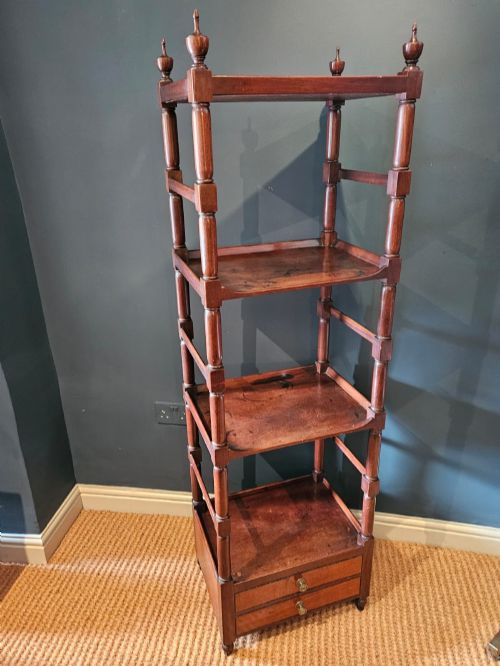
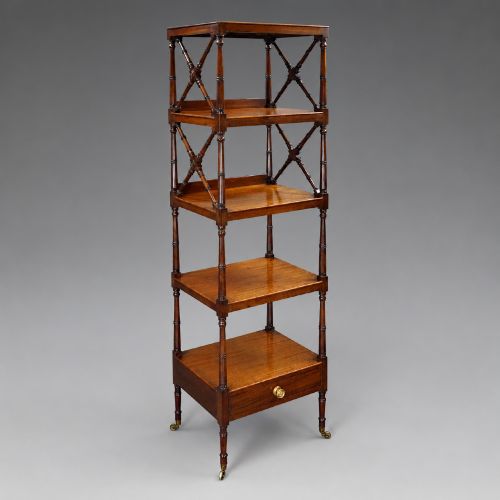
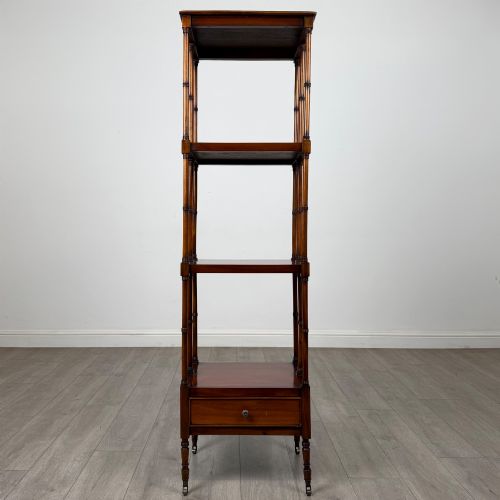
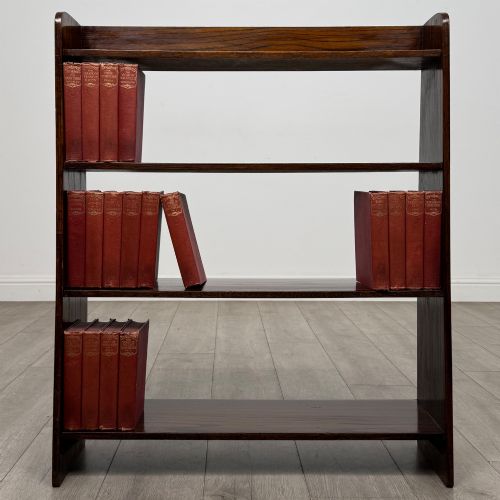
Tiered display shelving appears across nineteenth-century and early twentieth-century periods in forms such as whatnots, etageres, and wall-hanging shelves. The buyer encounters freestanding corner units, graduated bookcases, and multi-tiered etageres designed to maximise vertical space.
The materials span mahogany, walnut, oak, and rosewood, often paired with brass fittings or glass elements. Pieces range from compact wall shelves to substantial four-tier floor standing bookcases originating in Georgian, Regency, Victorian, and Edwardian workshops.
Materials and construction
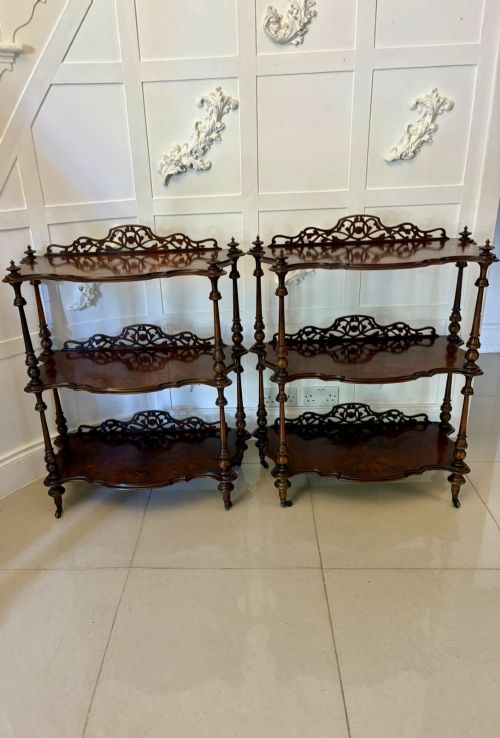
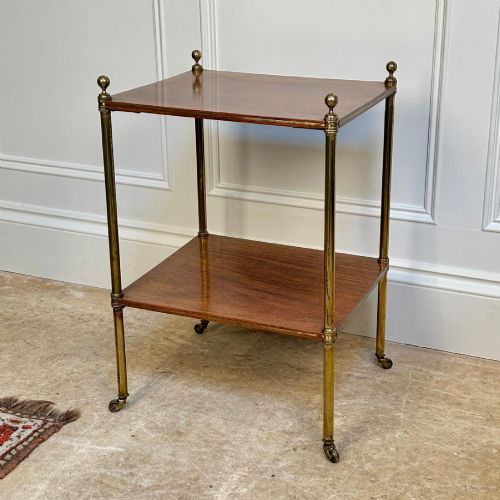
Cabinetmakers constructed these frames using dense hardwoods like mahogany, walnut, and rosewood, alongside lighter timbers such as oak and pine. Selected pieces incorporate burr walnut veneers, brass details, and ebonised or parcel gilded finishes.
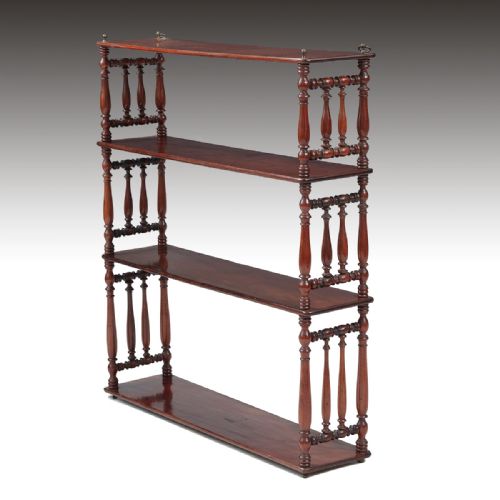
Joinery techniques link graduated horizontal tiers to vertical supports, whether through turned uprights, barley twist columns, or wall-hanging brackets. Freestanding structures distribute weight across multiple platforms while maintaining stability through balanced tier proportions.
Listings feature woods spanning mahogany, walnut, oak, rosewood, burr walnut, and ebonised finishes across the nineteenth and early twentieth centuries.
Assessment of standard
Quality rests upon the selection of timber veneers, the crispness of turned supports, and the structural integrity of the tiers. Superior examples display thoughtful grain matching on burr walnut surfaces and clean joinery at every shelf junction.
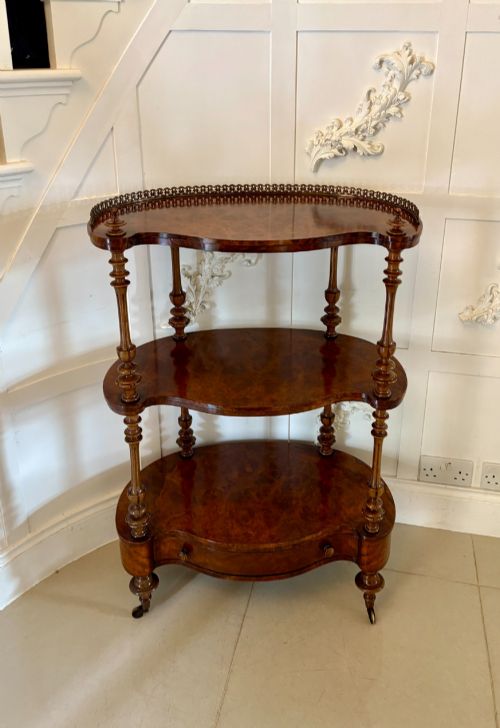
Refinement in proportion and decorative restraint distinguish better pieces. Details such as inlaid parquetry, parcel gilding, or integrated brass galleries elevate the design beyond utilitarian storage.
The Tiered Display Shelving Glossary
- Whatnot
- A piece of furniture consisting of a set of open shelves for displaying small objects or books. These freestanding tiers date prominently through the Victorian and Regency periods.
- Etagere
- A piece of furniture with a series of open shelves for displaying ornaments. Originating in France, these multi-tiered stands frequently utilise rosewood or ebonised wood.
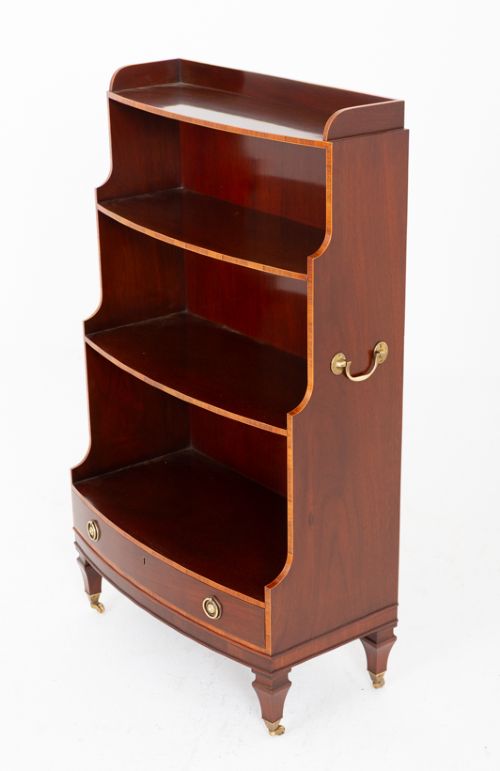
- Waterfall bookcase
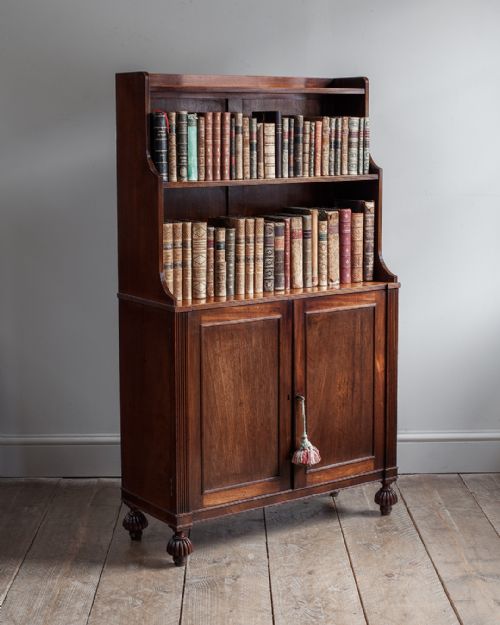
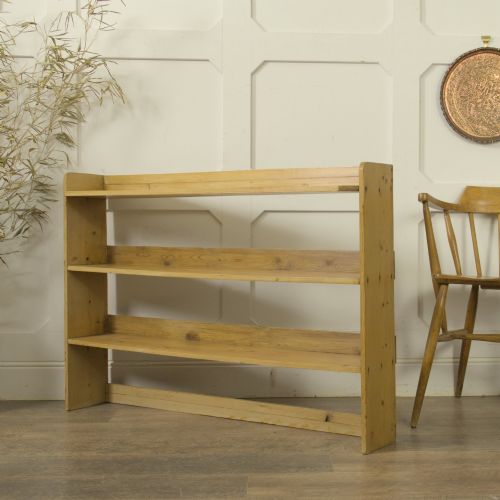
- A set of open shelves where the depth of each tier increases progressively from top to bottom. This form provides a distinct stepped profile.
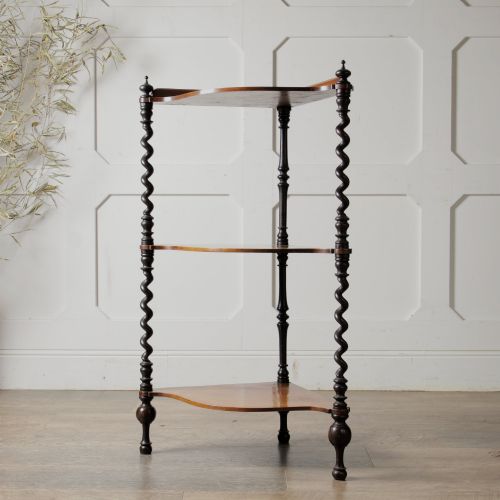
- Barley twist
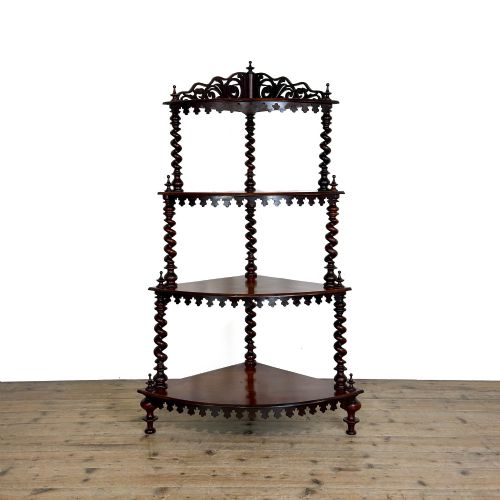
- A type of turning resembling a spiral rope, used for the vertical supports on nineteenth-century furniture. This decorative technique appears on several Victorian whatnots.
- Parquetry
- Geometric mosaic woodwork used for ornamenting floors, cabinets, and tables. Inlaid versions combine this technique with ebonised frames.
Tiered Display Shelving: Frequently Asked Questions
Where do I place a whatnot?
Freestanding units suit empty corners or living room spaces where multiple tiers can hold books and decorative objects without blocking light.
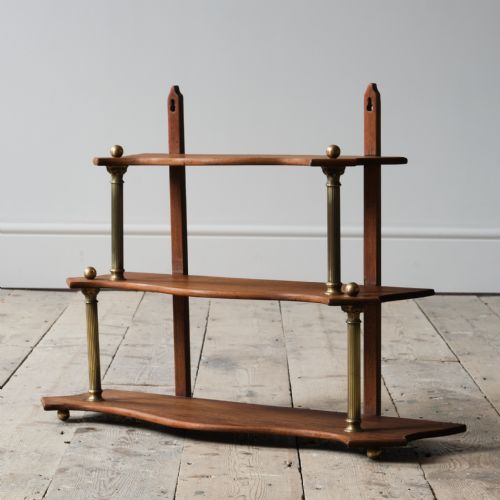
Wall hanging shelves fit smaller rooms, mounting directly above sideboards or desks to utilise vertical wall area.
How do I distinguish a Victorian whatnot?
Victorian examples frequently employ dark timbers like mahogany and walnut, often featuring turned supports, barley twist columns, or serpentine shaped tiers.
Construction details and timber choices align with nineteenth-century manufacturing methods, distinguishing them from later twentieth-century reproductions.
Can these shelves hold heavy books?
Smaller wall-hanging units and delicate etageres serve best for display items, ceramics, and lighter volumes rather than heavy bound collections.
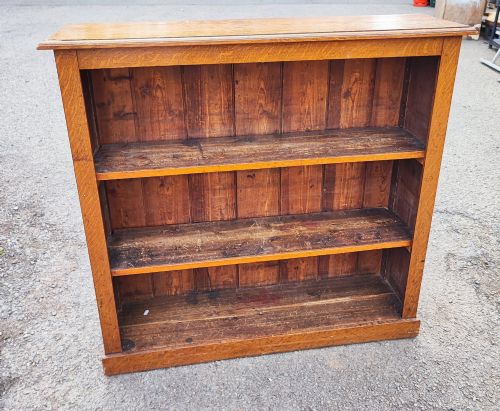
Sturdier oak and mahogany floor-standing bookcases provide the structural support needed for substantial book collections.
What is an etagere?
An etagere is a multi-tiered open shelving unit designed primarily for displaying ornaments, porcelain, and small decorative objects.
These pieces emerged in various woods, including rosewood and walnut, often incorporating brass galleries or inlaid details.