
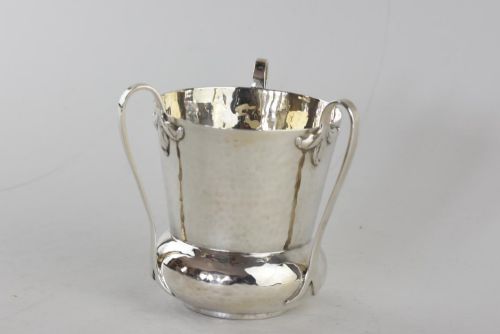

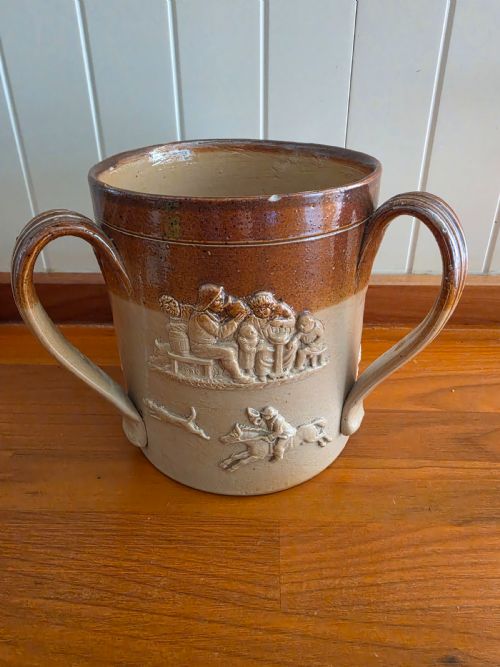


Three Handled Cup
These three handled cup examples are traditional vessels designed for sharing, combining practical drinking forms with decorative ceramic and metal craftsmanship.
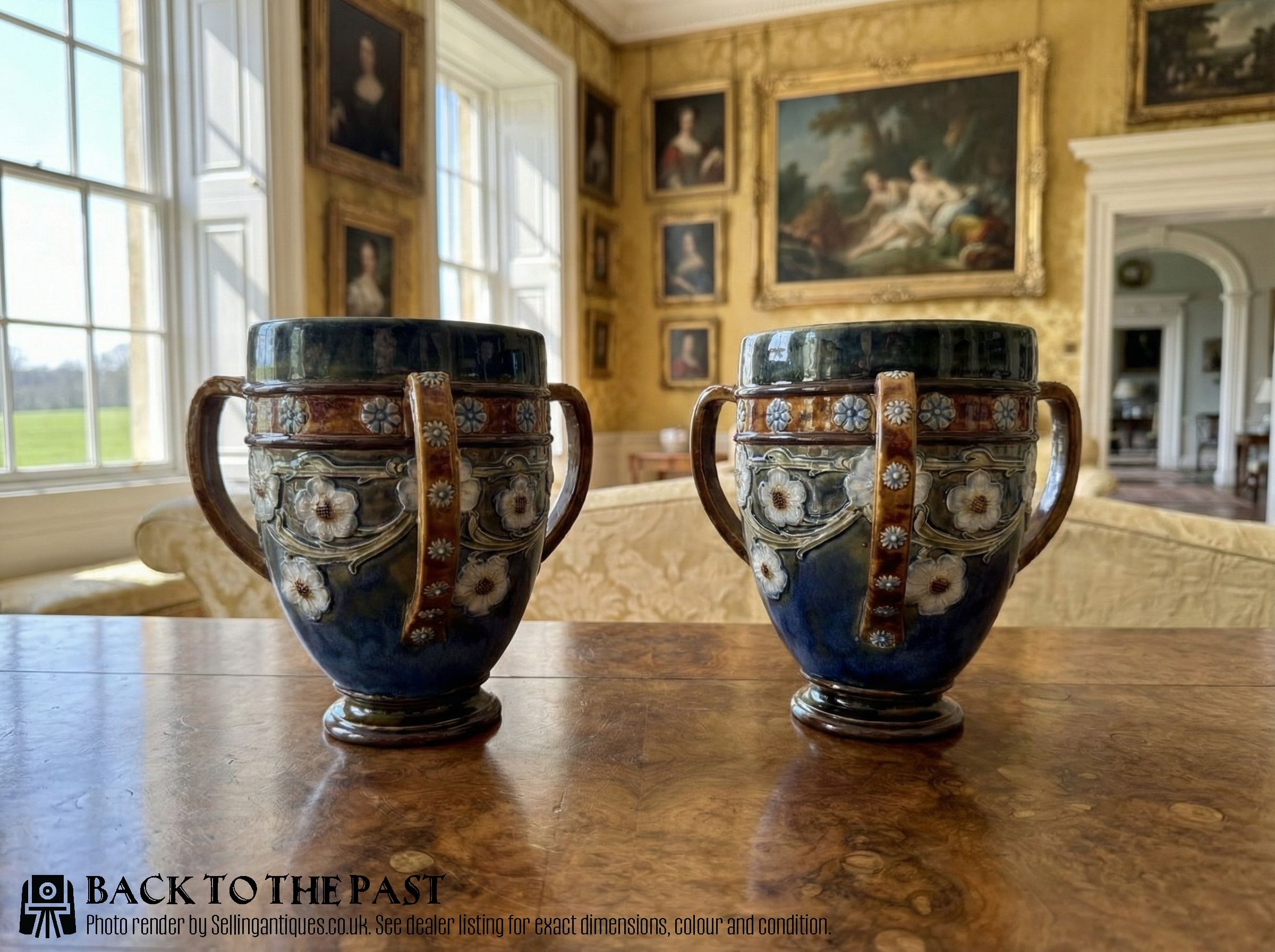
Three Handled Cup
A three handled cup, frequently known as a tyg, is a drinking vessel designed with multiple handles to allow several people to hold it safely during communal toasts.
The pieces seen here span the nineteenth and early twentieth centuries, encompassing Victorian stoneware, Edwardian porcelain, and French crystal glass.
Forms range from sturdy pottery vessels and dresser bases to delicate decorative bowls, vases, and miniature loving cups produced across European workshops.
How they were made
Potters shaped these vessels from stoneware, porcelain, and clay, often applying hand-painted decoration or specialised lustre finishes before firing.
Metalworkers utilised sterling silver and pewter to cast mounts, handles, and intricate details, occasionally combining silver with cut glass bodies.
Gilding and gold leaf were applied by hand to accent the rims and surface patterns of crystal glass bowls and porcelain mugs.
Some miniature tygs measure only a few inches tall, proving that even communal drinking vessels could come in pocket-sized editions for very modest toasts.
What varies in quality
The refinement of the surface decoration separates standard vessels from exceptional pieces, particularly where hand-painted details or slipwork by named artists are involved.
The integration of precious materials such as sterling silver mounts or heavy cut crystal dictates the overall weight, balance, and finish of the object.
Doulton Lambeth·Royal Doulton·Wedgwood·Kayserzinn·Royal Worcester·George Ernest Hawkins·Coalport
The Three Handled Cup Glossary
- Tyg
- A traditional English drinking vessel featuring three or more handles, used historically for passing around a table.
- Lustre
- A type of ceramic glaze that imparts a metallic sheen or iridescent gloss to the surface of the pottery.
- Stoneware
- A dense, impermeable ceramic fired at high temperatures, often finished with salt glazes or applied slip decoration.
Three Handled Cup: Frequently Asked Questions
What is a three handled cup used for?
These vessels were historically used for communal drinking during toasts, allowing multiple guests to hold the cup securely as it passed around the table.
Over time, many examples transitioned into purely decorative objects, displayed on dressers and mantelpieces for their craftsmanship.
How do I date a three handled cup?
Dating relies on identifying the manufacturing marks, pottery stamps, and silver hallmarks stamped onto the base or mounts.
Stylistic indicators such as Jugendstil motifs, Victorian stoneware glazes, or Art Deco lines also point to specific decades of production.
Are these cups safe to use for drinking?
While many antique vessels are structurally sound, historic glazes and silver components require careful handling and hand washing rather than daily use.
Collectors generally treat them as display pieces to preserve the delicate hand-painted surfaces, gilding, and antique mounts.