

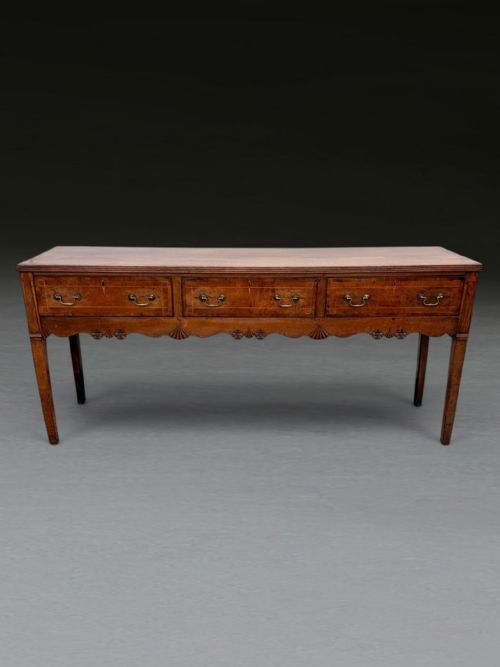
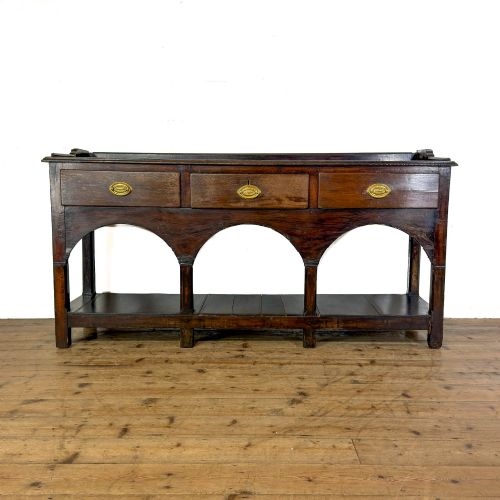
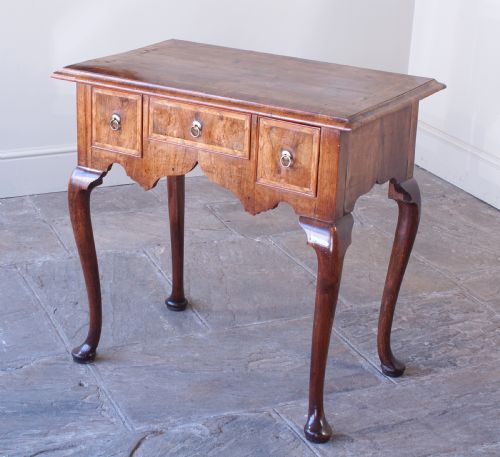
Three Drawer Server Table
A three drawer server table offers long surface space and deep storage, prized for anchoring a dining room or hallway.
Three Drawer Server Table
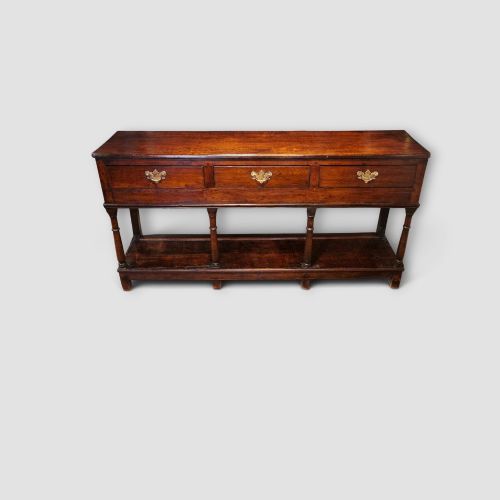
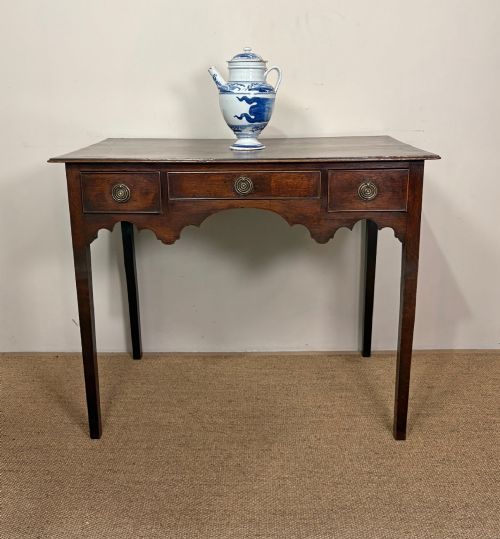
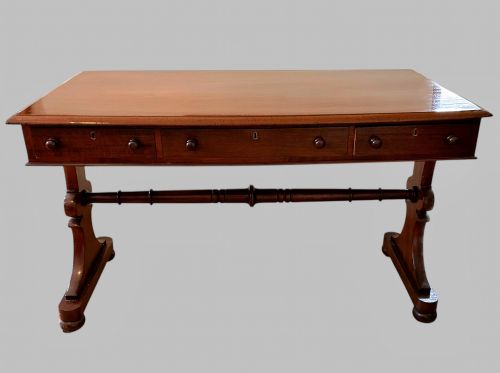
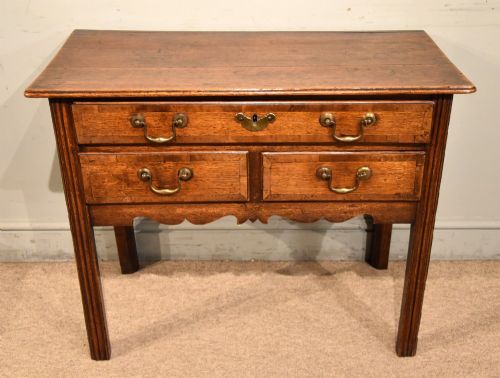
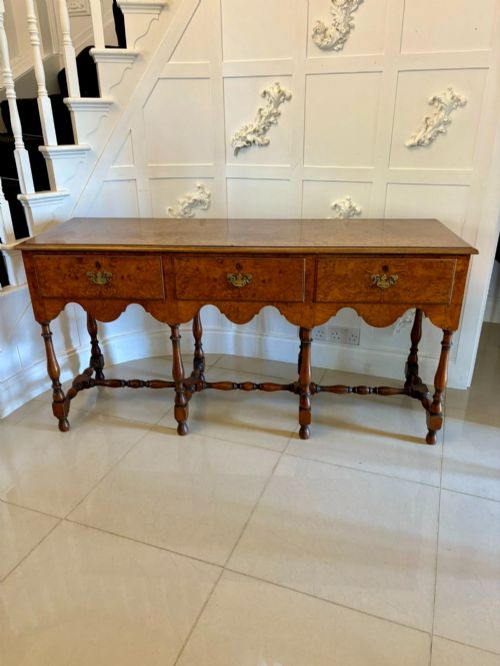
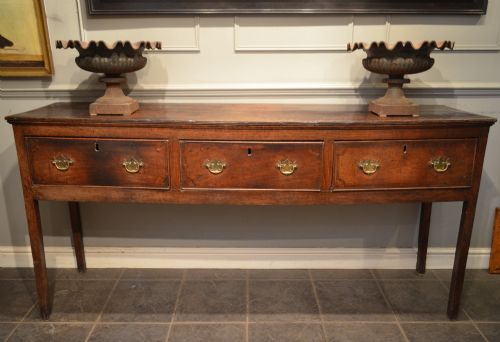
A three drawer server table combines the surface utility of a serving table with the multi-drawer format of a dresser base or lowboy. These pieces span from the seventeenth century through the Edwardian period, built primarily to hold dining utensils or food.
Most examples found here are constructed from English oak, often featuring a potboard shelf beneath the drawers. Other variations emerge in walnut, mahogany, pine, and fruitwood, following styles such as Georgian, Queen Anne, and rustic farmhouse.
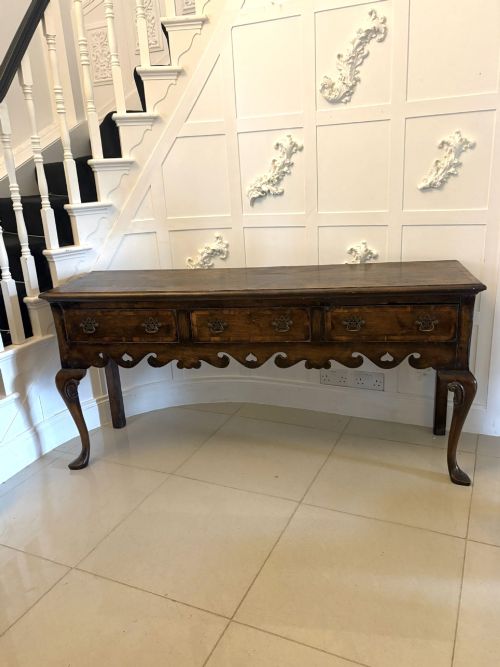
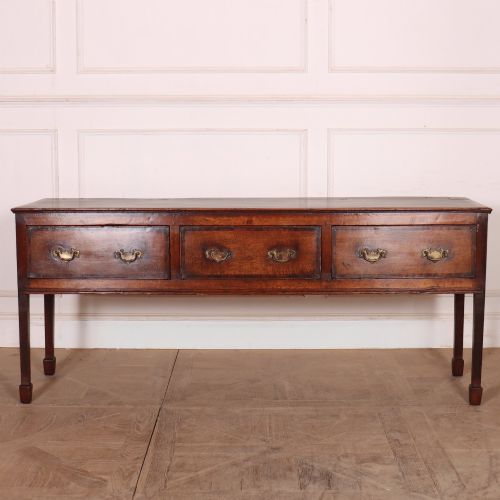
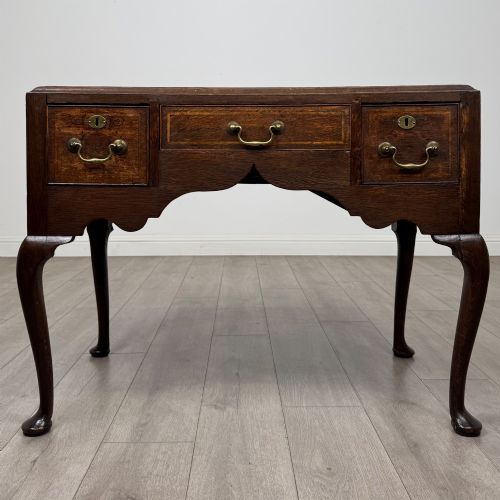
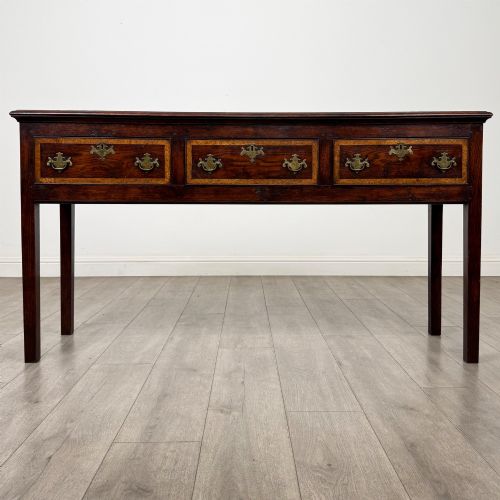
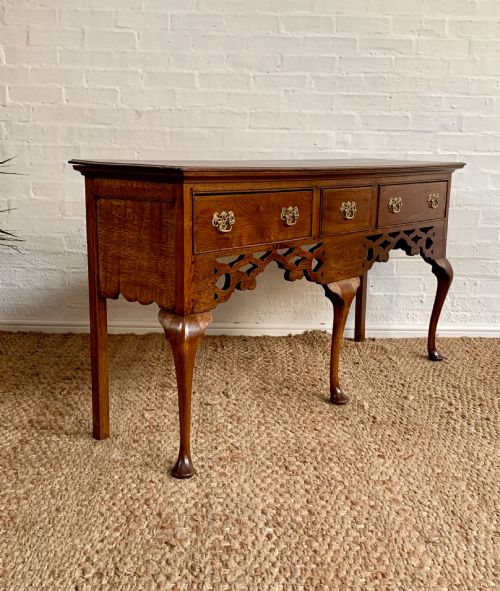
The layout typically places three drawers in a row beneath a rectangular top, sometimes raised on cabriole legs or straight supports. Form follows function closely, resulting in low profiles suited for serving or side storage.
Materials and construction methods
Makers relied heavily on solid hardwoods like oak, walnut, and mahogany, supplemented by softer woods such as pine and sycamore for secondary framing. Surfaces often show hand-planed finishes, painted treatments, or bleached patinas developed over centuries.
Joinery techniques prioritised durability, utilising pegged mortise and tenon joints for frames and hand-cut dovetails for drawer construction. Brass handles and escutcheons frequently provide the primary metalwork accents on drawer fronts.
Dairy prep tables quietly cross over into serving roles here, bringing traces of spilled milk and farm life into the dining room.
Judging build quality and character
Quality rests in the integrity of the timber selection, visible in dense grain patterns and well-matched drawer timbers rather than surface embellishment. Superior examples retain their original boards, handles, and structural joints without heavy timber replacement.
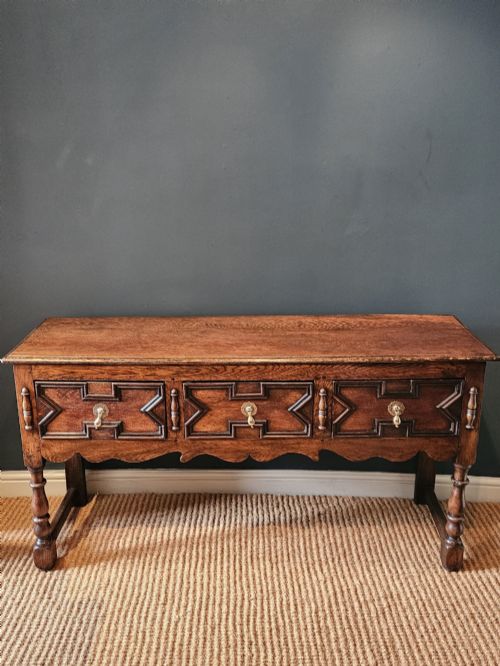
Proportion and stance distinguish finer server tables, where leg profiles like cabriole supports or geometric mouldings complement the body. The depth of patination on oak and walnut surfaces also separates honest period pieces from later interpretations.
The Three Drawer Server Table Glossary
- Dresser base
- The lower section of a traditional dining room dresser, built with surface space above and drawers or cupboards below.
- Potboard
- An open lower shelf fitted between the legs of a table or dresser base, historically used for storing pots and earthenware.
- Lowboy
- A small table with a low profile containing one or more rows of drawers, frequently used as a side table or dressing table.
- Cabriole leg
- A furniture leg that curves out in a convex arc and tapers inward in a concave arc, often ending in a pad or hoof foot.
- Geometric moulding
- Raised decorative framing applied to drawer fronts or panels, popular during the seventeenth and early eighteenth centuries.
Three Drawer Server Table: Frequently Asked Questions
How were three drawer server tables used?
These tables served primarily in dining rooms and kitchens for preparing food, holding dishes, and storing cutlery within the drawers.
The lower surface or potboard offered additional storage space for heavy kitchen pottery and serving vessels away from the main workspace.
What woods were used to build them?
Oak is the predominant material seen across seventeenth and eighteenth-century examples, valued for its strength and availability.
Craftsmanship also utilised walnut, mahogany, fruitwood, pine, and cherry, occasionally finished with paint or left in a bleached state.
How do I tell an 18th century piece from a later one?
Eighteenth-century examples display hand-cut dovetails, pegged joinery, and natural timber patination built up through generations of use.
Pieces dating towards nineteen-hundred or later often show machine-sawn elements, different interior secondary woods, or revival styling.
Can I use a server table in a hallway?
Their narrow rectangular proportions make these tables suitable for hallways, living rooms, and dining spaces alike.
The three drawers provide convenient storage for smaller household items while keeping the top surface free for lamps or display.