

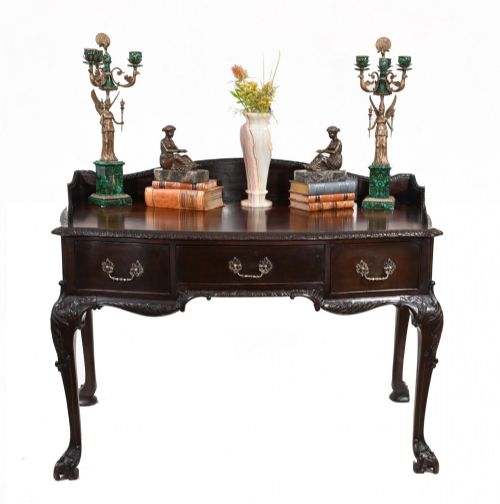
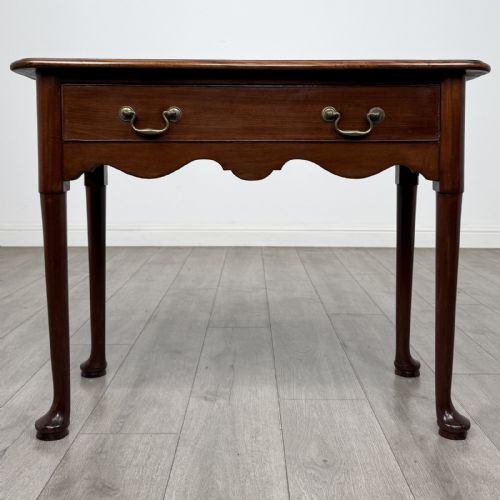
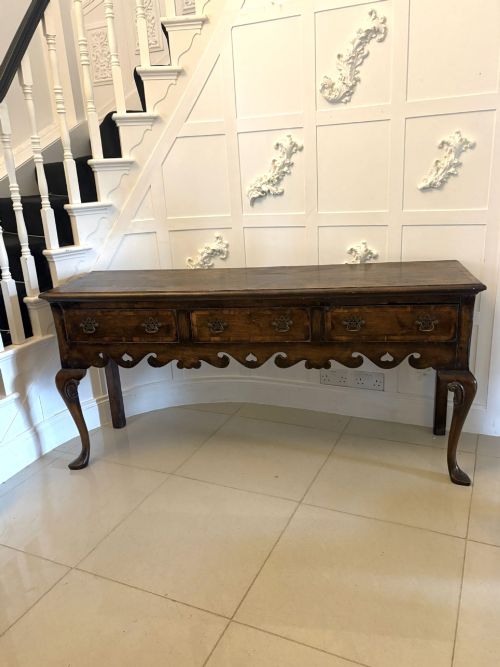
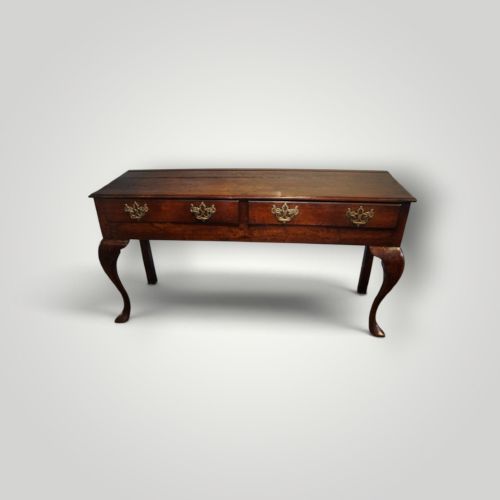






Cabriole Leg Serving Table
A cabriole leg serving table is a formal dining or entertaining surface raised on curved, graceful supports, valued for its combination of utility and sculptural line.
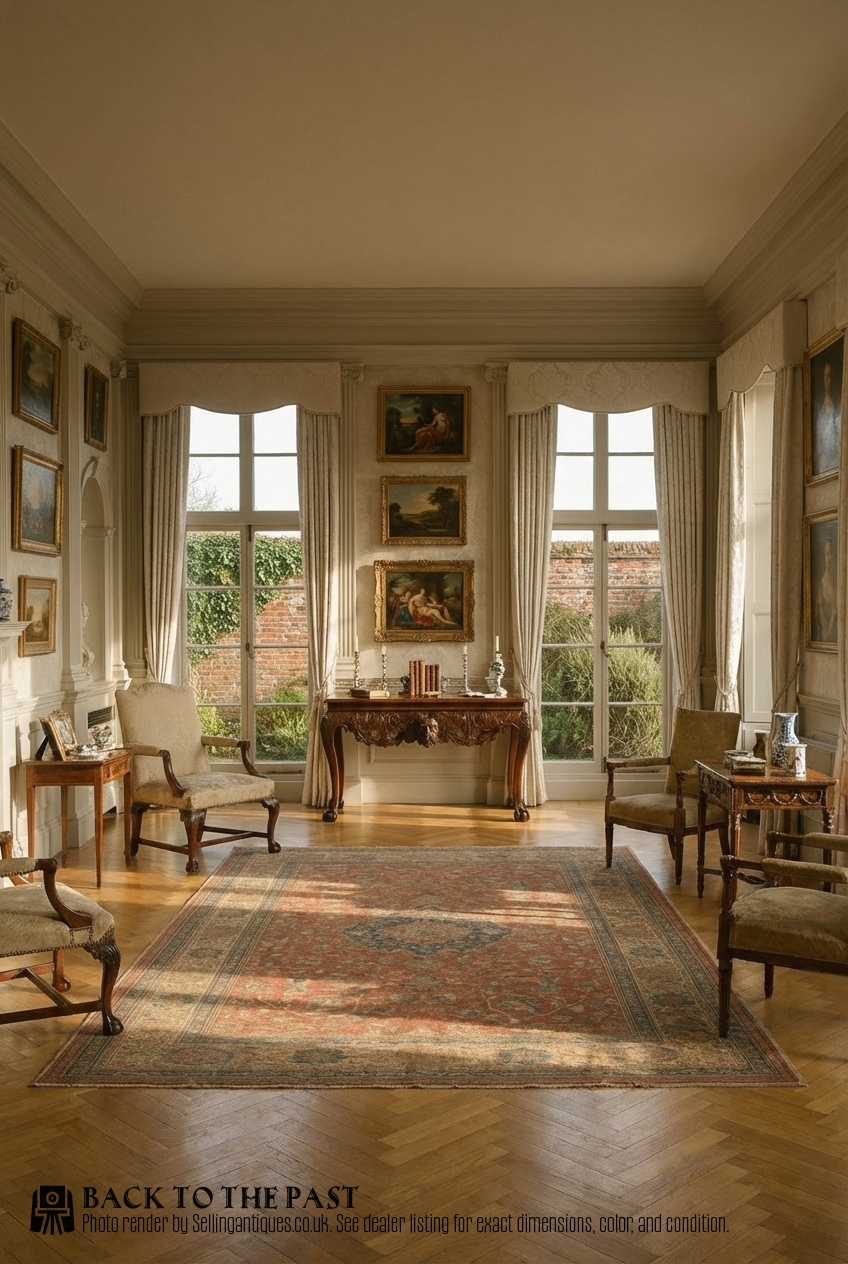
Cabriole Leg Serving Table
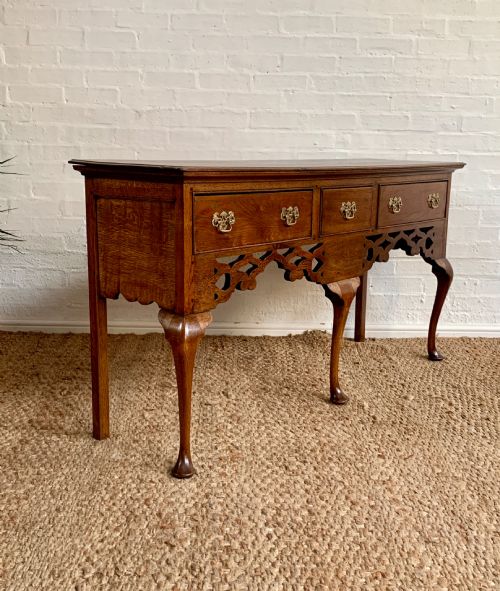
A cabriole leg serving table sits against a dining room wall or functions as a sideboard, holding dishes, silver and food during meals. The form encompasses lowboys, servers and dresser bases built for domestic service.
Most examples found here date from the eighteenth century through to the revival periods of the nineteenth and early twentieth centuries. Oak and mahogany dominate the timber choices, supplemented by walnut and cherrywood.
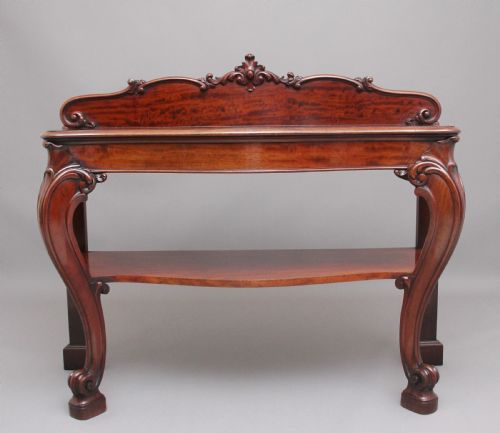
Makers shaped these surfaces to serve large households, employing drawers and tiered tiers to maximise utility. The presence of the curved leg defines the silhouette across regional English, Irish and continental workshops.
How they were made
Cabinetmakers utilised solid native and imported timbers, selecting mahogany, oak, walnut and burr walnut for their durability and grain pattern. Secondary woods like brass provided structural reinforcement and hardware.
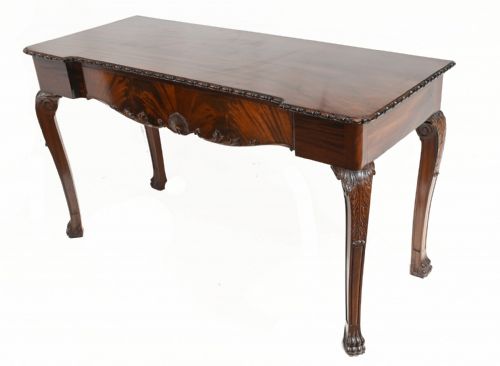
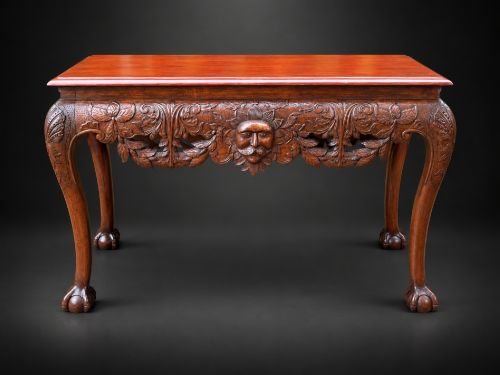
The characteristic curved leg was shaped from solid timber blocks, often flowing into pad, claw and ball, or hoof feet. Hand carving decorated the knees of the supports and the aprons of the tables.
Joinery relied on traditional mortise and tenon construction for the frames, while drawer boxes utilised hand-cut dovetails to withstand daily domestic use.
Cabriole Leg Serving Table Retail Price Guide 2026
Typical asking prices for cabriole leg serving table among the pieces listed under this phrase on Sellingantiques today, from the lower quarter to the upper quarter. They describe what is for sale here now, not the wider market.
The listings on this page span the eighteenth, nineteenth and early twentieth centuries, featuring mahogany, oak, walnut and cherrywood.
What varies in quality
The sophistication of the carved detail on the knees and aprons separates standard production from exceptional pieces. Crisp, deep relief work indicates a maker of higher skill.
Timber selection dictates visual weight, with figured grain, matched veneers such as burr walnut, and dense mahogany elevating the presence of the table. Construction thickness in the top boards and frame timbers also influences substance.
Proportion governs the aesthetic success of the curve, where smooth transitions from the rail to the foot reveal the competence of the original workshop.
Gillows·Epstein
The Cabriole Leg Serving Table Glossary
- Cabriole leg
- A furniture leg that curves out at the knee and tapers inward to an ankle and foot, mimicking animal limbs. This form became dominant during the early eighteenth century.
- Dresser base
- A low, heavy table with drawers, built into domestic spaces for storage and food preparation. These pieces often doubled as serving tables in country houses.
- Lowboy
- A small table with one or more drawers and cabriole legs, functioning as a dressing table or a compact side serving surface. Eighteenth-century examples are particularly sought after.
- Dumb waiter
- A tiered stand with rotating or fixed circular shelves used to hold dishes beside a dining table. These serving pieces dispense with the need for immediate servants during meals.
- George II style
- Design characteristics spanning the reign of George II, defined by heavy mahogany construction, bold cabriole legs and classical carving. Revival versions later adopted these motifs.
Cabriole Leg Serving Table: Frequently Asked Questions
What is a cabriole leg serving table?
A cabriole leg serving table is a functional dining surface supported by curved legs, designed to hold dishes, silver or food during meals. These pieces function alongside dining tables as sideboards or servers.
They appear in forms ranging from eighteenth-century lowboys to later nineteenth-century revival servers in mahogany and oak.
How were these tables used historically?
Historically, servants used these tables to stage dishes and utensils before serving them at the main dining table. They stood against dining room walls to keep food accessible yet out of the way.
Over time, multi-tiered versions like dumb waiters handled individual courses, while dresser bases provided drawer storage for linens and cutlery.
How do I tell an 18th-century piece from a revival?
Eighteenth-century pieces display natural timber ageing, hand-cut joinery marks and tool signatures specific to period hand-working methods. The timber dryness and construction wear provide key clues.
Revival pieces from the nineteenth and twentieth centuries often employ heavier commercial finishes and machine-assisted joinery, even when copying earlier styles.
How do I live with a serving table?
A serving table works naturally in a modern dining room or hallway as a console, holding lamps, books or tableware. Their shallow depth allows them to fit against walls without blocking walkways.
Routine maintenance involves waxing timber surfaces and avoiding direct heat or moisture to preserve the polished finish.