



Louis XV Style Server
A louis xv style server brings fluid curves and naturalistic ornamentation to a dining room or hallway.
Louis XV Style Server
When you search for a louis xv style server, you are looking at French-inspired case furniture designed for serving and storage, often taking the form of a buffet, sideboard, or serving table. These pieces emerge from periods spanning the late eighteenth century up to the twentieth century, including revival eras from nineteen hundred and nineteen thirty.
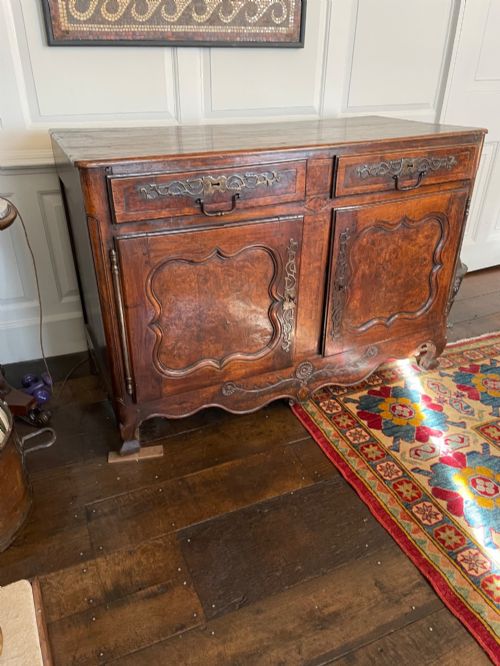
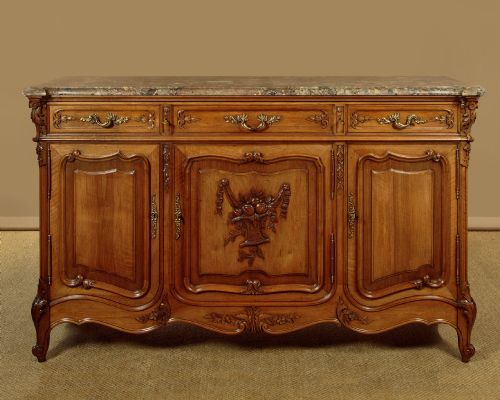
The most common versions on this page are marble-topped buffets and sideboards displaying characteristic serpentine fronts and cabriole legs. You will also encounter French provincial side tables and oak dresser bases reflecting the lighter, asymmetrical design vocabulary of the Rococo movement.
How they were made
Cabinetmakers built these servers using solid and veneered timbers such as walnut, burr walnut, oak, and cherrywood, frequently employing parquetry patterns on the top surfaces. The wooden carcases house multi-door compartments or drawers, shaped with bombé profiles or subtle curves.
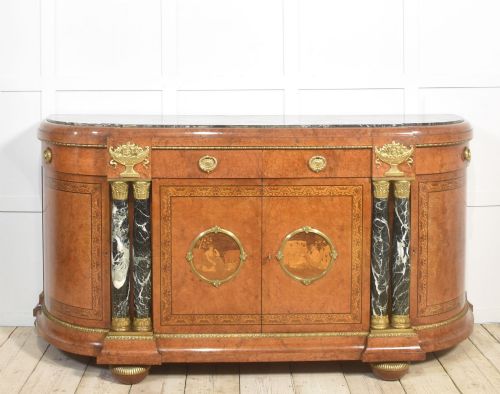
Many examples incorporate heavy polished marble tops in shades of white or grey, fitted precisely to the wooden contours. Gilded brass and ormolu mounts are applied to corners, handles, and aprons to accent the structural lines.
Louis XV Style Server Retail Price Guide 2026
Typical asking prices for louis xv style server among the pieces listed under this phrase on Sellingantiques today, from the lower quarter to the upper quarter. They describe what is for sale here now, not the wider market.
Some servers hide their bulk behind such generous bombé curves that they seem ready to waltz across the dining room.
What varies in quality
The distinction between ordinary and exceptional pieces lies in the fluidity of the carved woodwork and the crispness of the applied ormolu mounts. Hand-cut dovetailing in the drawer construction and select burr veneers demonstrate superior workshop practice.
Weight and thickness of the fitted marble top also indicate grade, as does the integration of parquetry work across the surface rather than simple planking.
KRIEGER of Paris
The Louis XV Style Server Glossary
- Ormolu
- Gilded bronze mounts applied to furniture for decoration. This technique adds metallic contrast to the timber surfaces.
- Bombé
- A swelling, outward-curving contour on the front and sides of a cabinet. It requires advanced shaping skills from the cabinetmaker.
- Parquetry
- Geometric wood patterns laid down as a veneer on tabletops or doors. Artisans arrange contrasting grain directions for visual effect.
- Cabriole leg
- A furniture leg that curves out and then in, resembling an animal's limb. It forms a primary characteristic of Rococo design.
- Buffet
- A low sideboard used for food service and storage. These pieces often feature multiple doors and heavy stone surfaces.
Louis XV Style Server: Frequently Asked Questions
What is a louis xv style server?
A louis xv style server is a decorative storage and serving piece inspired by French Rococo design, featuring curved lines and natural motifs. These units function as sideboards, buffets, or serving tables in dining spaces.
They combine wooden carcases with stone tops and metal mounts, originating from various periods including nineteenth-century revivals and early twentieth-century interpretations.
How were these servers used?
Historically, servers provided surface area for food preparation and presenting dishes during meals, while storing table linen and dinnerware below. The heavy marble tops offered durable, heat-resistant workspaces.
Today, they serve as prominent console pieces or credenzas in dining rooms, living areas, and hallways, providing display space for lamps and decorative objects.
How do I live with a marble top?
Marble surfaces require care to prevent staining from acidic liquids like wine or citrus juice, though they withstand general heat and daily wear well. Using coasters and mats preserves the polished finish.
Cleaning should involve mild soap and water rather than abrasive chemicals, allowing the natural stone to maintain its lustre over decades of domestic use.
How do I spot a revival piece?
Revival pieces from nineteen hundred or nineteen thirty often display machine-cut elements or standardised hardware alongside traditional hand-carved details. Examining the interior construction reveals the manufacturing methods of the era.
Timbers and finishing techniques also provide clues, as twentieth-century workshops utilised different sealants compared to eighteenth-century cabinetmakers.