



French Oak Buffet Server
A French oak buffet server delivers robust timber construction and regional storage utility, bringing time-tested utility and classic provincial presence into a modern dining space.
French Oak Buffet Server
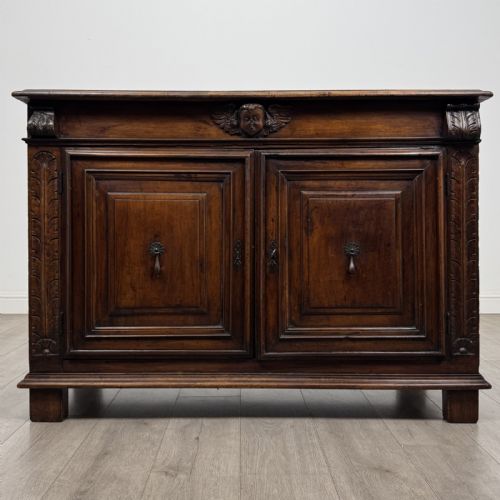
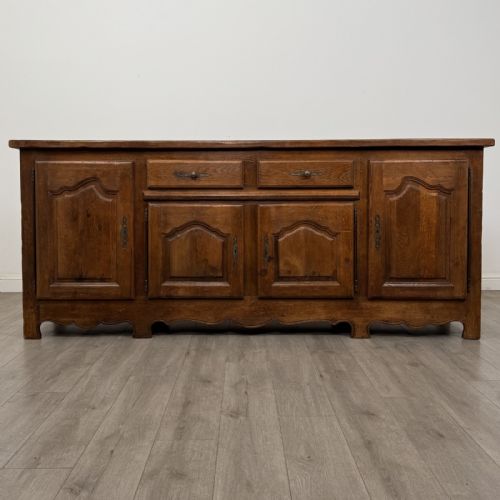
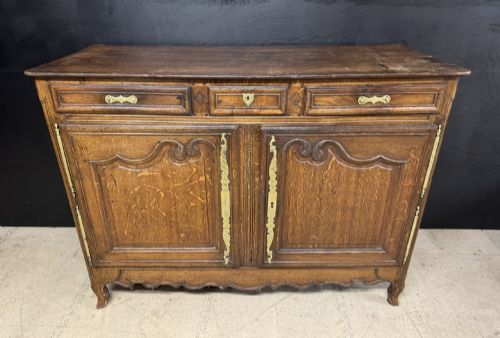
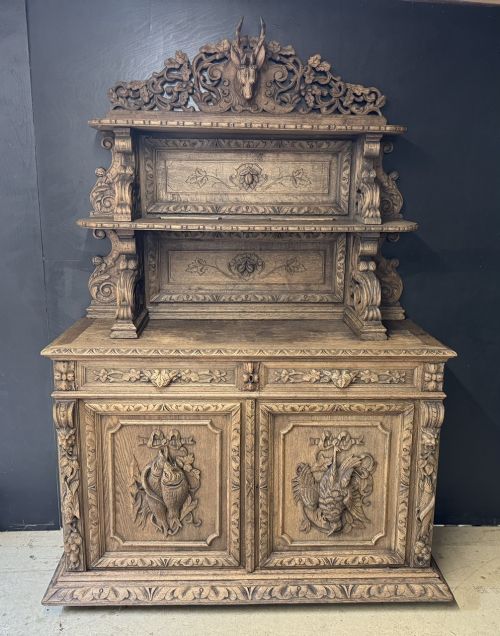
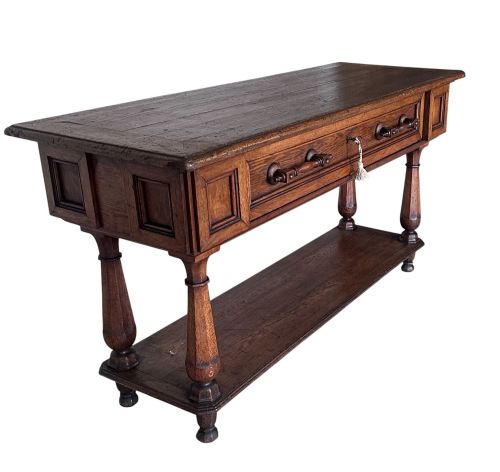
A French oak buffet server comprises low-built timber cabinetry designed for domestic storage and serving, appearing across diverse regional interpretations from the seventeenth century through the early twentieth century. When searching for a French oak buffet server, buyers encounter robust sideboards, serving tables, and dresser bases originating from provincial workshops and chateaux alike.
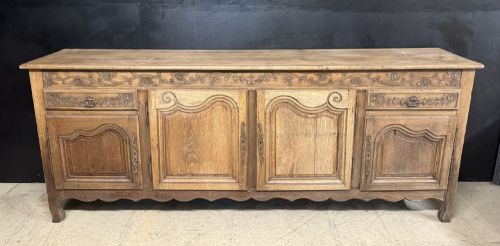
The material palette centres firmly on solid oak, frequently paired with fruitwood, walnut, or chestnut, and occasionally finished with marble tops or brass and iron hardware. These pieces take various forms including carved buffets, housemaid cupboards, and parquetry-topped sideboards reflecting Louis XV and Renaissance revival styles.
Materials and construction methods
Carpenters constructed these pieces using dense regional timber, predominantly solid oak alongside secondary woods such as fruitwood and walnut for internal elements or contrasting details. Joinery relied on traditional hand-carved joints, pegged frames, and sturdy plank construction suited to heavy domestic service.
Surface treatments incorporated elaborate hand-carving displaying provincial motifs, alongside smooth parquetry tops and fitted marble slabs. Metal fittings in brass, steel, and iron provided robust structural reinforcement and operational hardware for doors and drawers.
French Oak Buffet Server Retail Price Guide 2026
Typical asking prices for french oak buffet server among the pieces listed under this phrase on Sellingantiques today, from the lower quarter to the upper quarter. They describe what is for sale here now, not the wider market.
Housemaid cupboards tucked away in provincial quarters kept linens crisp long before modern laundry rooms existed.
Evaluating the standard of workmanship
Quality rests upon the crispness of the hand-carving and the structural integrity of the timber frame, distinguishing workshop-produced furniture from simpler utilitarian items. The selection of finely figured oak, well-fitted marble inserts, and integrated brass or iron hardware elevates the distinction of a piece.
Proportional harmony and the preservation of original patination dictate the standing of surviving examples. Pieces retaining untouched surfaces and authentic period mountings demonstrate superior historical integrity compared to heavily altered or over-restored equivalents.
KRIEGER of Paris
The French Oak Buffet Server Glossary
- Parquetry
- Geometric wood inlay work arranged in patterns, frequently utilised on table and sideboard tops to create decorative surfaces from contrasting timber grains.
- Dresser base
- A low utilitarian cabinet fitted with drawers and cupboards beneath a flat top, historically used in domestic kitchens and dining rooms for food preparation and storage.
- Fruitwood
- Dense timber harvested from fruit-bearing trees such as pear or cherry, valued for its fine grain and utilised alongside oak for contrasting details.
- Louis XV Style
- An asymmetric design movement characterised by curved lines, naturalistic scrollwork, and organic floral carving popularised during the eighteenth century and revived later.
French Oak Buffet Server: Frequently Asked Questions
What is a French oak buffet server used for?
These pieces functioned historically for storing domestic provisions, tableware, and linens while providing a sturdy surface for food preparation and serving.
Today, they serve equally well in dining rooms or kitchens as practical storage credenzas and display surfaces.
How do I distinguish eighteenth-century pieces?
Early pieces from the eighteenth century typically display hand-pegged joinery, deep natural patination, and regional carving styles specific to provincial workshops.
Examining the tool marks on the interior timber and the wear patterns on the oak helps confirm the period of construction.
Are marble tops original to these buffets?
Marble inserts appear on numerous nineteenth and early twentieth-century examples, particularly those influenced by Parisian workshop designs and later revival styles.
These stone slabs offered a durable, cool surface suited to food preparation and serving within the dining interior.
How do I care for antique oak furniture?
Maintain the timber by keeping it away from direct heat sources and sudden humidity shifts that can cause the oak to split or warp.
Apply a traditional beeswax polish sparingly to nourish the grain and protect the historical patination built up over centuries.