

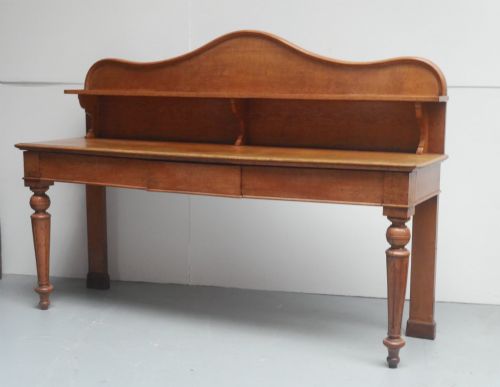
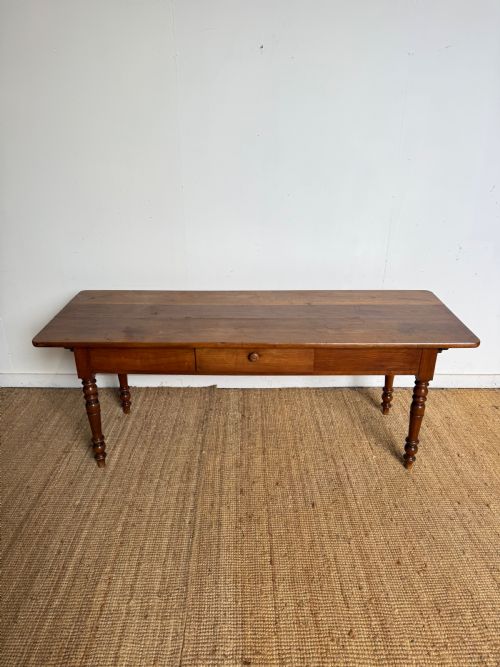
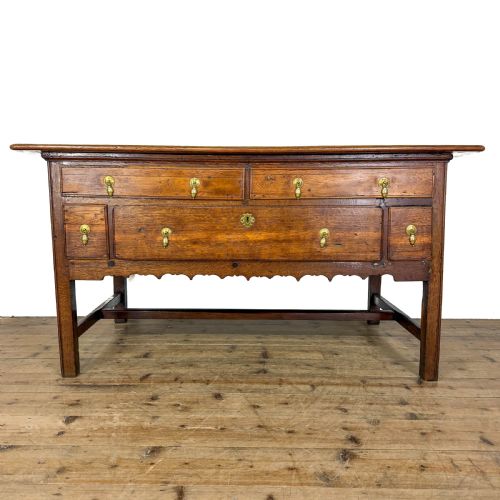


Warm Brown Serving Table
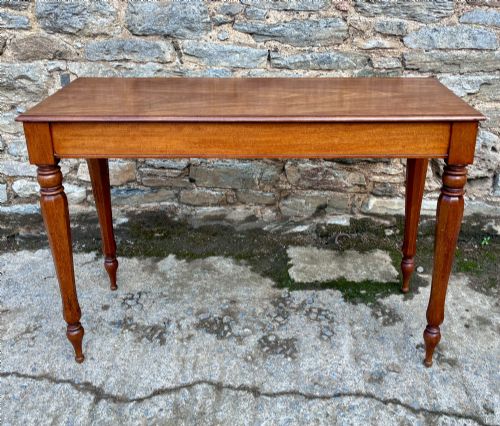
A warm brown serving table brings practical surface space and rich timber tones to a dining room or hallway.
Warm Brown Serving Table
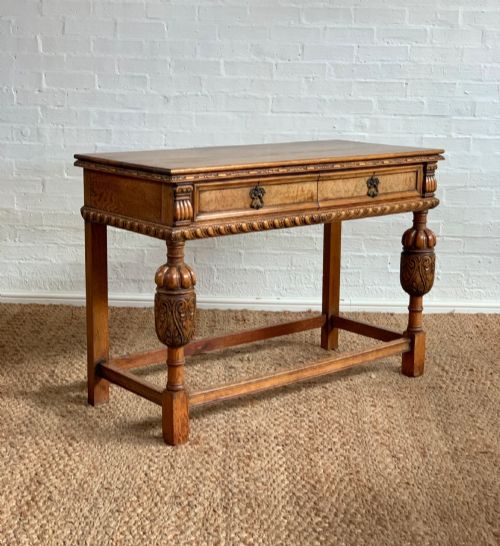
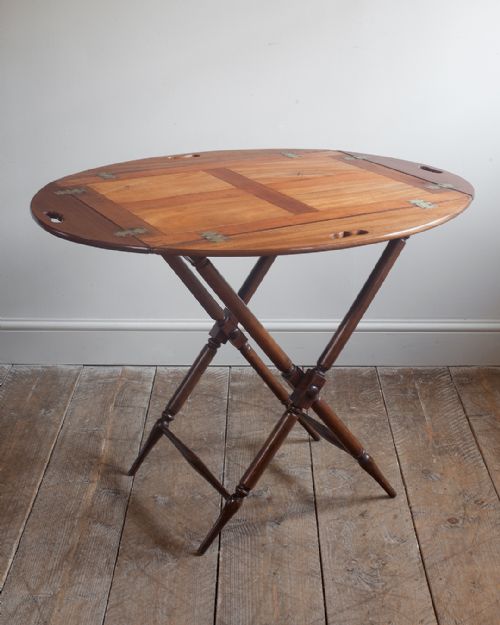
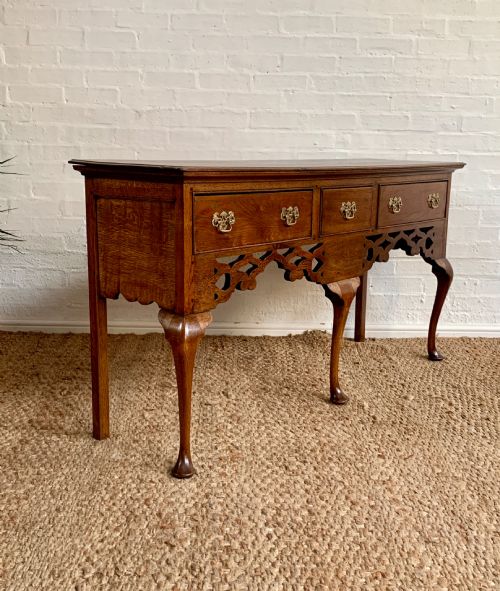
A warm brown serving table spans several distinct forms designed to aid hospitality, ranging from substantial dresser bases and sideboards to console tables and tiered dumb waiters. These pieces appear across the eighteenth, nineteenth, and early twentieth centuries, reflecting changing domestic habits in British, French, and country houses.
The materials dictate the characteristic warmth of the surface, with oak, mahogany, and cherrywood dominating the selection alongside fruitwood, pine, and satinwood. Buyers encounter regional variations such as Scottish oak tables, English country house pieces, and French provincial servers.
How they were made
Cabinetmakers utilised solid timbers and selected veneers, shaping oak, mahogany, and cherrywood into robust frames, drawer fronts, and tops. Construction methods relied on traditional joinery to support the weight of heavy serving vessels and dishes.
Decorative detailing on these surfaces involved contrasting stringing, brass hardware, boxwood inlay, and marquetry work. Finishing techniques brought out the deep grain patterns of the wood without masking the natural colour.
Warm Brown Serving Table Retail Price Guide 2026
Typical asking prices for warm brown serving table among the pieces listed under this phrase on Sellingantiques today, from the lower quarter to the upper quarter. They describe what is for sale here now, not the wider market.
What varies in quality
The distinction between tiers of quality rests on the selection of timber and the crispness of the carving or inlay. Superior examples display carefully matched grain across drawer fronts and tops, alongside well-proportioned legs and solid backboards.
Execution of secondary details, such as drawer linings and the integration of brass mounts or boxwood stringing, separates standard provincial work from finer cabinetmaking. Age-related patination and the integrity of the original construction further define the character of each piece.
Beresford & Hicks London
The Warm Brown Serving Table Glossary
- Dresser base
- A low wooden storage unit featuring drawers and sometimes cupboards below a wide top, often utilised for food preparation and serving in country houses.
- Dumb waiter
- A tiered freestanding serving table with rotating or fixed shelves designed to hold dishes and glasses without requiring a servant present.
- Serpentine
- A furniture front or edge shaped with a central convex curve flanked by concave curves, typical of finer Georgian cabinetmaking.
- Marquetry
- Decorative veneer work forming intricate pictures or geometric patterns using various coloured woods such as satinwood and boxwood.
- Console table
- A table designed to stand against a wall, frequently supported by brackets or legs, matching the decor of the room.
Warm Brown Serving Table: Frequently Asked Questions
How do I use a serving table today?
These tables function effectively in dining rooms for holding food and drinks during meals, or in hallways as console surfaces for lamps and decorative objects.
Their robust construction and practical proportions also make them suitable for living spaces requiring additional display surface.
What is the difference between a sideboard and a serving table?
Sideboards generally incorporate greater enclosed storage with cupboards and multiple drawers for dining paraphernalia.
Serving tables often present a more open profile with fewer drawers or tiered shelves intended specifically for presenting dishes.
How do I identify a Georgian piece?
Georgian tables display characteristic proportions, often utilising solid mahogany or oak with restrained decorative carving and brass hardware.
Construction details such as hand-cut dovetails on drawer boxes point firmly toward eighteenth-century craftsmanship.
Are these tables suitable for small rooms?
Many console tables and small side tables offer compact footprints that fit neatly into narrow hallways or restricted dining spaces.
Tiered dumb waiters also provide vertical storage capacity without demanding excessive floor area.