
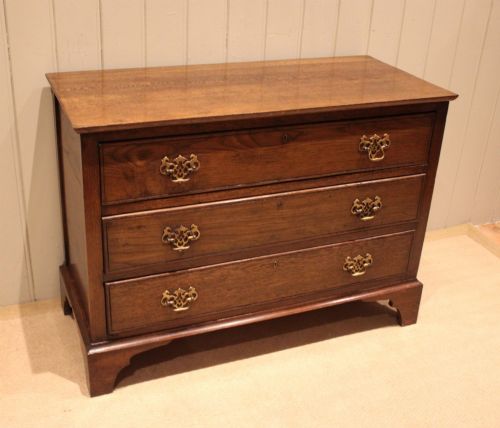
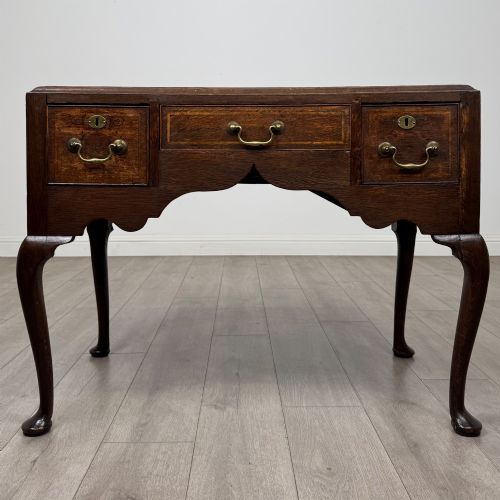
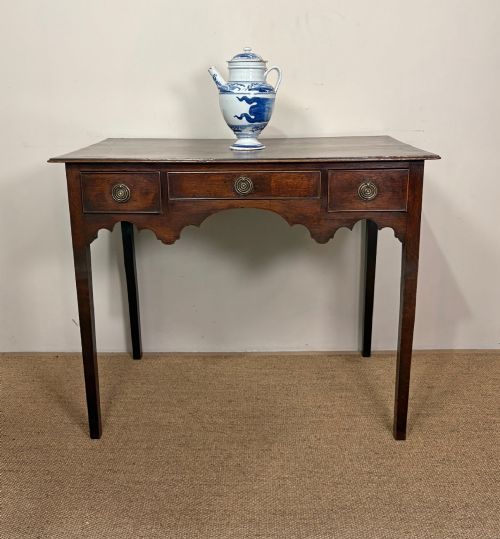
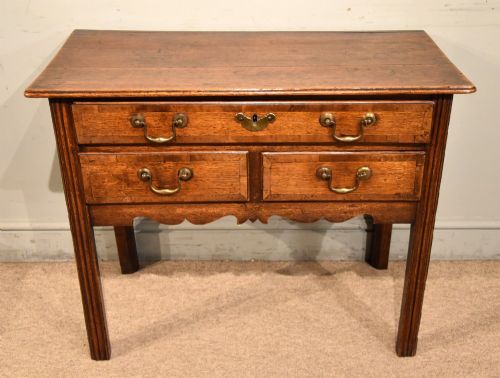

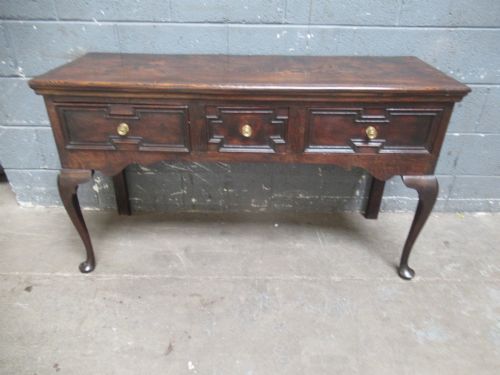

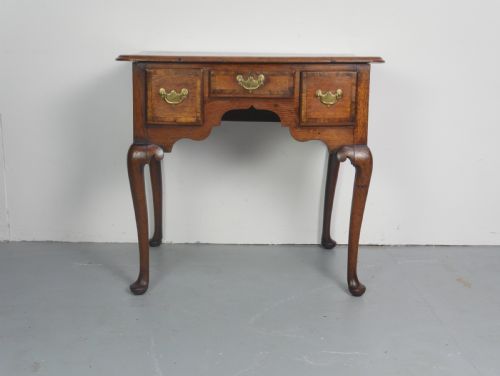


Three Drawer Oak Lowboy
A three drawer oak lowboy is a compact and useful side table that brings practical surface space and traditional timber character to any room.

Three Drawer Oak Lowboy
A three drawer oak lowboy is a low table with drawers, commonly used as a dressing table, side table, or small writing desk. These pieces span periods from the seventeenth century through to the nineteenth century, including Georgian and revival eras.
Buyers also encounter related dresser bases and side tables sharing similar proportions and drawer configurations. These versatile items served various domestic functions in period homes, from storage to personal grooming.
How they were made
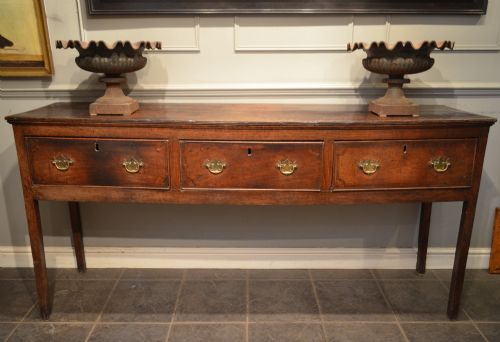
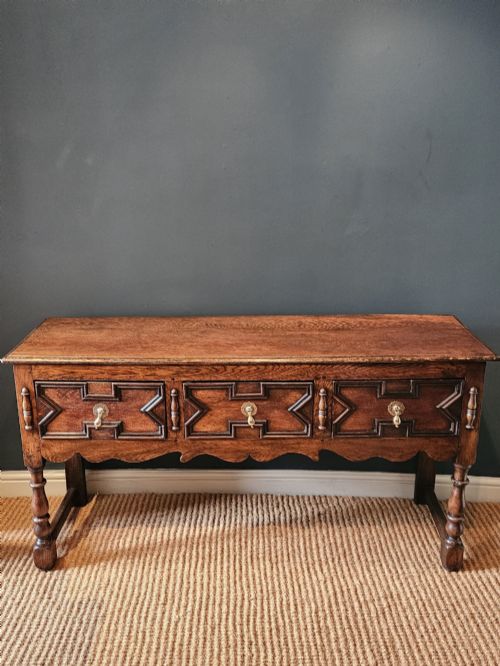
Cabinet makers utilised solid timber, primarily oak alongside fruitwood and walnut, constructing frames with traditional joinery. Carved details and geometric mouldings appear on select pieces, adding texture to drawer fronts and aprons.
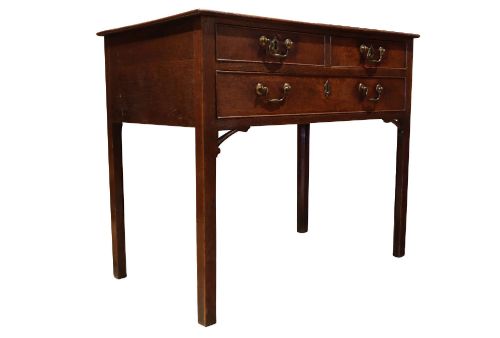
Hardware typically involves brass handles and escutcheons, often paired with feather banding on finer walnut examples. Surfaces finished with natural wax highlight the grain and colour of the wood built up over generations.
What varies in quality
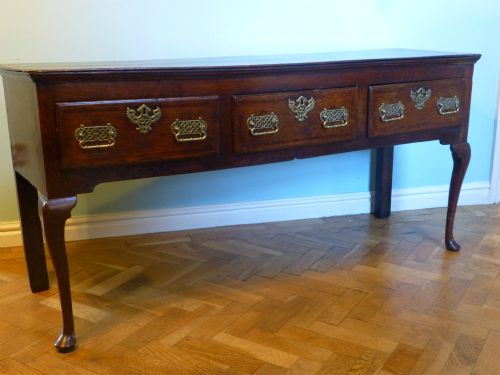
The standard of a three drawer oak lowboy depends on the crispness of the cabinet work and the integrity of the timber. Finely proportioned cabriole legs and well-figured grain distinguish superior examples from simpler utilitarian pieces.
Original brass hardware and undisturbed surface patination elevate a piece significantly. Alterations to drawer linings or replaced timber affect the overall cohesion and historical standing of the furniture.
The Three Drawer Oak Lowboy Glossary
- Lowboy
- A small table with drawers, standing on four legs, typically used as a dressing or side table. This form became popular during the late seventeenth and eighteenth centuries.
- Cabriole leg
- A furniture leg that curves out and then in, resembling an animal's leg. This design feature appears frequently on Queen Anne and Georgian pieces.
- Dresser base
- The lower section of a kitchen or dining room dresser, often fitted with drawers and cupboards. These heavy-duty pieces share similar joinery and timber choices with lowboys.
- Feather banding
- An inlay technique using thin strips of veneer arranged in a herringbone pattern to frame drawer fronts. It adds decorative contrast to walnut and mahogany furniture.
- Geometric moulding
- Raised wooden mouldings applied in rectilinear patterns to drawer fronts or panels. This detail is characteristic of early pieces from the seventeenth and early eighteenth centuries.
Three Drawer Oak Lowboy: Frequently Asked Questions
What was a three drawer oak lowboy used for?
These tables served multiple functions in historic households, operating as dressing tables for personal grooming, writing desks, or general side tables in hallways and parlours.
The three drawer arrangement allowed for the storage of small personal items, documents, or accessories while maintaining a low, unobtrusive profile beneath mirrors or windows.
How do I date an oak lowboy?
Dating relies on examining construction methods, timber choice, leg style, and hardware types. Pieces from the early eighteenth century often display geometric mouldings or cabriole legs.
Later Georgian examples transition toward straight legs and simpler drawer configurations, while nineteenth-century revival pieces incorporate characteristics from earlier eras with modern manufacturing tools.
Where should I place a lowboy at home?
A lowboy fits well in entrance halls, living rooms, or bedrooms as a compact side table or console. Its shallow depth ensures it occupies minimal floor space.
The surface accommodates lamps, decorative objects, or acts as a writing desk when paired with a small chair or stool.
How do I care for antique oak furniture?
Maintain oak surfaces by dusting with a dry cloth and applying occasional natural beeswax to nourish the timber. Avoid placing furniture in direct sunlight or near heat sources.
Stable indoor humidity prevents the wood from drying out or cracking, preserving the patina developed over centuries of use.