
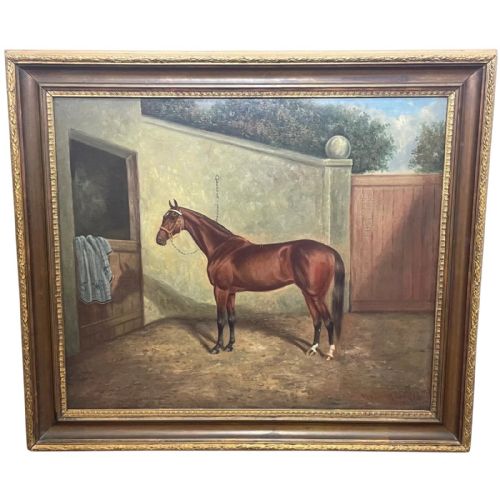
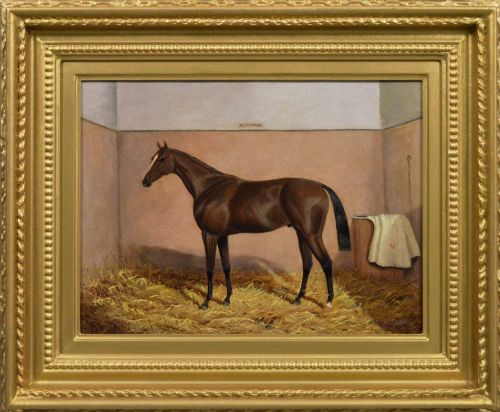
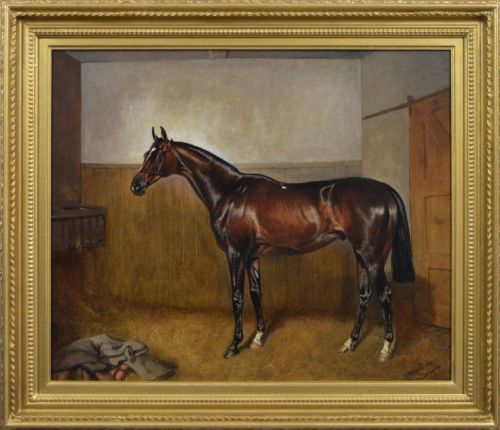
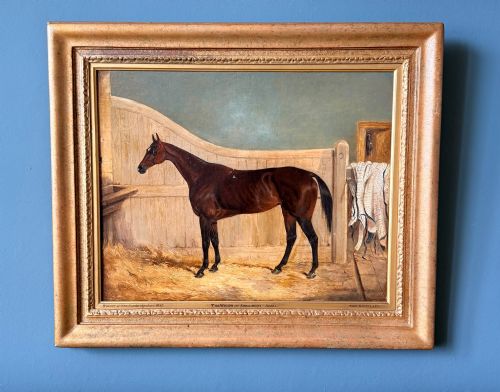


Thoroughbred Racehorse Painting
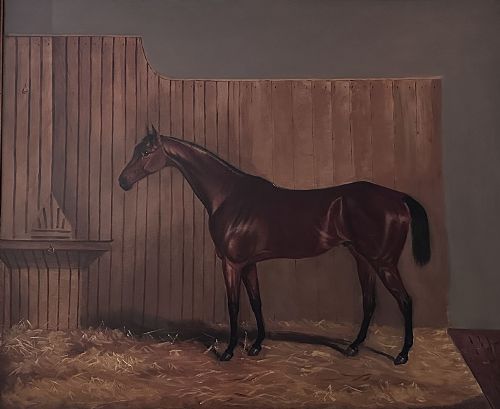
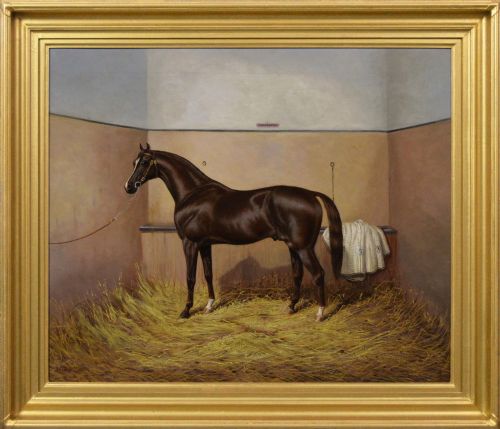
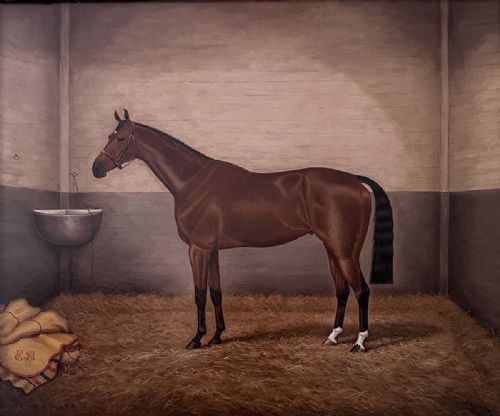
These thoroughbred racehorse painting works capture famous winners and their riders in oil on canvas, offering a direct window into the history of the turf.
Thoroughbred Racehorse Painting
A thoroughbred racehorse painting records celebrated champions from the turf, often named alongside their jockeys and owners in the title. These works document notable victors such as Spion Kop, Flying Fox, and Persimmon across the nineteenth and twentieth centuries.
Most examples found here date from the Victorian and Edwardian periods, reflecting a golden age of British racing art. Canvas surfaces bear traditional oil paint, framed frequently in giltwood to match the formal portraiture style of the era.
The compositions vary from side-profile conformation studies to dramatic depictions with jockeys up in racing colours. Every piece preserves a specific equine biography, tying the canvas to historical racecourses and famous owners.
How they were made
Painters applied oil paint to stretched canvas, building up rich coats of pigment to capture the musculature and sheen of the animal. Artists utilised fine brushes to render the intricate details of silk racing jackets and facial markings.
Many works incorporate heavy wood and giltwood frames that protect the perimeter of the canvas and provide a traditional decorative border. Gold leaf accents sometimes highlight the carved wooden mouldings of the period frames.
Listings feature works spanning the nineteenth and twentieth centuries, utilising oil paint on canvas and wood supports within giltwood frames.
What varies in quality
The skill of the brushwork dictates the realism of the equine anatomy and the accuracy of the jockey's likeness. Master painters render the tension in the horse's legs and the play of light on the coat with notable precision.
The historical significance of the subject influences the importance of the work. Canvases depicting legendary Epsom or Derby winners by recorded nineteenth-century artists stand apart from anonymous studies of unnamed mounts.
Albert Clark·John Alfred Wheeler·Thomas Walker Bretland·Samuel Spode·Alfred Wheeler·Walter Herbert Wheeler·Frank Giggs·H C Evans
The Thoroughbred Racehorse Painting Glossary
- Oil on Canvas
- A traditional painting medium where coloured pigments suspended in drying oils are applied to a woven fabric support. This combination allows for deep tonal gradations and lasting durability.
- Giltwood
- Wood that has been coated with a thin layer of gold leaf or metallic powder. It provides a bright, reflective border popular for framing fine art portraits.
- Victorian Sporting Art
- A genre of nineteenth-century painting dedicated to equestrian subjects, hunting, and racing. These works emphasise accurate anatomical depiction and narrative historical context.
- Jockey Up
- A phrase indicating that the rider is mounted on the horse ready for the race. In painting titles, it often precedes the name of the jockey depicted in the saddle.
- Conformation
- The physical build and bodily structure of the horse. Nineteenth-century artists studied this closely to reflect the ideal proportions of a champion thoroughbred.
Thoroughbred Racehorse Painting: Frequently Asked Questions
What is a thoroughbred racehorse painting?
These works are oil paintings on canvas that portray famous racehorses, often accompanied by their jockeys, trainers, or owners. They record actual historical winners from tracks like Epsom and Kempton Park.
Created primarily during the Victorian and Edwardian eras, the genre blends equine portraiture with British sporting history. Each canvas preserves the specific likeness and name of a celebrated turf champion.
How were these paintings displayed originally?
Owners and turf enthusiasts hung these works in country houses, estate libraries, and racing stables to commemorate their prized animals and victories. The heavy giltwood frames complemented the formal interior decoration of nineteenth-century homes.
Today, they suit similar traditional interior settings or dedicated equine art collections. Their substantial frames allow them to function as focal points on panelled or neutral walls.
How do I identify the period of the artwork?
The clues lie in the canvas preparation, the framing style, and the costume details of the jockeys depicted. Victorian and Edwardian works often feature specific lettering on the canvas or stretcher bars noting the horse's name and victory date.
Artists active during the nineteenth century employed distinct palettes and brush techniques typical of British realism and sporting art. Comparing the recorded birth and death dates of the named artist provides the firmest dating evidence.
Who are the figures shown with the horses?
Titles frequently name the jockeys riding the horses, such as Jack Watts or Mornington Cannon, alongside the owner of the stable. These individuals played a direct role in the racing history recorded on the canvas.
Depicting the rider in specific silks ensures the painting serves as an accurate historical record of winning colours. Owners commissioned these works to celebrate their triumphs on the turf.