


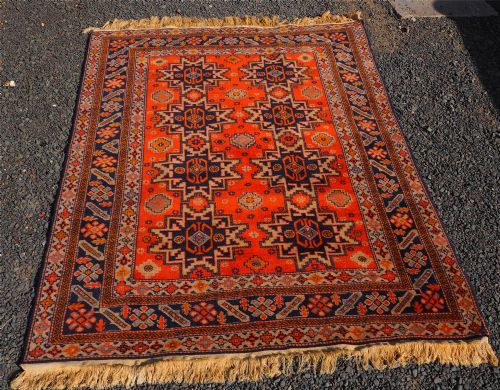
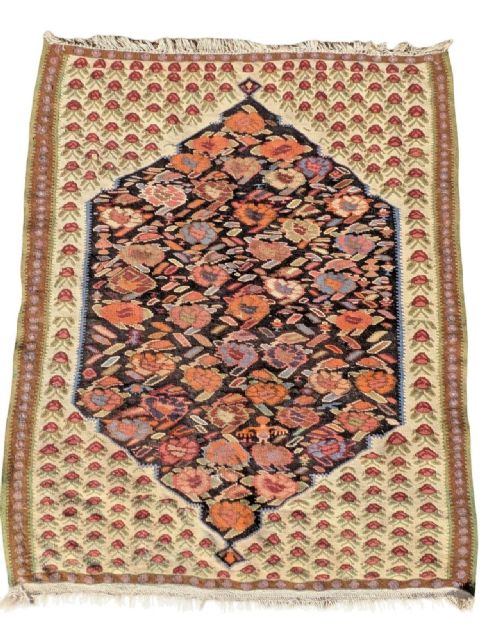
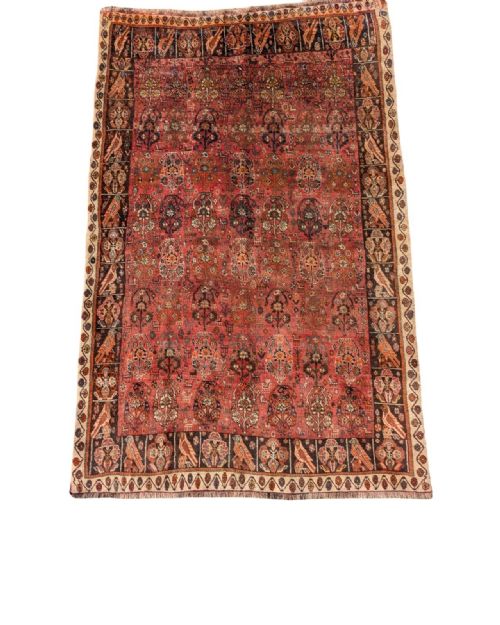
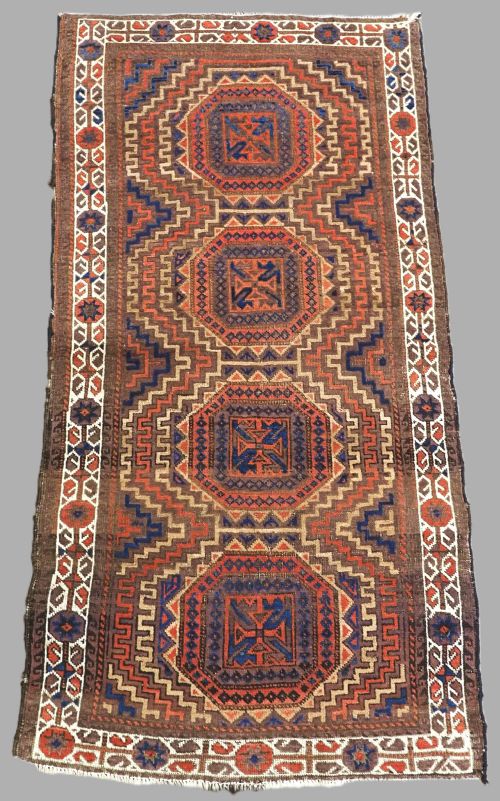

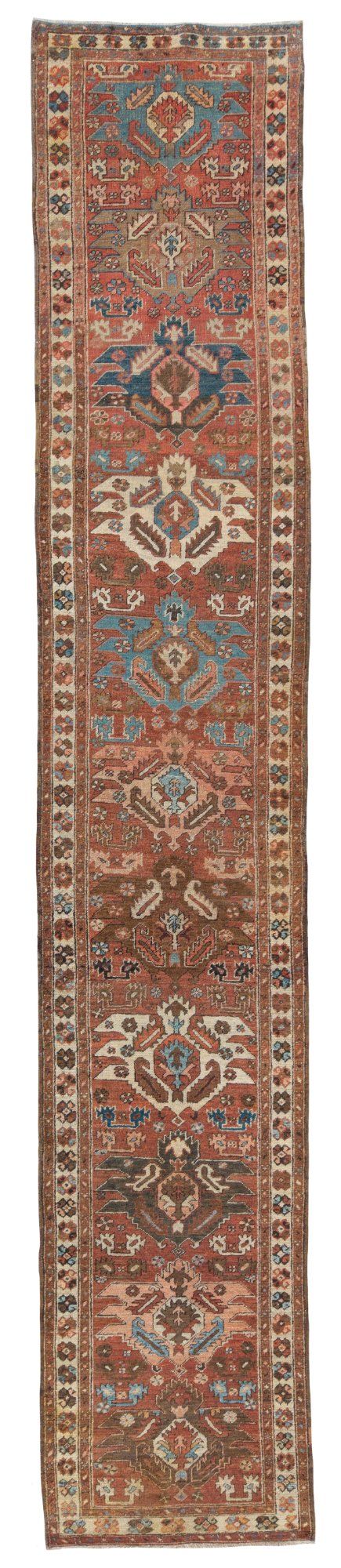
Terracotta Tribal Runner Rug
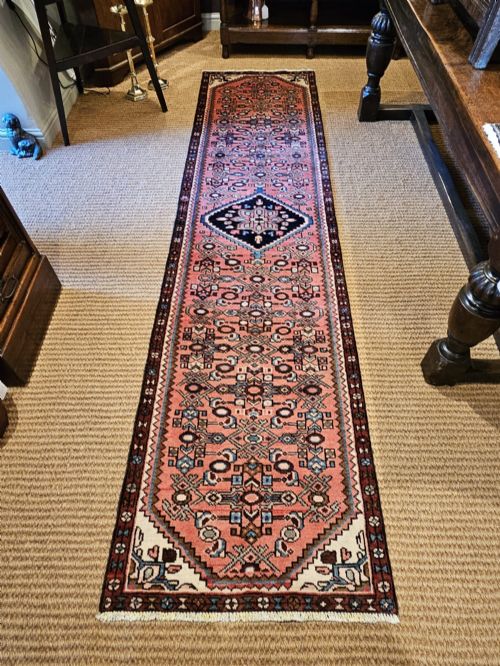
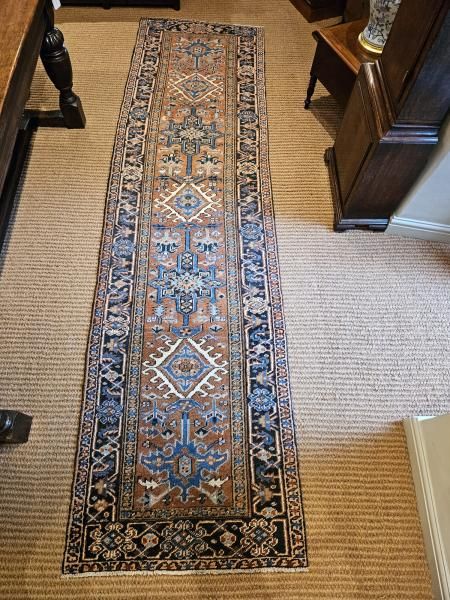
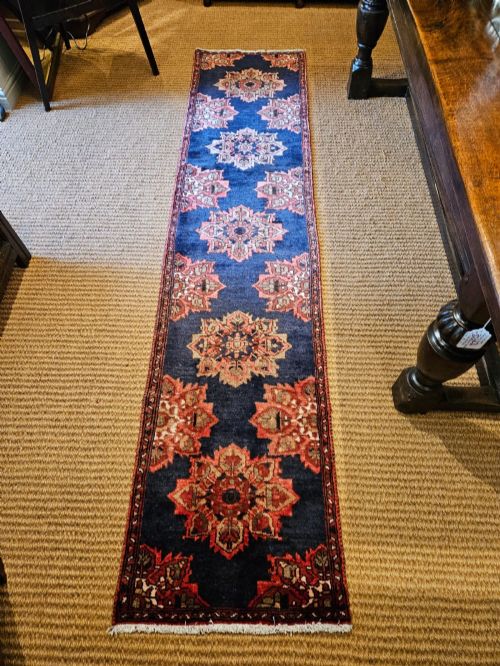
These terracotta tribal runner rugs bring warmth and structure to a hallway through geometric motifs and rich, earthy hues.
Terracotta Tribal Runner Rug
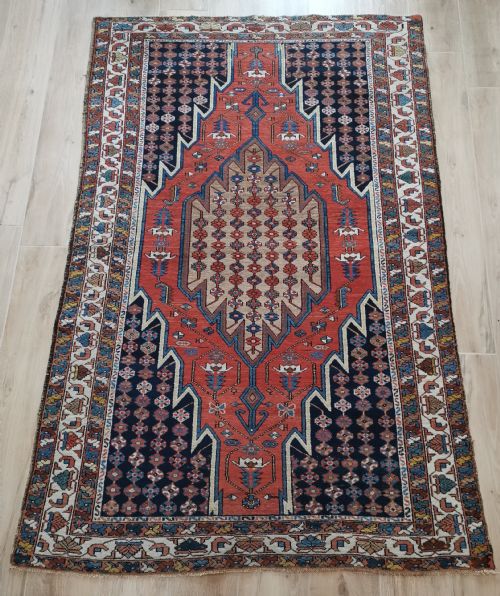
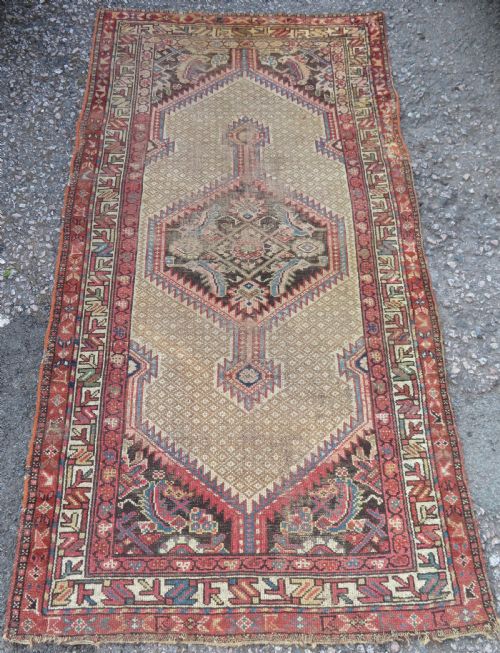
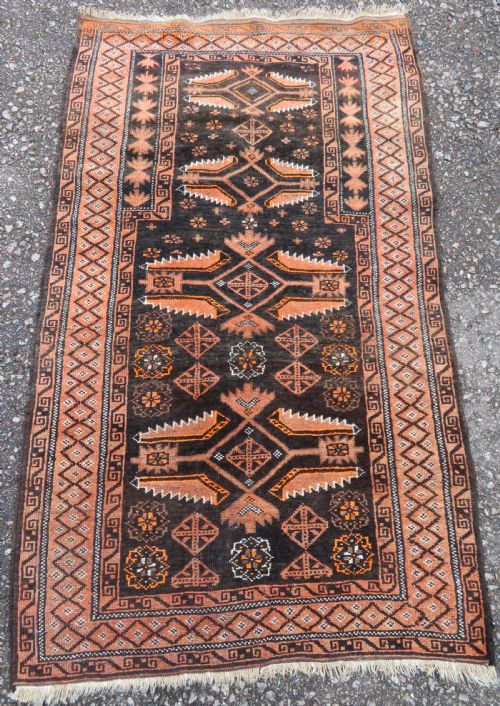
A terracotta tribal runner rug combines elongated proportions with earthy red-brown tones derived from traditional dyeing traditions. These pieces originate from regional weaving groups across Persia, the Caucasus, and surrounding areas, spanning from the late nineteenth century into the early decades of the twentieth century.
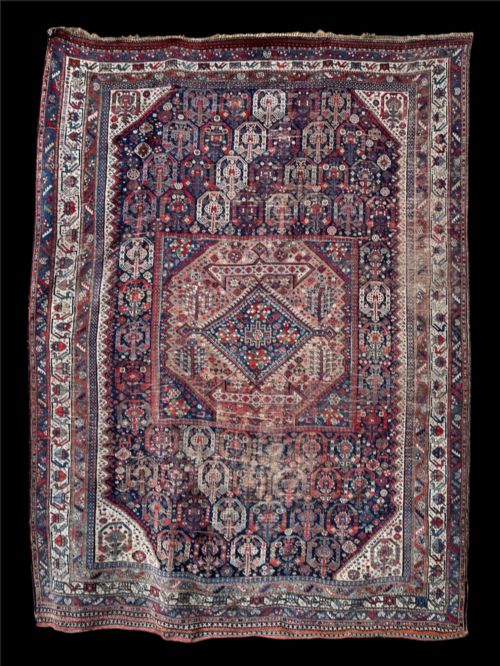
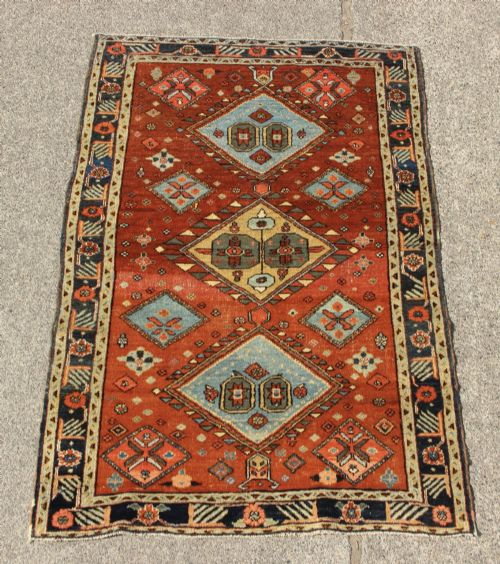
The selection here includes long formats designed for corridors alongside room-sized carpets and smaller scatter rugs bearing similar tribal motifs. Examples range from Kurdish and Heriz productions to Caucasian and Afghan pieces, each displaying distinct geometric or medallion layouts.
Makers utilised durable materials suited for heavy household traffic, resulting in practical floor coverings that double as textile art. The predominant palette relies on terracotta, brick red, and rust shades set against contrasting borders.
Materials and construction
Weavers constructed these floor coverings using hand-spun wool for the pile, often paired with cotton foundations for stability and strength. Certain pieces incorporate camel hair within the wool mix, adding subtle tonal variations and texture to the surface.
Natural dyes provide the foundational colour palette, yielding deep terracotta, indigo, and madder tones that mellow gracefully over decades of use. Hand-knotting techniques secure the pile firmly to the warp and weft threads, ensuring structural resilience.
Camel hair was occasionally spun directly into the pile to give the rug a naturally springy step.
Judging quality and character
Quality rests in the precision of the knotting and the depth of the natural dyes, which create a vibrant play of colour across the surface. Finer examples display intricate geometric articulation within the guls and borders, maintaining crisp lines despite dense pile work.
The integrity of the foundation and the uniformity of the weave distinguish superior specimens from standard domestic work. Wool quality also dictates longevity, with tightly packed hand-spun fleece resisting wear more effectively than softer, looser fibres.
The Terracotta Tribal Runner Rug Glossary
- Gul
- A repeating medallion or octagonal motif frequently found in tribal weaving traditions. These designs often identify specific weaving groups or confederacies.
- Kelim
- A flat-woven carpet or rug produced without a pile by tightly interweaving warp and weft threads. This technique results in a lightweight, reversible textile.
- Runner
- A long, narrow carpet format traditionally utilised in corridors, staircases, and hallways. The proportions emphasise linear patterns and repeating border guards.
- Boteh
- A stylised floral or almond-shaped motif representing a cypress tree or flame. It appears frequently as an all-over pattern in Persian regional weaving.
- Warp
- The vertical threads stretched tightly on the loom that form the structural foundation of the rug. The exposed ends often terminate in visible fringes.
Terracotta Tribal Runner Rug: Frequently Asked Questions
Where should I place a long runner rug?
These narrow formats suit hallways, corridors, and narrow entryways where linear floor space benefits from added warmth and texture.
Ensure you use a suitable underlay to prevent slipping on hard wooden or tiled floors.
How do I clean an antique wool rug?
Regular gentle vacuuming without a rotating brush attachment removes loose dust and grit from the wool pile.
For deeper cleaning, consult a specialist in antique textiles rather than attempting immersion washing at home.
What causes the terracotta colour in these rugs?
Weavers relied on natural plant and root dyes, such as madder, to achieve warm red and terracotta hues.
These organic dyes interact with wool over decades, resulting in subtle tonal shifts known as abrash.
How can I tell the age of a tribal rug?
Inspect the materials, dye types, and structural wear patterns to gauge the approximate period of production.
Hand-spun wool and natural colour palettes typically point towards nineteenth or early twentieth-century manufacture.