
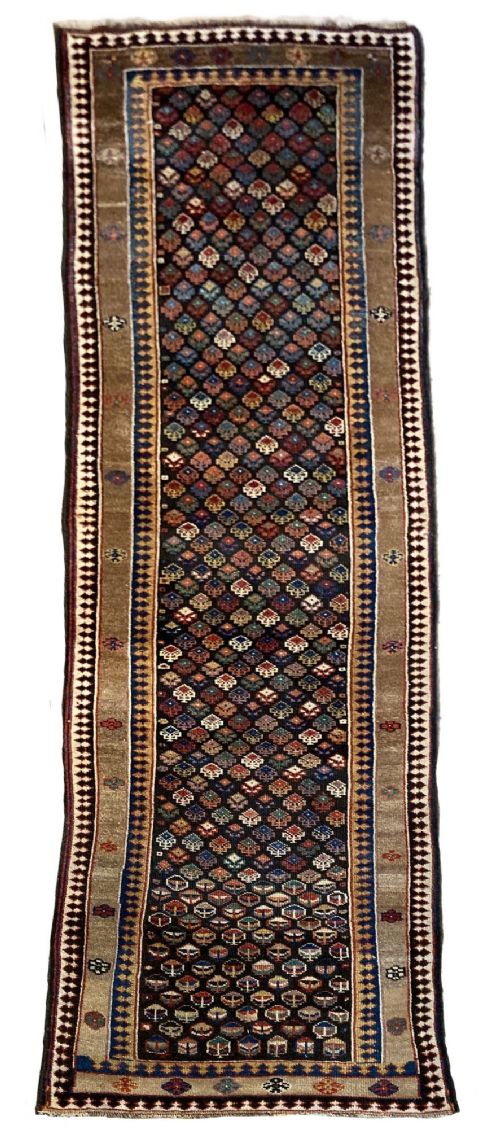


Antique Wool Passage Carpet
An antique wool passage carpet brings historic proportion and texture to long corridors.
Antique Wool Passage Carpet
When you search for an antique wool passage carpet, you encounter elongated floor coverings designed specifically for hallways, stairs, and narrow galleries. These textiles span from the late nineteenth century through to the early twentieth century, originating from Persian and Caucasian weaving traditions.
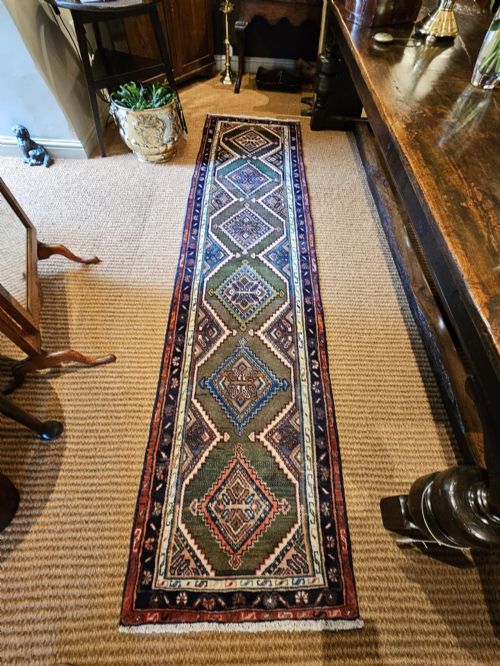
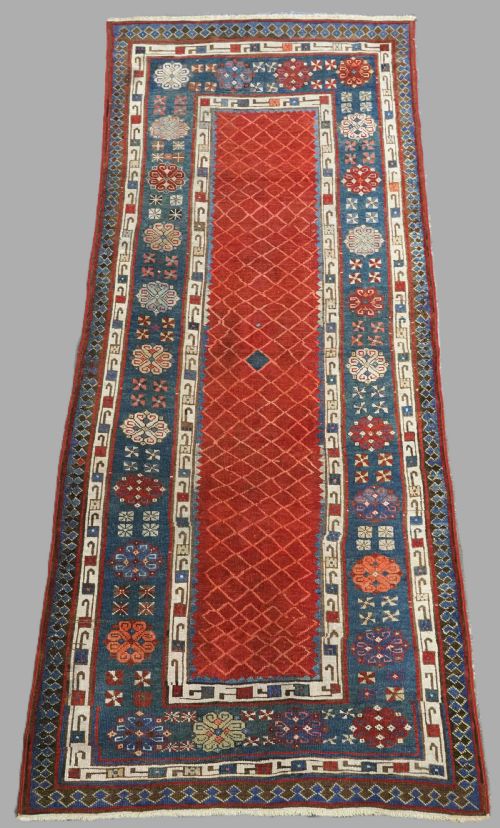
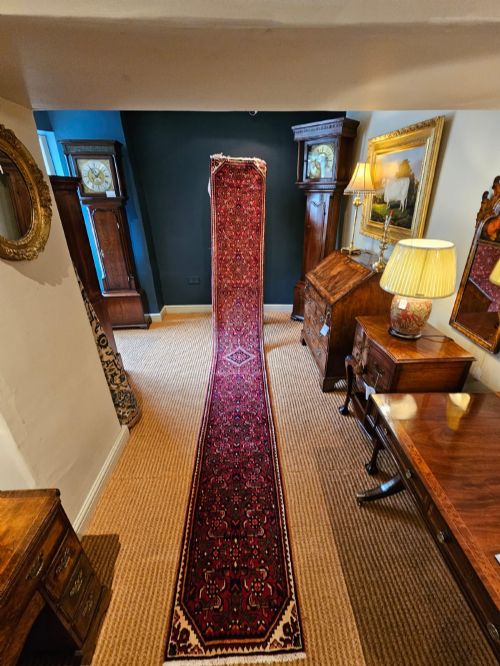
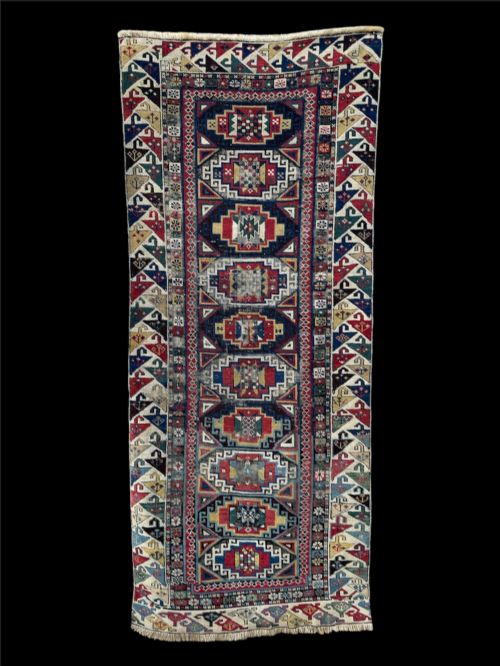
The pieces on this page appear predominantly as runners and long gallery carpets. They include regional styles such as Heriz, Kurdish, Shirvan, and Talish, deployed to warm timber floorboards and define transitional spaces in domestic interiors.
Materials and construction
These carpets rely almost entirely on natural wool pile knotted onto sturdy cotton foundations. Weavers sourced resilient fleeces that took traditional natural and early synthetic dyes with lasting depth.
The hand-knotting technique yields a dense pile capable of withstanding heavy foot traffic over generations. Structural integrity depends on tight warp and weft threads holding the intricate geometric or floral motifs firmly in place.
The selection spans from the late nineteenth century into the 1930s, featuring wool and cotton construction across Persian and Caucasian tribal styles.
Distinctions in quality
Knot density and structural tightness set finer examples apart from coarser village work. Superior pieces maintain precise linear geometry and crisp design motifs along extended lengths without warping.
Pile preservation and the vibrancy of the dye palette dictate the standing of a textile. Examples retaining deep, even wool coverage alongside harmonious colour combinations represent the higher tier of survival.
The Antique Wool Passage Carpet Glossary
- Runner
- A long, narrow carpet format intended for corridors, hallways, and staircases. This proportion balances width and length to suit confined architectural spaces.
- Warp
- The vertical foundation threads stretched lengthwise on a loom before knotting begins. These strong cotton or wool cords carry the structural tension of the textile.
- Weft
- The horizontal threads passed across the warp strands between rows of knots to bind the structure. They maintain the rigidity and width of the carpet.
- Pile
- The vertical tufts of wool that form the usable surface of the carpet. The height and density of these fibres determine the tactile feel underfoot.
- Boteh
- A stylised almond or paisley motif representing a seed or floral sprout. This ancient Persian design appears frequently across regional woven borders and fields.
Antique Wool Passage Carpet: Frequently Asked Questions
Where should I place a passage carpet?
These elongated textiles suit corridors, wide hallways, and staircase landings where linear proportions add structure to circulation spaces.
They protect high-traffic wooden floors while softening acoustics and introducing rich historic pattern into otherwise plain transit areas.
How do I care for antique wool runners?
Regular gentle vacuuming without a beater bar removes trapped dirt from the wool pile safely. Professional rug cleaning is recommended periodically to preserve the integrity of the natural fibres and dyes.
Using a quality underlay prevents slipping and cushions the foundation threads against hard subfloors.
How do I distinguish Persian from Caucasian runners?
Persian pieces often display curvilinear floral elements, Heriz geometries, or all-over shrub designs woven with rich depth. Their structures frequently incorporate sturdy cotton foundations.
Caucasian carpets tend towards crisper, highly geometric medallions, diagonal stripes, and bold tribal symbols executed in sharper, contrasting palettes.
What dates are typical for these carpets?
The examples available span from the late nineteenth century through the early decades of the twentieth century. Production methods during this era remained firmly rooted in traditional hand-knotting workshops.
Village and tribal weavers utilised regional dyes and time-honoured motifs passed down through generations.